
EPA Rollbacks on Clean Air Favor St Croix Refinery Reopening: But Questions Remain Weighing Jobs, Air Quality and Regulation
M.A. Dworkin
USVI - A refinery restart on St. Croix is never just a business decision. It is a test of how far regulators will go to protect air quality, how much risk nearby communities are asked to accept, and whether a shuttered industrial site can return as an economic engine without repeating the mistakes that shut it down.
The EPA’s recent rollback of clean air regulations could shift that balance. If federal greenhouse gas rules and Clean Air Act upgrade requirements become easier to satisfy, a potential reopening of the St. Croix Refinery may face a lower federal barrier than it would under stricter rules. That does not mean the refinery can simply turn the lights back on. The U.S. Virgin Islands has its own permitting role through the Department of Planning and Natural Resources, known as DPNR, and the facility’s history makes public trust a central issue.
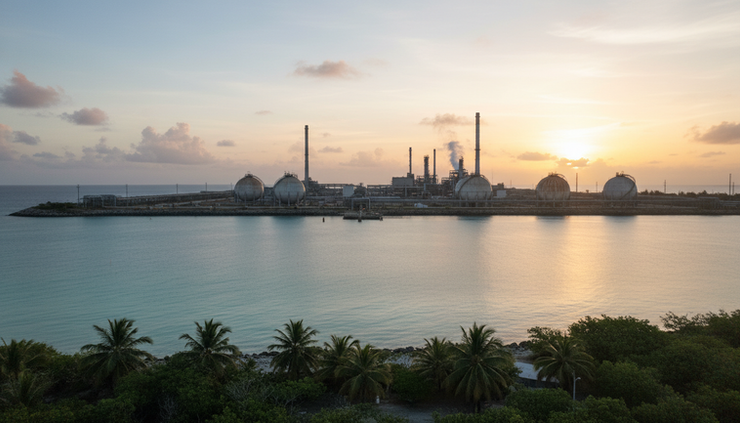
A rollback could lower federal pressure on refinery upgrades
The Clean Air Act does not ban refineries from operating. It sets rules for emissions, permits, monitoring, reporting, and pollution controls. For a large petroleum refinery, two federal concepts matter most during a restart or major upgrade:
New Source Review
This permitting process can require pollution controls when a facility builds new equipment or makes changes that increase emissions.
Greenhouse gas permitting
Large industrial sources may need to account for carbon dioxide and other climate pollutants under federal permitting programs.
A rollback that narrows the scope of greenhouse gas controls or softens upgrade requirements could make a refinery restart less costly. The facility may have more room to repair, replace, or restart units without triggering the most demanding federal review. That can matter a lot for a refinery that has sat idle, changed ownership, or needs major mechanical work before operating safely.
For operators, the appeal is clear. A less demanding federal framework can reduce uncertainty. It can shorten permitting timelines. It can lower the cost of installing Best Available Control Technology, or BACT, where that standard applies. It can also make investors more willing to finance repairs, staffing, fuel supply contracts, and product shipping.
Yet the rollback does not erase Clean Air Act obligations. A refinery still needs permits. It still must meet enforceable emissions limits. It still faces duties related to sulfur dioxide, particulate matter, volatile organic compounds, nitrogen oxides, hazardous air pollutants, and other regulated pollutants. The difference is not between regulation and no regulation. The difference is how strict the trigger points and control requirements become.
For St. Croix, that distinction matters because the refinery’s past problems were not abstract climate policy issues. They involved local air impacts, operational failures, and public concern after emissions events during the previous restart period. Any reopening proposal would be judged against that record.
The refinery’s history raises the standard for trust
The St. Croix Refinery has long been tied to the island’s economy. In earlier decades, the site supported jobs, contractors, port activity, and related services. It also became one of the most visible industrial properties in the U.S. Virgin Islands.
More recently, under the Limetree Bay name, the refinery’s attempted restart drew federal scrutiny after serious emissions incidents. Residents reported impacts, including oil mist and odors, and the EPA used emergency authority under the Clean Air Act to address risks tied to operations. The refinery later shut down and entered bankruptcy proceedings.
That history shapes the current debate. A new owner or operator may argue that upgraded equipment, stronger operating procedures, and clearer permits can avoid past failures. Residents and environmental groups may ask why the community should accept another restart unless regulators require strict proof before operations resume.
Both positions reflect real concerns.
The economic case is not small. A refinery can create direct jobs for operators, mechanics, electricians, engineers, safety staff, marine workers, truckers, inspectors, and administrative workers. It can also support indirect jobs at restaurants, suppliers, equipment yards, and local service companies. Tax revenue and port activity could help the territory’s budget.
The environmental case is just as concrete. Refineries emit pollutants that affect nearby air quality. Even when a facility meets permit limits, people living downwind may worry about flaring, odors, accidental releases, and cumulative exposure. The Caribbean setting also adds climate concerns. The region faces heat, storms, coastal flooding, coral stress, and energy vulnerability. A fossil fuel facility restart sits inside that wider climate discussion.
A reopening decision would not be credible if it focuses only on jobs or only on emissions. The hard question is whether St. Croix can get enforceable economic benefits without accepting preventable environmental harm.

DPNR remains central even when federal rules change
The U.S. Virgin Islands Department of Planning and Natural Resources plays a key role in local air quality oversight. DPNR is not a side actor. In the USVI, it administers environmental programs, handles many permit functions, and serves as the local regulator closest to residents and site conditions.
Federal law sets the baseline, but local implementation determines how those rules affect daily operations. DPNR can affect a reopening through:
Air permits and permit revisions
Public notice and comment processes
Emissions monitoring requirements
Compliance inspections
Enforcement referrals or actions
Coordination with EPA Region 2, which includes the U.S. Virgin Islands
Review of operating limits, startup conditions, and reporting duties
For a refinery restart, the details in the permit matter more than broad promises. A strong permit should define what units may operate, when they may operate, and under what pollution limits. It should address startups, shutdowns, malfunctions, fuel types, flaring conditions, tank emissions, sulfur controls, leak detection, and community notification.
A weak permit can leave too much to operator discretion. A strong permit turns expectations into enforceable terms.
Local air quality regulations also matter because St. Croix residents are the people closest to the facility. DPNR has to weigh technical data, federal standards, and local experience. If the agency treats reopening as routine paperwork, public opposition would likely grow. If it demands clear evidence of readiness, including equipment testing and transparent emissions controls, the process may be more credible even among skeptics.
Federal Clean Air permitting still creates guardrails in the USVI
The USVI falls within the federal Clean Air Act framework, even though it is not a state. That means major sources must still operate under federal air permitting programs, including Title V operating permits and preconstruction review where applicable. EPA oversight remains important, especially for large facilities with complex emissions profiles.
The rollback could affect how federal agencies interpret permitting triggers, greenhouse gas control duties, and upgrade requirements. Even so, there are several reasons federal oversight would still matter.
First, the refinery is a major stationary source. Large industrial facilities do not avoid scrutiny simply because one category of rule becomes less strict.
Second, past compliance history can influence the level of attention regulators bring to a facility. Agencies may require detailed demonstrations that equipment can operate safely and within limits before allowing full operations.
Third, permits are legally enforceable. Once limits appear in a permit, EPA and DPNR can use them in inspections and enforcement.
Fourth, federal rules for hazardous air pollutants remain relevant. Refineries can emit benzene and other toxic pollutants. Greenhouse gas rollbacks do not remove every air toxics obligation.
That means the practical question is not whether the rollback makes reopening possible by itself. It is whether it changes the cost, speed, and bargaining position around a reopening plan.
What the rollback may ease
Greenhouse gas review, some upgrade triggers, and certain federal control obligations tied to modified equipment.
What operators may gain
Lower compliance costs and a clearer path to financing repairs and restart work.
What still remains
Local permits, Title V duties, emissions limits, monitoring, public process, inspections, and enforcement authority.
What residents may demand
Proof that the refinery can operate without oil mist events, repeated flaring, or poorly explained emissions problems.
Economic benefits are real, but they need conditions
Supporters of reopening often start with employment, and that is understandable. St. Croix has lived with the loss of industrial jobs, and a refinery can provide wages that are hard to match in many local sectors. A restart could create work during construction, commissioning, maintenance, marine transport, security, waste handling, and operations.
The territory could also benefit from more economic activity around the port. Local vendors may gain contracts. Skilled trades may see more demand. Public revenue could improve if the facility operates steadily.
But economic benefits need structure. Without clear commitments, the community may carry risk while profits leave the island. A serious reopening plan should address:
Local hiring and training
Emergency response funding
Air monitoring paid for by the operator but independently reviewed
Clear complaint response systems
Financial assurance for cleanup or shutdown problems
Penalties for repeated permit violations
Public reporting that residents can understand
These conditions do not make reopening impossible. They make it more accountable. If a refinery cannot operate with modern controls, transparent monitoring, and a credible emergency plan, that is not a regulatory burden. It is a warning.

Environmental concerns go beyond carbon
The EPA rollback discussion often centers on greenhouse gases. That is a major issue, especially as climate policy affects long-term fossil fuel infrastructure. Still, local air quality concerns on St. Croix are broader than carbon dioxide.
Carbon dioxide affects the climate, but many refinery pollutants affect people nearby more directly. Nitrogen oxides can contribute to smog. Sulfur dioxide can irritate lungs. Fine particles can travel into the respiratory system. Volatile organic compounds can create odor problems and contribute to harmful air mixtures. Hazardous air pollutants require special attention because some carry long-term health risks.
For residents, the fear is not only normal operations. It is abnormal operations. Startup periods, shutdowns, flaring, equipment failure, tank problems, and storm damage can create short but intense emissions events. A permit that looks good on annual averages may not fully address those lived concerns.
That is why regulators should focus on operating scenarios, not just yearly totals. They should ask:
What happens during startup?
What happens if pollution control equipment fails?
How fast must the facility notify DPNR and the public?
What data must be posted?
What conditions require a shutdown?
Who verifies emissions monitors?
How will hurricane risk affect storage, power supply, and emergency systems?
A refinery in the Caribbean is not just another refinery. It operates in a coastal, storm-exposed environment near communities that depend on clean air, clean water, tourism, and fisheries. Environmental review should reflect that setting.
The rollback may change leverage, not the core decision
The biggest effect of the EPA rollback may be political and financial. If federal rules become easier, refinery owners may feel more confident pressing for reopening. Investors may see fewer compliance risks. Supporters may argue that national policy now favors domestic fuel production and industrial restart.
At the same time, local regulators and residents may see the rollback as a reason to be more cautious, not less. If Washington lowers the federal floor, DPNR’s role becomes more visible. The agency may face pressure from both sides, one calling for faster approvals and the other demanding stronger safeguards.
Courts could also shape the outcome. Major environmental rollbacks often face lawsuits. If rules change, then change again after litigation or a future administration, a refinery could invest under one set of assumptions and later face stricter requirements. That uncertainty matters for both the operator and the community.
A durable reopening plan would not rely on the weakest possible standard. It would build in controls that can survive political change. That may cost more upfront, but it can reduce shutdown risk, enforcement risk, and public backlash.

What a credible reopening process should include
A serious reopening review should answer practical questions in plain language. Technical modeling is needed, but modeling alone will not restore public confidence.
DPNR, EPA, and any refinery operator should make the process clear enough for residents to follow. That means public documents should explain not only the legal basis for permit decisions, but also what will happen on the ground.
A credible process would include:
A detailed restart plan
The plan should identify which units will restart, in what order, and under what operating limits.
Independent review of critical equipment
Pollution controls, tanks, flare systems, and monitoring equipment should be tested before full operation.
Fence-line and community air monitoring
Data should be available in a format residents can use, with clear explanations of exceedances or unusual readings.
Strong startup and shutdown rules
Many problems happen outside steady-state operations. Permits should address those periods directly.
Clear enforcement consequences
Regulators should define what happens after violations, including when operations must pause.
Public communication before, during, and after restart
Residents should not learn about emissions events through rumors, odors, or visible plumes.
This approach does not prejudge the outcome. It creates a fair test. If the operator can meet strict, transparent conditions, reopening becomes easier to defend. If not, regulators have a clear basis to say no or require more work.
The real choice is not jobs versus air quality
The St. Croix debate often gets framed as a tradeoff between economic revival and environmental protection. That framing is too simple. Jobs matter. Air quality matters. Public trust matters. So does the territory’s long-term resilience.
The EPA rollback may make reopening the refinery easier on paper, especially if greenhouse gas and upgrade rules under the Clean Air Act become less demanding. But the refinery’s future will still depend on local permits, federal Clean Air Act guardrails, DPNR oversight, and the operator’s ability to prove that past failures will not be repeated.
A smart reopening decision should not treat clean air rules as obstacles to overcome. It should treat them as the conditions that make any restart legitimate.
For St. Croix, the best outcome would be honest and specific: real jobs, enforceable limits, transparent monitoring, and a regulator willing to stop operations if the promises do not hold. Anything less would leave the island carrying too much risk for a recovery that may not last.

