Esencia Luxury Resort Controversy in Puerto Rico: Community Reactions, Environmental Concerns and Economic Impact
Maria Rivera Garcia
Special to St. Croix Times
San Juan, PR - A luxury resort can promise jobs, visitors, and new spending. It can also raise hard questions about land, water, access, and who gets to decide the future of a place.
That tension sits at the center of the controversy around Esencia Luxury Resort in Puerto Rico. The debate reflects a wider issue the island has faced for years: how to welcome tourism investment while protecting local communities, fragile ecosystems, and public trust.
The dispute is not a simple battle between “development” and “environment.” Many residents want economic opportunity, but they also want projects to respect local needs. Environmental groups warn that coastal and rural areas cannot absorb unlimited construction. Resort supporters argue that high-end tourism can bring jobs, tax revenue, and long-term business for nearby towns.
The result is a complicated public debate with real stakes for Puerto Rico’s economy, identity, and natural resources.

What is driving the controversy around Esencia Luxury Resort
The Esencia Luxury Resort debate centers on the proposed or planned transformation of land into an upscale destination aimed at travelers seeking privacy, comfort, and access to Puerto Rico’s coastal beauty. Supporters see it as a chance to attract visitors with higher spending power. Critics see it as another sign that valuable land may be shifting toward outsiders and wealthy travelers, rather than local priorities.
Several concerns tend to surface in public debates over projects like this:
Land use
Residents question whether the scale of the resort fits the surrounding area and whether the land could be used in ways that better serve nearby communities.
Environmental review
Activists want clear studies on wetlands, coastal habitats, water use, erosion, and species protection before construction moves forward.
Public access
In Puerto Rico, beaches are public, yet resort construction can make access feel limited in practice through gates, parking rules, private roads, or security presence.
Infrastructure strain
Local roads, water systems, emergency services, and waste management can face new pressure when major tourism projects arrive.
Economic fairness
Some residents ask whether new jobs will be stable and fairly paid, or whether the largest gains will flow to investors and outside operators.
The controversy also touches a deeper cultural concern. Many Puerto Ricans have watched housing costs rise in coastal and tourist-friendly areas. Short-term rentals, outside investment, and high-end development have changed the feel of some communities. Against that backdrop, another luxury resort can become a symbol of displacement, even if the project itself promises benefits.
Local residents are weighing opportunity against loss
Community reactions are rarely uniform. Some residents may welcome the idea of a major resort because tourism remains one of Puerto Rico’s most visible economic engines. A project that brings construction work, hospitality jobs, restaurant demand, taxi rides, maintenance contracts, and local vendor opportunities can sound attractive, especially in towns where steady employment is limited.
For families who depend on tourism, a luxury property can mean more visitors during more months of the year. Small businesses may hope guests will spend money outside the resort, in bakeries, bars, boat tours, farms, craft shops, and local restaurants.
Yet other residents worry that the promise of jobs can hide long-term costs.
Housing is one of the biggest concerns. When an area gains attention as a luxury destination, land values can rise. That may benefit property owners who choose to sell, but it can hurt renters, younger residents, and families trying to stay near where they grew up. Even when a resort does not directly displace homes, it can contribute to a market where local buyers compete with investors.
Public access is another sensitive issue. Puerto Rico’s coastline is deeply tied to daily life, culture, and recreation. A beach is not just scenery for visitors. It is where families gather, fishers work, children learn to swim, and communities mark holidays. Residents often fear that “public” access on paper may not feel public once luxury development changes roads, parking, paths, or the social atmosphere of an area.
There is also concern about voice. Communities want to know whether they were meaningfully consulted, or only informed after major decisions had already gained momentum. A public meeting can satisfy a legal requirement, but residents often look for something deeper: proof that local concerns can change a project’s design, size, or conditions.
For many residents, the core question is whether the resort will become part of the community or a separate world built beside it.
That distinction matters. A resort that buys from local farmers, hires locally, supports public access, protects natural areas, and works with nearby towns may earn more trust. A resort seen as closed, exclusive, or dismissive can face lasting opposition.
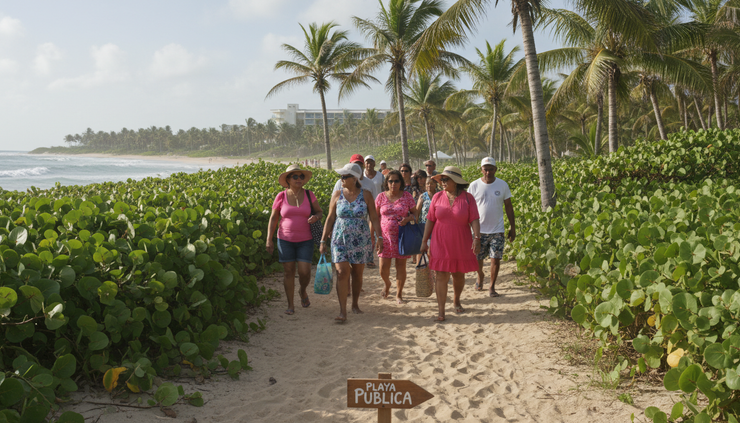
Environmental activists are focused on water, habitat, and coastal risk
Environmental groups tend to look beyond the resort’s architecture or guest experience. Their focus is on ecosystems that may already be under pressure from climate change, storms, drought, and poorly planned development.
Puerto Rico’s coastal and near-coastal areas can include dunes, wetlands, mangroves, dry forests, coral-related systems, and habitat for birds, reptiles, and marine life. Disturbing one part of that system can affect another. Filling wetlands, clearing vegetation, increasing runoff, or changing drainage patterns may have impacts that do not appear right away.
Water use is often a major point of concern. Luxury resorts can require significant water for guest rooms, pools, landscaping, kitchens, laundry, and maintenance. In a Caribbean island setting where drought and water service interruptions can affect residents, activists often ask whether a new resort will compete with community needs.
Key environmental questions include:
Concern | Why it matters |
Water demand | Large resorts can place pressure on local water supplies, especially during dry periods. |
Wastewater treatment | Poor handling can threaten groundwater, nearby habitats, and coastal waters. |
Stormwater runoff | Paved areas and altered land can increase flooding or carry pollutants toward the coast. |
Habitat disruption | Construction can fragment or damage areas used by wildlife. |
Coastal erosion | Development near shorelines can worsen risks as sea levels rise and storms intensify. |
Environmental activists also tend to push for transparency. They often want public access to environmental impact studies, permit applications, mitigation plans, and monitoring data. If documents are hard to find or too technical for residents to understand, distrust can grow.
A common activist argument is that Puerto Rico does not need to reject tourism to protect nature. It needs stronger rules, better enforcement, and projects designed around ecological limits. In that view, the Esencia Luxury Resort controversy is part of a bigger test: whether green promises can be measured, verified, and enforced.
Resort developers sometimes point to environmental features such as preserved open space, native landscaping, reduced building footprints, water-saving systems, habitat restoration, or limits on vehicle access. Activists usually respond with a practical question: who verifies those claims over time?
A project can look sustainable in renderings and still create problems if enforcement is weak. For critics, the issue is not only what management promises before opening. It is what happens five, 10, or 20 years later.
Resort management frames the project as investment and planned growth
From the management side, a luxury resort is often presented as a carefully planned investment that can raise the profile of a region and bring long-term economic activity. Resort leaders may argue that high-end tourism produces more local spending with fewer visitors than mass tourism, which can reduce crowding while supporting businesses and jobs.
Management’s likely case rests on several points.
Job creation is the first. Resorts need construction labor before opening, then ongoing staff for hospitality, groundskeeping, security, food service, maintenance, transportation, recreation, and administration. If management commits to local hiring and training, that can appeal to residents who want stable work near home.
Local purchasing is another. Resorts can support farmers, fishers, artisans, tour guides, cleaning services, repair workers, and food suppliers if they choose to build local supply chains. Those choices determine whether money circulates nearby or leaves the area quickly.
Tax revenue and fees can also matter. When tourism projects perform well, municipalities and the central government may benefit through taxes, permits, and related economic activity. That money can support public services, though residents often want clear evidence that benefits will reach affected communities.
Managed development is a final part of the argument. Resort management may say that a planned project with environmental standards is better than scattered, unregulated growth. If the land is going to attract development anyway, they may argue, a single managed project can include conservation areas, infrastructure upgrades, and formal oversight.
The strength of that argument depends on details. Promises carry more weight when management shares clear commitments, timelines, public reporting, and consequences for missing targets.
For trust to improve, resort management would need to address questions such as:
How many permanent jobs will go to local residents?
What wage standards and training programs will be used?
How will public beach access be protected in daily practice?
What water sources will the resort use, and how will shortages be handled?
What independent monitoring will track environmental conditions?
How will complaints from residents be handled after opening?
A balanced view recognizes that resort management is not wrong to pursue investment. Puerto Rico needs economic activity, and tourism is a major part of that reality. The question is whether the project’s benefits are broad enough, durable enough, and accountable enough to justify the trade-offs.

The controversy could shape tourism and the local economy
The economic impact of the Esencia Luxury Resort controversy is not limited to the resort itself. Public conflict can affect how visitors, investors, residents, and policymakers think about tourism in Puerto Rico.
If the project moves forward and performs well, supporters may point to new employment, higher visitor spending, and more attention for the surrounding region. Nearby businesses could gain customers if resort guests explore beyond the property. A successful luxury development may also attract more investment in roads, utilities, restaurants, tours, and cultural experiences.
Yet the gains are not automatic.
Some luxury resorts operate like self-contained bubbles. Guests eat, shop, relax, and book activities inside the property. When that happens, nearby towns may see less benefit than expected. Local workers may hold service jobs while ownership profits flow elsewhere. The economy grows on paper, but the community may feel little improvement.
There is also reputational risk. Modern travelers increasingly pay attention to environmental and social concerns. A resort linked to community conflict, beach access disputes, or habitat damage may face criticism from visitors who want their travel choices to align with local well-being. Even travelers who love luxury may avoid properties seen as harmful or controversial.
At the same time, prolonged conflict can create uncertainty for businesses that depend on tourism. If public agencies, courts, or permit reviews slow a project, contractors and vendors may delay hiring or investment. Nearby entrepreneurs may wait to see whether the resort opens, changes shape, or stalls. Uncertainty has its own cost.
The local economy also includes non-tourism values that are harder to measure. Beaches, forests, fishing areas, and open land support recreation, culture, food traditions, and quality of life. When those resources are damaged or restricted, communities lose more than potential income. They lose common spaces and practices that help define place.
A fair economic analysis should ask both sides of the ledger:
Possible benefits | Possible costs |
Construction and hospitality jobs | Higher land values and housing pressure |
More visitors with higher spending power | Reduced public access in practice |
New demand for local vendors | Environmental damage that affects fishing, recreation, or water quality |
Greater tax activity | Public spending needed for roads, water, waste, and oversight |
Regional visibility | Community resentment if benefits feel unequal |
The controversy may also influence future projects across Puerto Rico. If officials require stronger community engagement and environmental safeguards, developers may adapt. If residents feel ignored, opposition to future tourism proposals may grow.
What a balanced path forward could look like
The most productive outcome would not come from slogans. It would come from enforceable commitments and real participation.
For residents, trust may improve if they see specific protections for public access, local hiring, traffic, water use, and complaint resolution. For environmental advocates, the key may be independent review, public data, and clear limits on construction near sensitive areas. For resort management, a clearer process can reduce uncertainty and show that the project can meet a higher standard.
A balanced path could include:
Publicly available environmental studies written in plain language
Independent monitoring before, during, and after construction
Binding public access plans with parking, paths, and signage
Local hiring goals backed by training partnerships
Water conservation plans that account for drought conditions
Regular community meetings after opening, not only before approval
Transparent reporting on vendor spending and local economic benefits
None of these steps would satisfy everyone. Some opponents may believe the site should not be developed at all. Some supporters may think added conditions make investment harder. But stronger transparency can narrow the conflict and help the public judge facts rather than promises.

The takeaway
The Esencia Luxury Resort controversy in Puerto Rico shows why tourism development carries both promise and risk. A resort can bring jobs, visibility, and new spending. It can also strain water supplies, alter public access, raise housing pressure, and damage trust if residents feel excluded.
The central issue is accountability. Communities are not only asking whether development will happen. They are asking who benefits, who bears the costs, and who gets a real voice before decisions become permanent.
Puerto Rico’s future as a tourism destination will depend on more than luxury rooms and beautiful beaches. It will depend on whether growth protects the people and places that make the island worth visiting in the first place.