
Fishing Charter Prep: What to Bring, Safety Tips and Seasickness Advice
Axel Dash
USVI - A fishing charter can feel like the perfect mix of adventure and relaxation, until the night before, when the questions start piling up. What should go in the bag? Are snacks allowed? What if the boat rocks more than expected? Do beginners need special gear?
The good news is simple: most charter crews want guests to have a great day, and they usually provide the heavy-duty fishing equipment. A little preparation makes everything smoother. You will board with less stress, listen more easily, stay safer, and enjoy the water instead of worrying about what you forgot.
This guide covers what to expect before you step on board, what to bring, how to treat the crew, what kinds of trips are available, and how to manage seasickness before it spoils the fun.

Know what kind of fishing charter you booked
Not all fishing charters feel the same. Some are calm, family-friendly outings close to shore. Others head far offshore and chase larger fish in deeper water. Knowing the style of trip helps you pack well and set the right expectations.
Inshore trips stay closer to land
Inshore charters usually fish bays, flats, passes, rivers, sounds, or nearshore coastal waters. These trips often work well for beginners, families, and anyone who wants a shorter day on the water.
The ride tends to be calmer than offshore trips, though weather can still change the feel of the water. Common techniques may include casting, drifting, trolling, or fishing around structure such as docks, grass flats, rocks, oyster bars, or channels.
Inshore trips are a good choice if you want:
A shorter outing
Less travel time by boat
A more relaxed pace
A better chance of seeing shoreline scenery
A first charter experience without committing to a full day offshore
Nearshore trips offer a middle ground
Nearshore charters usually run outside protected water but do not travel as far as deep-sea boats. They may target reefs, wrecks, jetties, buoys, or coastal structure.
These trips can offer more variety and larger fish than some inshore trips while still keeping the travel time reasonable. The water may be choppier, so seasickness planning matters more.
Offshore and deep-sea trips go farther out
Offshore charters often involve longer runs, open water, heavier tackle, and bigger fish. These trips can be exciting, but they also require more stamina. A full-day offshore trip may include early departure, hours in the sun, and periods of waiting between bites.
If you love the idea of tuna, mahi-mahi, marlin, grouper, snapper, or other offshore species, this kind of trip can be memorable. Just read the trip details carefully. Ask how long the boat ride may be, what the sea conditions look like, and what guests should bring.
Shared and private charters feel different
A private charter books the boat for your group. You get more flexibility, more personal instruction, and a trip shaped around your goals.
A shared charter, sometimes called a party boat or open boat, may include people you do not know. It can cost less per person and still be a lot of fun, but the schedule and fishing style may be less flexible.
Charter type | Best for | What to expect |
Inshore | Beginners, families, shorter trips | Calmer water, light tackle, more time near land |
Nearshore | Mixed skill levels, more variety | Moderate boat rides, reefs or coastal structure |
Offshore | Experienced anglers, big-fish goals | Longer runs, deeper water, heavier gear |
Shared | Budget-conscious solo anglers or pairs | More guests, set schedule, social atmosphere |
Private | Groups wanting flexibility | More personal attention and custom pacing |
Pack smart and keep your gear simple
Most fishing charters provide rods, reels, bait, tackle, and required fishing permits or licenses, but do not assume. Read your confirmation email and ask before packing your own gear. Some captains welcome personal rods, while others prefer guests to use boat gear for safety, space, and consistency.
Your goal is to bring useful items without crowding the deck. A soft-sided bag works better than a hard cooler or bulky suitcase because it can tuck away easily.
Clothing that works on the water
Dress for sun, wind, spray, and changing temperatures. Even warm days can feel cool during an early boat ride.
Bring or wear:
Lightweight sun shirt Long sleeves protect better than sunscreen alone and help keep you cool.
Quick-dry shorts or pants Denim gets heavy and uncomfortable when wet.
Light jacket or windbreaker Morning runs and sudden clouds can feel chilly.
Hat with a brim A secure hat helps protect your face and eyes.
Polarized sunglasses These reduce glare and make it easier to see into the water.
Non-marking shoes Boat decks get wet. Wear shoes with grip, such as deck shoes, fishing sandals with back straps, or clean sneakers.
Avoid flip-flops if the boat may rock or if you will move around often. Bare feet can be unsafe around hooks, fish, and slick surfaces.
Personal items worth bringing
Use the charter’s guidance first, then build your bag around the basics.
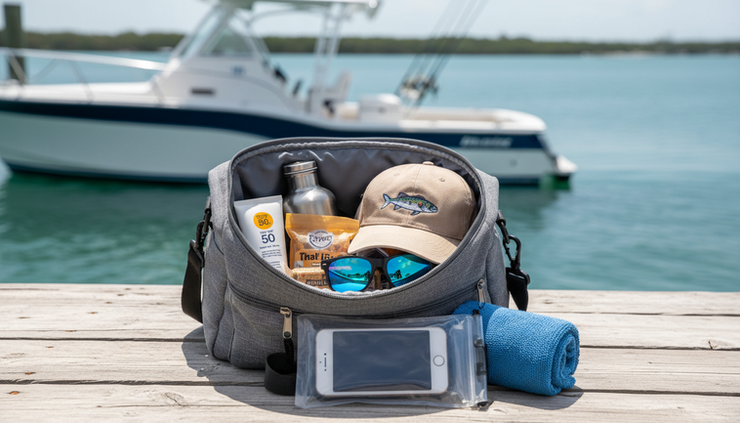
Good items to pack include:
Sunscreen Choose a water-resistant sunscreen and apply it before boarding. Bring extra for later.
Lip balm with SPF Lips burn quickly on the water.
Refillable water bottle Staying hydrated helps with energy and may help reduce seasick feelings.
Snacks or lunch Choose easy foods such as sandwiches, fruit, crackers, granola bars, or nuts. Avoid messy foods.
Motion sickness medicine Bring it even if you are unsure. Take it according to the label or your clinician’s guidance.
Small towel Useful for wet hands, spray, or cleanup.
Phone protection A waterproof pouch or dry bag can save your phone from spray and drops.
Cash for tips Crews often work hard before, during, and after the trip. Tipping is customary when service is good.
Bring your ID if the charter requires it, and keep payment details handy if you still owe a balance.
Items to leave behind
Space matters on a boat. If the captain did not ask for it, skip it.
Leave these at home unless approved:
Large hard coolers
Glass bottles
Expensive jewelry
Heavy tackle boxes
Speakers
Drones
Strong-smelling foods
Too many extra rods
If you want to bring alcohol, ask first. Some crews allow limited drinks. Others do not allow alcohol for safety or insurance reasons. Never bring illegal substances.
Put safety first before the boat leaves the dock
A good captain takes safety seriously, and guests should do the same. Listening during the pre-trip briefing is one of the easiest ways to prevent problems.
The crew may explain where to sit, how to move around, what to do with hooks, where life jackets are stored, and how to use the marine toilet, often called the head. Even if you have been on boats before, every vessel has its own layout.
Listen to the safety briefing
Pay attention to:
Life jacket locations
First aid kit location
Fire extinguisher location
Emergency communication equipment
Areas guests should avoid
Safe places to stand while underway
Rules for children
How to handle fish with teeth, spines, or sharp gill plates
If you do not hear something clearly, ask. Crews would rather answer a basic question at the dock than handle a risky situation later.
Move carefully on deck
The deck can get wet from spray, bait, fish slime, or rain. Keep one hand free when walking. Use railings and fixed surfaces for balance. Do not step over loose line, open hatches, or gear.
When the boat is running, stay seated unless the captain or mate says it is safe to move. Sudden turns or waves can throw people off balance.
Hooks deserve extra respect. Keep rods pointed in safe directions. Never swing a baited hook behind you without looking. If a fish is flopping on deck, let the crew handle it unless they invite you to help.
Protect yourself from sun and heat
Water reflects sunlight, so sun exposure can sneak up fast. Apply sunscreen before the trip and reapply during the day. Wear sunglasses that stay secure, especially if you lean over the rail.
Drink water early. Do not wait until you feel thirsty. Heat, salt air, and excitement can drain energy quickly.
If you feel dizzy, weak, overheated, or confused, tell the crew right away. Moving to shade, drinking water, and cooling down early can prevent a small issue from growing.
Respect weather decisions
Captains watch wind, tides, storms, swell, and visibility. A sunny forecast on land does not always mean safe water offshore. If the captain changes the plan, delays departure, moves spots, or cancels, safety is the reason.
A canceled trip can be disappointing, but a responsible weather call protects everyone. Ask about the charter’s weather and rescheduling policy before the trip so expectations stay clear.

Work with the crew like a good teammate
The captain and crew want fish in the boat, but they also manage safety, gear, navigation, bait, weather, and guest comfort. A little courtesy goes a long way.
Start by showing up on time. Charters often plan around tides, sunrise, fuel schedules, and marina traffic. Arriving late may shorten the trip for everyone.
Ask questions early
If you are new to fishing, say so. There is no shame in being a beginner. A good crew can explain how to hold the rod, reel properly, drop bait, cast safely, or fight a fish without tiring too fast.
Helpful questions include:
Where should I stand while fishing?
Should I cast, drop straight down, or wait for instructions?
How do I know when a fish bites?
Should I set the hook or keep reeling?
What should I do when the fish gets close to the boat?
Ask before changing tackle, moving rods, opening storage compartments, or handling bait. Many systems on a boat have a reason behind them.
Follow instructions during the action
Fishing can move from quiet to chaotic in seconds. When a fish hits, the crew may give quick commands. Listen closely. They might tell you to lift the rod, reel down, move left, step back, keep the line tight, or let the fish run.
Try not to take instructions personally. Short commands keep people safe and help land fish.
If multiple anglers hook up at once, the crew may move people around to prevent tangled lines. Stay calm, keep your rod tip where they tell you, and enjoy the moment.
Treat fish with care
Some fish go in the cooler. Others must be released due to size, season, species, or trip rules. The crew should know local regulations and proper handling methods.
If you want photos, say so before the fish goes back. Hold fish only when the crew says it is safe. Some species have sharp teeth, spines, or slime coats that protect them. Wet hands may help when handling fish for release, and fast photos reduce stress on the fish.
If you plan to keep fish, ask how cleaning works. Some charters clean fish at the dock. Others may direct you to a fish-cleaning station or local processor.
Tip based on service
Tipping customs vary, but charter mates and crews commonly rely on tips as part of their income. If the crew worked hard, taught patiently, handled gear, cleaned fish, and kept the trip safe and enjoyable, a tip shows appreciation.
Fish counts are never guaranteed. Effort, attitude, safety, and service matter more than whether every fish cooperated.
Manage seasickness before it starts
Seasickness can happen to anyone. It does not mean you are weak, inexperienced, or “bad on boats.” It comes from a conflict between what your inner ear feels and what your eyes see. The best plan is to prepare before symptoms show up.
This section is informational only and is not medical advice. If you have health conditions, take prescriptions, are pregnant, or have concerns about motion sickness medicine, ask a qualified clinician before your trip.
Start the night before
Get decent sleep. A tired body handles motion worse. Avoid a heavy, greasy dinner and go easy on alcohol. Dehydration and a rough morning can make seasickness more likely.
Pack your bag the night before so the morning feels calm. Eat a light breakfast before boarding. An empty stomach can feel just as bad as an overloaded one.
Good pre-trip foods often include:
Toast
Bananas
Crackers
Oatmeal
Simple eggs
Plain bagels
Light sandwiches
Avoid heavy fried foods, too much coffee, and strong smells if you know your stomach is sensitive.
Use motion sickness medicine correctly
Many over-the-counter motion sickness options work best when taken before symptoms begin. Read the label carefully. Some can cause drowsiness, and some may not be safe for everyone.
Common non-medication tools include wristbands, ginger candies, ginger chews, and focusing on the horizon. People respond differently, so use what has helped you in the past.
If you are very prone to motion sickness, talk with a clinician before the trip. They may suggest options based on your health history.
Choose the right spot on the boat
Fresh air helps. Stay outside when possible and look toward the horizon. Avoid staring down at your phone, tying knots for long periods, or sitting in enclosed cabins with fuel or bait smells.
The middle and back areas of many boats may feel more stable than the bow, though every boat is different. Ask the crew where to sit if you start feeling off.
If nausea builds, tell the crew early. Do not wait until you feel awful. They can offer a better seat, fresh air, water, or simple guidance.
Keep your mind and body steady
Small choices help:
Sip water often
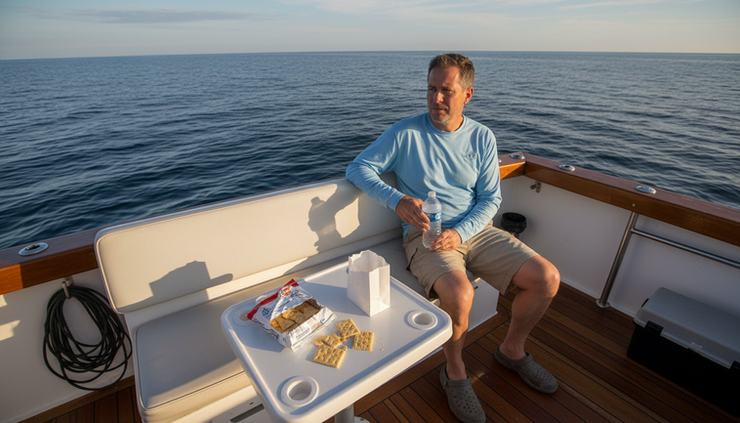
Eat a few plain crackers
Face forward while the boat runs
Avoid strong odors
Stand or sit where you can see the horizon
Keep your head as still as you can
Do not go below deck unless needed
If you need to be sick, ask where to go. The crew has seen it before. They will not judge you, and they would rather help than have you lean over an unsafe area.
Step aboard ready for a great day
A successful charter starts before the first cast. Confirm the departure time, location, parking details, cancellation policy, and what the boat provides. Pack light but smart. Dress for sun, spray, and wind. Listen to the safety briefing. Treat the crew as partners. Take seasickness seriously before the boat leaves the dock.
Most of all, bring a flexible attitude. Fishing includes quiet stretches, surprise bites, missed fish, tangled lines, changing weather, and stories that get better every time you tell them. The crew can guide the trip, but the ocean, lake, bay, or river always gets a vote.
With good preparation, you can step on board feeling calm, capable, and excited. The rods are ready, the water is waiting, and the next bite could come at any moment.


