
How the Justice Department’s Welfare-Reform Clarification Impacts US Virgin Islands Governance
A.J. Pike
USVI - A federal clarification about reporting immigration status can look narrow on paper. In the US Virgin Islands, it can touch nearly every front counter of government.
The Justice Department’s clarification on the Welfare-Reform law centers on a sensitive point: when government employees know that a person is unlawfully present, federal law protects, and in some readings may require, communication with federal immigration authorities. The clarification is tied to the 1996 Personal Responsibility and Work Opportunity Reconciliation Act, often called the Welfare-Reform law, along with related federal rules that limit state and local restrictions on sharing immigration status information.
For the US Virgin Islands, the issue is not just technical compliance. It affects how agencies handle benefit applications, police encounters, school and health referrals, housing support, disaster response, child welfare, and community trust. The territory’s smaller scale makes that impact more direct. A policy memo issued centrally can quickly shape what happens at a clinic desk, a food assistance office, or a police station.
This article is informational only and does not provide legal advice. Agencies and individuals should rely on qualified counsel for specific legal questions.

The clarification changes the risk calculation for territorial agencies
The core issue is the line between local service delivery and federal immigration enforcement.
Under the Welfare-Reform law, many public benefits are limited to certain categories of eligible immigrants. The same legal framework also includes provisions aimed at preventing state and local governments from blocking communication with federal immigration authorities about a person’s immigration status.
The Justice Department’s clarification matters because it signals how the federal government expects public agencies to read those provisions. For US Virgin Islands departments, this creates a practical governance question:
When does an agency merely verify eligibility, and when does it have a duty or protected authority to report known unlawful presence?
That question is harder than it sounds.
A benefits worker may see immigration documents during an application. A health department employee may encounter a person seeking emergency care or disease prevention services. A school official may receive family information but operate under separate education privacy rules. Police may learn immigration status during an arrest, traffic stop, or public safety response. Community service workers may support immigrant families during a hurricane recovery effort.
The clarification does not turn every agency into an immigration agency. It does, though, make it harder for departments to adopt blanket policies that prohibit employees from sharing immigration status information with federal authorities where federal law protects such sharing.
Legal experts who work with public benefits programs tend to separate three issues:
Eligibility
Whether someone qualifies for a specific benefit under federal or territorial law.
Verification
What documents or databases the agency may use to confirm eligibility.
Reporting
Whether and when the agency communicates known immigration status information to federal authorities.
Keeping those categories separate will be essential for the US Virgin Islands. If agencies blur them, they risk denying services that remain legally available, over-reporting people based on weak information, or chilling participation in public health and safety programs.
The best reading for local governance is careful rather than sweeping. The clarification raises the need for clear reporting policies, but it does not erase due process, privacy duties, civil rights obligations, or program-specific eligibility rules.
Welfare programs face the most immediate operational impact
Welfare and public assistance offices sit at the center of this issue because the federal law grew out of public benefits reform.
In the US Virgin Islands, departments that handle cash assistance, nutrition support, housing support, disability-related services, child welfare, Medicaid-related programs, and emergency aid may need to review their forms, intake scripts, eligibility manuals, and staff training.
The practical effect will depend on the program.
Some federal benefits are restricted to citizens and certain qualified noncitizens. Others, such as emergency medical assistance, disaster relief, immunization, testing and treatment for communicable diseases, and some short-term crisis services, may remain available regardless of immigration status. Children may also be affected differently from adults, depending on the program and the funding source.
That means a one-size-fits-all rule would be risky.
A well-run agency review would ask:
Program area | Governance question |
Nutrition and cash assistance | What immigration eligibility rules apply, and what proof is required? |
Medicaid-related services | Which services are restricted, and which emergency or public health services remain available? |
Housing support | Are funds federal, territorial, or mixed, and what eligibility rules attach? |
Child welfare | How do reporting rules interact with the best interests of the child and family court duties? |
Disaster aid | Which services must remain open during emergencies to protect life and public safety? |
Public benefits attorneys often warn that eligibility screening is one of the areas most vulnerable to mistakes. Staff may confuse an expired document with unlawful presence. They may assume a mixed-status household is ineligible when eligible family members can still receive benefits. They may also treat a person’s lack of documents as proof of unlawful presence, which can be legally unsafe.
For local agencies, the clarification should prompt stronger verification standards, not guesswork.
The key administrative challenge is to report only what is actually known, not what is assumed.
This is especially important in a territory where families may include US citizens, lawful permanent residents, people with temporary status, and people without current lawful status. A child may be a US citizen even if a parent is not. A household may qualify for a benefit for one member but not another. Incorrect handling could lead to unlawful denials, federal compliance issues, or harm to children and vulnerable adults.
The phrase Justice Department’s Welfare-Reform Clarification should not be treated as shorthand for automatic denial of aid. Its real impact is procedural. It pushes agencies to define what “known” means, who is authorized to make that determination, and how to document decisions.

Law enforcement will need clear boundaries and consistent training
The impact on law enforcement is different from the impact on welfare offices, but the stakes are just as high.
Police departments may encounter immigration information during arrests, investigations, traffic stops, domestic violence calls, missing person reports, or cooperation with federal agencies. The clarification may increase pressure to share information with federal immigration authorities when officers know a person is unlawfully present.
Yet policing in the US Virgin Islands depends heavily on community cooperation. Victims and witnesses must feel able to report crimes. Parents must feel able to call for help. People must trust that reporting domestic violence, exploitation, or trafficking will not automatically put an entire household at risk.
Law enforcement experts often frame this as a distinction between status information and public safety work. Officers may share immigration status information where allowed by federal law, but agencies still need rules that prevent racial profiling, unlawful stops, and selective enforcement.
A sound territorial policy would cover at least five points:
When officers may ask about immigration status.
When officers may report known status information.
Who approves communication with federal immigration authorities.
How officers document the factual basis for reporting.
What protections apply to victims, witnesses, minors, and people seeking emergency help.
Without clear rules, two risks grow at the same time.
The first risk is under-compliance. Departments may maintain informal practices that federal authorities see as restricting communication. That can expose agencies to legal conflict or funding scrutiny.
The second risk is overreach. Officers may ask about status in routine situations where it has no public safety purpose. That can damage trust, invite civil rights complaints, and make communities less safe.
For the US Virgin Islands, where neighborhoods are close-knit and government agencies are highly visible, the trust cost can be immediate. If residents believe any interaction with territorial police could trigger immigration reporting, some will avoid calling 911, reporting wage theft, cooperating as witnesses, or seeking help after abuse.
That does not serve public safety. It also does not serve federal compliance if reports are based on assumptions instead of reliable knowledge.
The strongest approach is written guidance backed by scenario-based training. Officers and supervisors should work through real situations, such as:
A person arrested for a violent offense who states they have no lawful status.
A domestic violence victim who lacks documents but needs protection.
A traffic stop where a passenger volunteers immigration information.
A juvenile case involving parents with different immigration statuses.
A joint operation with federal authorities.
Training should focus on lawful authority, factual certainty, documentation, and civil rights. That helps officers comply with federal expectations without turning every local encounter into an immigration investigation.
Community services may see trust, access, and coordination pressure
Community services are where the clarification may have the broadest social impact.
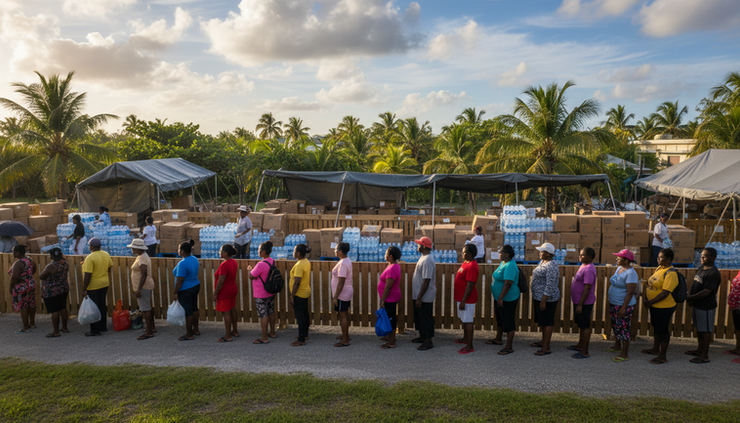
Health clinics, shelters, schools, food distribution sites, senior services, youth programs, behavioral health support, and disaster response networks often serve people before legal status is clear or relevant. Their mission is usually immediate harm reduction: feed a family, protect a child, treat an illness, shelter someone after a storm, or prevent violence.
If clients fear that any request for help will trigger immigration reporting, they may wait until problems become emergencies. That can raise costs for the government and worsen outcomes for the whole territory.
Public health professionals often stress that immigration-related fear can reduce participation in vaccination, prenatal care, infectious disease treatment, and emergency shelter use. Social service experts raise similar concerns about child neglect prevention, homelessness outreach, and domestic violence intervention.
That does not mean agencies can ignore federal law. It means they need careful intake design.
Forms should not ask for immigration information unless the program needs it. Staff should explain why information is being collected. Agencies should separate eligibility screening from general referral services where possible. They should also provide language access so applicants understand their rights and obligations.
Some community programs may need a tiered model:
Status-based benefits
Programs that require immigration eligibility checks should use trained staff, clear documentation, and legally approved verification steps.
Open-access services
Emergency, public health, safety, and referral services should avoid unnecessary status questions and focus on immediate need.
This distinction is crucial during hurricanes and other emergencies. The US Virgin Islands has direct experience with disasters that require rapid coordination among territorial agencies, federal partners, nonprofits, and local communities. In those moments, unclear immigration reporting rules can slow response and discourage people from seeking shelter or medical care.
Community service agencies also need referral protocols. A staff member at a shelter should know when to send a family to a benefits office, when to protect confidentiality, and when a legal services referral is appropriate. A food pantry partner should understand what it can ask, what it should not ask, and where government reporting duties begin.
The governance challenge is coordination across all departments
The deepest impact of the clarification is not limited to one agency. It is a test of local governance.
The US Virgin Islands government will need consistency across departments that may have very different missions. Human services, health, police, education, labor, housing, corrections, licensing, courts, emergency management, and community affairs may all touch information related to immigration status.
If each department writes its own policy in isolation, the territory could end up with conflicting practices. One agency might report aggressively. Another might avoid all status questions. A third might collect information without knowing whether it must protect or share it. That inconsistency creates legal risk and public confusion.
A territory-wide response should include:
A central legal review led by government counsel.
Department-specific policy updates.
A shared definition of “known” unlawful presence.
Training for front-line workers and supervisors.
Privacy rules for records and interagency referrals.
Public-facing explanations in plain language.
Periodic audits to check for errors and unequal treatment.
The definition of “known” deserves special attention. Agencies should not treat rumor, accent, appearance, country of birth, or lack of English fluency as knowledge. Reliable knowledge may require documentation, admission, federal confirmation, or another legally sound basis. The exact standard should come from legal counsel, but the principle is clear: assumptions should not drive government action.
Expert opinion is fairly consistent on one point. The safest administrative path is precision.
Immigration lawyers focus on due process and status complexity. Public benefits experts focus on eligibility accuracy. Police policy specialists focus on public safety and trust. Public administrators focus on consistent procedures and training. Civil rights advocates focus on preventing profiling and unequal access. These views are not mutually exclusive. Together, they point toward disciplined governance.
Potential challenges include staff capacity, limited training budgets, language access needs, outdated forms, data-sharing systems, and public fear. Small agencies may struggle to interpret federal guidance without central support. Nonprofit partners may also need direction if they help deliver government-funded services.
There is also a political challenge. Immigration policy is often polarizing. Territorial leaders will need to communicate that compliance and humane service delivery can coexist. That message must be backed by written rules, not slogans.
For local governance, the clarification may lead to three long-term changes.
First, agencies may become more formal in how they document immigration-related decisions. Verbal practices and informal discretion will carry more risk.
Second, interagency coordination may increase. Departments will need shared legal guidance and data safeguards.
Third, community relationships may become a core compliance issue. If residents withdraw from public health, policing, or child welfare systems, the government will feel the effects across budgets and public safety.

The best path is clear policy without unnecessary harm
The Justice Department’s clarification should push the US Virgin Islands toward better administrative discipline. It should not push agencies into panic, blanket denials, or status checks in every public interaction.
The territory’s response should start with a practical question for every department: What information do we truly need to collect, what does federal law allow or require us to share, and how do we protect lawful access to essential services?
Welfare programs will need the most detailed eligibility procedures. Law enforcement will need strong training and guardrails. Community services will need intake practices that preserve access to emergency, health, and safety support. Central government will need to coordinate the whole system so residents do not face different rules at every door.
A careful policy can meet federal expectations while reducing avoidable harm. That means no guessing, no profiling, no unnecessary data collection, and no confusion about which services remain available.
The overall impact on US Virgin Islands governance will depend less on the clarification itself and more on how the territory implements it. Clear rules can strengthen compliance and public trust. Poorly explained rules can weaken both.


