
Justice Alito Lashes Out on Birthright Citizenship - Major Clash Over 14th Amendment Continues
M.A. Dworkin
Washington, DC - Few constitutional disputes cut as close to identity as birthright citizenship. The question is simple to state and hard to resolve: when a child is born on U.S. soil, does the Constitution make that child a citizen automatically, or are there limits based on the parents’ legal status and allegiance?
That question stood at the center of the Supreme Court’s June 30, 2026, decision in Trump v. Barbara. In a 6-3 ruling, the Court’s majority upheld a broad understanding of birthright citizenship under the Fourteenth Amendment. Justice Samuel Alito dissented, sharply criticizing the majority opinion as a serious error that, in his view, weakens the meaning of U.S. citizenship.
Alito’s dissent was not only about immigration policy. It was about constitutional text, national sovereignty, and the legal bond between a person and the United States. His argument turned on one key phrase in the Fourteenth Amendment: “subject to the jurisdiction thereof.”
This post explains the Alito dissent on birthright citizenship, the majority’s competing view, and why the decision has become a major flashpoint in the long-running debate over the Fourteenth Amendment.

The dispute was about the meaning of constitutional citizenship
The Fourteenth Amendment was adopted after the Civil War. Its Citizenship Clause states:
“All persons born or naturalized in the United States, and subject to the jurisdiction thereof, are citizens of the United States and of the State wherein they reside.”
For generations, that sentence has been understood by many courts, scholars, and civil rights groups to establish a broad rule: a child born in the United States is a citizen at birth, with narrow exceptions.
The best-known exception is for children of foreign diplomats, who are not fully subject to U.S. law in the same way as ordinary residents. Other historical exceptions have been discussed in legal debates, including enemy occupation and certain tribal sovereignty issues before later changes in federal law.
In Trump v. Barbara, the Court faced the question of whether the Fourteenth Amendment’s citizenship guarantee reaches children born in the United States to parents who are not lawful permanent residents or citizens. The majority answered yes, treating birth on U.S. soil and ordinary subjection to U.S. law as enough to satisfy the amendment’s requirement.
Justice Alito rejected that reading. In his dissent, he argued that the majority expanded the clause beyond its original meaning and turned a constitutional safeguard into a rule that, in his view, invites abuse.
His dissent framed the majority’s ruling as a significant mistake because it treats physical birth within U.S. borders as the central question while giving too little weight to political allegiance.
Alito read the Fourteenth Amendment through allegiance
Alito’s dissent focused on the words “subject to the jurisdiction thereof.” In ordinary speech, being subject to a country’s jurisdiction can mean being required to obey its laws. A tourist, temporary worker, or undocumented immigrant can be arrested, sued, taxed in some circumstances, or prosecuted while present in the United States.
For Alito, that was not the full constitutional meaning. He argued that the phrase must be read in a deeper political sense. Under his view, the Citizenship Clause grants birthright citizenship only to children who owe sole allegiance to the United States at birth.
That distinction matters.
If “jurisdiction” means ordinary legal control, then most children born on U.S. soil qualify. If it means complete political allegiance, then children of many noncitizen parents may fall outside the clause, especially if their parents remain citizens or subjects of another country.
Alito’s analysis treated citizenship as more than a legal status. He described it as membership in the American political community. From that perspective, the Constitution does not merely ask where a child was born. It asks whether the child is born into a relationship of full and undivided allegiance to the United States.
His dissent likely drew on an older understanding of citizenship tied to sovereignty, consent, and allegiance. Supporters of this view often argue that the Fourteenth Amendment was meant to secure citizenship for formerly enslaved people and their descendants, not to create an unlimited citizenship rule for every child born to foreign nationals temporarily or unlawfully present in the country.
Critics of Alito’s approach disagree. They argue that the amendment’s framers chose broad language on purpose. In their view, the phrase “all persons born” was meant to avoid caste systems and prevent political branches from denying citizenship to disfavored groups.
That clash between text and theory sits at the heart of the case.
The majority treated birthright citizenship as a constitutional baseline
The 6-3 majority took a different path. It read the Citizenship Clause as a broad guarantee designed to create a clear national rule. Under that view, citizenship cannot turn on shifting political judgments about a parent’s immigration status, temporary presence, or foreign ties.
A broad birthright rule has several practical effects:
It creates a simple rule for hospitals, state agencies, schools, and passport authorities.
It prevents children from being left in uncertain or disputed status.
It limits the ability of Congress or the president to redefine citizenship by policy preference.
It reflects a long-standing understanding that U.S. citizenship begins at birth for most people born on U.S. soil.
The majority’s position, as described in the dispute, treats the Fourteenth Amendment as a restraint on government power. If the Constitution declares a child a citizen at birth, the political branches cannot narrow that guarantee through statute or executive action.
Alito saw that as an overreading. To him, the majority did not protect citizenship. It diluted it by separating citizenship from allegiance.
That is why his dissent was so forceful. He believed the Court’s decision did not merely settle an immigration dispute. It changed the constitutional meaning of national membership.
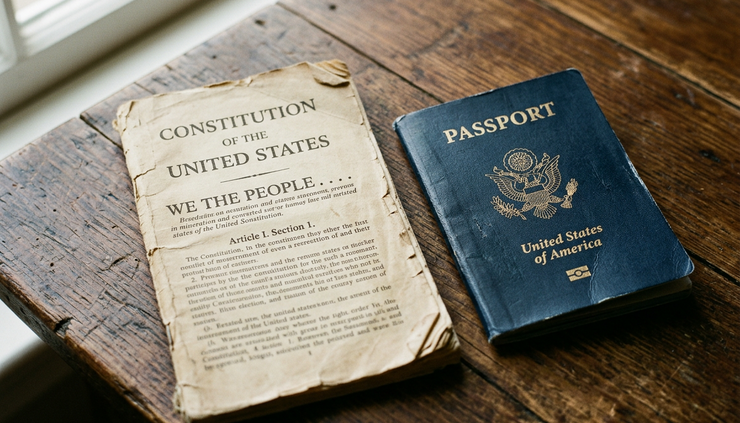
National security and birth tourism shaped Alito’s concerns
Alito also raised concerns beyond constitutional interpretation. His dissent warned that a broad rule of birthright citizenship could create national security risks and encourage practices commonly described as “birth tourism.”
Birth tourism refers to travel to the United States for the purpose of giving birth so that the child receives U.S. citizenship. The term covers a range of conduct. Some cases involve lawful travel and private medical care. Others have involved fraud, visa misuse, or organized schemes designed to hide the real purpose of travel.
Alito’s concern was that automatic citizenship could create incentives for foreign nationals to seek U.S. citizenship for their children without any lasting tie to the United States. In his view, that makes citizenship less a marker of national belonging and more a legal benefit that can be obtained through strategic timing and location.
His national security concern followed a similar logic. If citizenship is granted automatically based on birth alone, he argued, the United States may have less control over who becomes part of the national political community. That could matter in cases involving foreign governments, hostile actors, or parents whose allegiance remains tied to another country.
Supporters of the majority view respond that these concerns are better handled through immigration enforcement, visa screening, fraud prosecution, and national security law. They argue that denying citizenship to a class of U.S.-born children is a severe constitutional remedy for problems that Congress can address in narrower ways.
They also warn that changing the rule could create a large group of children born in the United States but denied clear citizenship anywhere. That risk, they say, cuts against the Fourteenth Amendment’s purpose of preventing inherited exclusion.
Liberal organizations read the Fourteenth Amendment differently
Liberal organizations, civil rights groups, and many immigrant-rights advocates generally take a broader view of the Fourteenth Amendment. Their argument starts with the text: “All persons born or naturalized in the United States, and subject to the jurisdiction thereof.”
To them, “subject to the jurisdiction” means subject to U.S. law. A child born in Texas, California, New York, or Florida is born under U.S. legal authority. The child’s parents may be citizens, lawful permanent residents, visa holders, asylum seekers, or undocumented immigrants. The child is still born within U.S. territory and subject to U.S. law.
Groups such as the ACLU and other constitutional rights organizations have long argued that birthright citizenship is a core protection against second-class status. Their concern is historical as well as legal. Before the Fourteenth Amendment, citizenship could be denied based on race, ancestry, and political exclusion. A broad constitutional rule was meant to stop that.
From that perspective, Alito’s allegiance-based theory raises its own dangers. If citizenship depends on whether a child’s parents have the right kind of allegiance, the rule becomes harder to administer and easier to politicize.
Civil rights advocates also warn that restricting birthright citizenship could place immigration status at the center of a child’s legal identity. That may lead to disputes over records, parentage, nationality laws of other countries, and the child’s future rights.
Their broader position can be summed up this way: the Fourteenth Amendment protects children from being punished for their parents’ status.
Alito’s dissent turns that point around. He would likely say the Constitution does not “punish” anyone by declining to grant citizenship where full allegiance does not exist. In his view, citizenship is not a penalty or benefit program. It is a constitutional status tied to a sovereign relationship.
The clash is not only over compassion or enforcement. It is over who gets to define membership in the United States.
The stakes reach beyond immigration policy
The birthright citizenship debate often gets discussed as an immigration issue, but Trump v. Barbara shows why it is also a constitutional structure issue.
If the majority is right, then birthright citizenship is a firm constitutional rule. Congress and the president may regulate immigration, visas, border security, and naturalization. They may not deny citizenship to most people born on U.S. soil.
If Alito is right, then the political branches may have more room to define which U.S.-born children qualify as citizens. That would shift power away from a broad constitutional guarantee and toward a narrower test of allegiance.
The practical questions would be difficult:
How would the government measure a newborn child’s allegiance?
Would the parents’ immigration status decide the child’s citizenship?
Would temporary lawful visitors be treated differently from undocumented parents?
How would the rule apply when one parent is a U.S. citizen and the other is not?
What records would hospitals and state agencies need to collect?
Supporters of Alito’s view might answer that those questions are hard but necessary. They would argue that citizenship has been stretched too far and that the Court must return to the amendment’s original limits.
Supporters of the majority would answer that these problems prove why the broad rule matters. A bright-line rule reduces the risk that citizenship becomes dependent on bureaucracy or political pressure.
Both sides claim to defend the value of citizenship. They disagree on what protects it.
The dissent’s lasting importance
Alito’s dissent in Trump v. Barbara matters even though it did not control the outcome. Supreme Court dissents can shape future debates, especially when they offer a clear alternative theory. They can influence lower courts, lawmakers, legal scholars, and future litigants.
His dissent gives opponents of broad birthright citizenship a constitutional roadmap. It centers the phrase “subject to the jurisdiction thereof” and ties it to allegiance rather than mere physical presence. It also connects birthright citizenship to national security and sovereignty, two themes likely to remain prominent in immigration debates.
At the same time, the 6-3 majority gives defenders of the traditional broad rule a strong precedent. It reinforces the idea that the Citizenship Clause sets a national standard that cannot be narrowed by ordinary political action.
The result is a legal debate that is both settled for now and far from quiet.
This article is for general informational purposes only and is not legal advice.
The takeaway
The June 30, 2026, decision in Trump v. Barbara marked a major clash over the Fourteenth Amendment. The majority treated birthright citizenship as a broad constitutional guarantee for children born on U.S. soil. Justice Samuel Alito’s dissent argued that this reading undermines U.S. citizenship by ignoring allegiance and weakening the sovereign meaning of national membership.
The disagreement is deep because both sides appeal to core American principles. One side stresses equality at birth, clear constitutional rules, and protection from inherited exclusion. The other stresses sovereignty, allegiance, national security, and the seriousness of citizenship itself.
That is why the case will likely remain a reference point in debates over immigration, constitutional law, and what it means to belong to the United States.


