
Puerto Rico: From Spanish Colony to US Territory
Updated: Apr 6
John F. McKeon
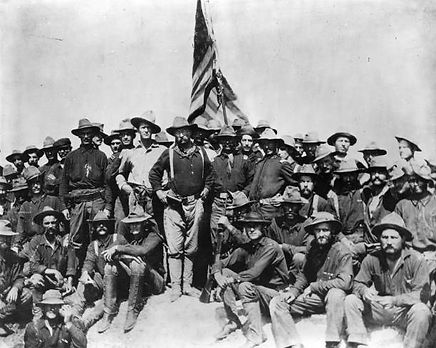
It is impossible to analyze the modern status of Puerto Rico as a US territory without first establishing the pivotal context of the Spanish-American War of 1898, as this conflict represents the definitive rupture in the island’s history that shifted its sovereignty from Spain to the United States. The war, culminating in the Treaty of Paris in December 1898, directly forced Spain to cede Puerto Rico, Guam, and the Philippines to the US, transforming Puerto Rico from a Spanish colony into an unincorporated US territory.
Without understanding the geopolitical motivations of the 1898 conflict—specifically the US desire for Caribbean naval refueling stations and expanding imperial influence—it is impossible to understand why Puerto Rico became a territory rather than an independent nation. The Spanish-American War is not merely a background event but the direct legal and political cause of Puerto Rico’s current status. The War was not caused by a single person, but rather by a combination of nationalist movements, media influence, and a specific naval disaster.
Puerto Rico and Cuba were legally part of Spain in 1898 until the signing of theTreaty of Paris. Throughout the nineteenth century, they remained the last two Spanish colonies in the New World. Spain held full legal sovereignty over both islands until they were relinquished as a result of the War. In 1897, the Spanish Crown granted both islands an Autonomic Charter, which allowed them to establish their own parliaments and legislate on internal matters like education and public works while remaining under the Spanish flag. Inhabitants were legally considered Spanish nationals. Under the Spanish Civil Code (extended to the islands in 1890), they were viewed as full citizens of Spanish territories. After the 1898 transition, Spain relinquished all claim of sovereignty. In 1902, Cuba was placed under temporary US military occupation before becoming an independent republic, though still remaining a US protectorate. A protectorate is an autonomous territory or state that is protected diplomatically or militarily by a stronger sovereign entity. While it retains its own local government and formal sovereignty, it typically relinquishes control over its external affairs—such as foreign policy and defense— in exchange for security.
Spain ceded the island of Puerto Rico to the United States and it transitioned from a Spanish province to an unincorporated US territory. The Treaty was signed by representatives of Spain and the United States in Paris on Dec. 10, 1898 and legally terminated Spain's 400-year presence in these territories, marking the sunset of the Spanish Empire in the Americas, and the sunrise of the American Empire.
How it Began:
A previous revolt had occurred in Cuba, led by figures like José Martí, against Spanish rule in 1895. Their struggle for independence was the fundamental spark that drew American attention. "Yellow Journalist” Newspaper tycoons William Randolph Hearst and Joseph Pulitzer used their platforms, the New York Journal and New York World, to publish sensationalized and often exaggerated accounts of Spanish "atrocities". This whipped up American public opinion in favor of war. Prominent "hawks" like Theodore Roosevelt (then Assistant Secretary of the Navy) aggressively pushed for war to expand American power and territory.
General Valeriano Weyler y Nicolau was a Spanish general and Governor-General of Cuba from 1896–1897 and became notorious for his brutal policy during the Cuban War of Independence. By forcing hundreds of thousands of civilians into concentration camps to break the rebellion, his actions caused between 170,000 and 400,000 deaths from disease and hunger. These actions provided the ‘moral justification’ for US intervention.

The sinking of the USS Maine in Havana Harbor on February 15, 1898, was the point of no return. Although modern investigations suggest the explosion was likely an internal accident (such as a coal bunker fire), the American public and press immediately blamed Spain. The rallying cry "Remember the Maine, to Hell with Spain!" made war politically unavoidable for President William McKinley. McKinley initially resisted war and sought a diplomatic solution but ultimately gave in to public and congressional pressure, requesting Congress for authority to intervene. On April 25, 1898, the US Congress formally declared a state of war. US troops landed in the southern town of Guánica in Puerto Rico on July 25, 1898, and rapidly occupied the island, facing little resistance.
The invasion was part of a larger strategy to take control of Spanish possessions in the Caribbean. The local response was mixed. While many were dissatisfied with Spanish colonial rule, there was no immediate welcome, some residents opposed the US presence. A military government was installed, and the US quickly began changing the island's infrastructure, currency, and administration.
American Expansion after The War:
The Spanish-American War was a pivotal turning point that transformed the United States from a relatively isolated nation into a global imperial power. Although the conflict lasted only about four months, its effects reshaped American foreign policy, military structure, and national identity. Puerto Rico was transformed into a strategic US territory, navigating a turbulent transition under military and early civilian rule. The period was marked by legal ambiguity, economic transformation into a sugar monoculture, and significant Americanization efforts, concluding with the 1917 Jones Act granting US citizenship. The 1898 Treaty formally ended the war and forced Spain to cede several overseas territories to the US. These became US territories, providing strategic naval bases in the Caribbean and the Pacific.
The US and Spain also negotiated the transfer of the Philippines (without Filipino representation), although Filipino revolutionaries had already declared independence and controlled most of the archipelago, leading to the Philippine-American War. The US purchased the Philippines for $20 million dollars marking its first major colonial venture in Asia. The $20 million payment was largely seen as a move to give legal legitimacy to the American annexation of the islands. The US held the Philippines as a territory until granting independence on July 4, 1946.
While granted technical independence, Cuba became a US protectorate. The Platt Amendment, a 1901 legislative measure defined the terms for the withdrawal of US troops from Cuba. It restricted Cuban foreign policy and debt, required land for naval bases and was even incorporated into the Cuban constitution. It gave the US the right to intervene in Cuban affairs and established a permanent naval base at Guantanamo Bay.
Domestically, the US was neither unified in their support of the treaty nor the idea of the United States building an empire. Many prominent Americans, including Jane Addams, former President Grover Cleveland, Andrew Carnegie, Mark Twain, and Samuel Gompers felt strongly that the country should not be pursuing an empire, and, formed the Anti-Imperialist League to oppose expansionism. Though not a direct result of the combat, the war provided the political momentum for the US to annex Hawaii in 1898 to serve as a mid-Pacific refueling station.
The US need to move warships quickly between the Atlantic and Pacific during the war made the construction of the Panama Canal a national priority. The war had exposed severe logistical failures, as more American soldiers died from disease (like yellow fever)and poor food than from combat. This led to major reforms in the US Army and a massive expansion of the US Navy which under Theodore Roosevelt rose to become one of the world's largest. Roosevelt’s fame as a "war hero" with the Rough Riders catapulted him into the national spotlight, leading to his vice presidency and eventually the presidency. However, the acquisition of colonies sparked a "rancorous debate" between imperialists, who saw expansion as a matter of prestige and progress, and anti-imperialists who argued that ruling other people without their consent violated American democratic principles. The decisive US victory in The Spanish American War signaled to European powers that the United States was now a formidable military force. The war effectively ended the US policy of staying out of international affairs, leading to increased involvement in Latin America and as far as China.
Key developments during this period
The Transition of Power (1898–1900): General John R. Brooke took control as military governor of Puerto Rico in October 1898, establishing a government that ruled with little regard for local culture.
The Foraker Act (1900): This act ended military rule and established a civilian government, defining Puerto Rico as an unincorporated territory with limited self governance.
"Foreign in a Domestic Sense": Supreme Court rulings (Insular Cases) in 1901 determined that Puerto Rico belonged to, but was not part of, the United States, meaning the Constitution did not fully apply.
The Jones Act (1917): Driven by the need for strategic control during World War I, this act granted US citizenship to Puerto Ricans, just before the US entered the war
From 1898 to 1917, Puerto Rico underwent a profound transformation as it shifted from four centuries of Spanish rule to becoming a territory of the United States. Early governance transitioned from a brief military administration to a US-controlled civilian government established by the Foraker Act of 1900. During these two decades, the island experienced rapid modernization in infrastructure and education, alongside an economic shift toward a sugar monoculture. The era culminated in the Jones-Shafroth Act of 1917, which replaced the previous governing structure and granted U.S. citizenship to Puerto Ricans, just as the United States prepared to enter World War I.
Puerto Rican acceptance of US ownership and citizenship in 1917 was deeply ambivalent and largely involuntary. While many in the local political leadership sought closer ties to the US, the imposition of citizenship was met with significant political opposition, particularly regarding its timing and the lack of full self-determination. The Puerto Rican House of Delegates voted unanimously against the act, arguing that US citizenship was imposed specifically to facilitate the conscription of Puerto Rican men into the army for World War I. It was viewed by critics as a way to "press" citizenship upon the islanders rather than a voluntary adoption. Resident Commissioner Luis Muñoz Rivera, sought to liberalize the law while others viewed it as an extension of colonial rule. Key officials (like the governor) remained US presidential appointees. Despite the opposition, only 288 Puerto Ricans legally declined to accept US citizenship within the one-year statutory period allowed by the act, as declining meant losing the right to hold public office on the island. There was widespread belief that the US imposed citizenship as a tool to draft 20,000 Puerto Ricans for World War I.
After the Treaty of Paris, Puerto Ricans were technically not citizens of the US, which left them largely stateless and restricted their travel. They were thought of as ‘foreign in a domestic sense’. The US Supreme Court later clarified ( Balzac v. Porto Rico, 1922) that citizens of an unincorporated territory did not have full constitutional rights, such as a jury trial, confirming the "ownership" status was not equal to statehood. Although controversial at the time, the act established a permanent, unique relationship between the US and Puerto Rico that continues to this day.
Key Historical Aspects & US Acquisition:
Spanish Rule (1493–1898) colonized by Juan Ponce de León in 1508, Puerto Rico was a major Spanish outpost and agricultural center.
Treaty of Paris (1898): Spain officially ceded Puerto Rico (along with Guam and the Philippines) to the United States on December 10, 1898, ending 400 years of Spanish rule.
The Insular Cases: In 1901, the Supreme Court deemed Puerto Rico an "unincorporated territory," allowing for unequal application of the US Constitution. The Insular Cases were a series of US Supreme Court decisions, beginning in 1901, that established the legal framework for governing territories acquired after the Spanish-American War. These cases remain valid law, although they are under intense modern legal scrutiny. The Court established a distinction between "incorporated" territories (destined for statehood) and "unincorporated" territories(appurtenant to, but not part of, the United States). Rulings in these cases have determined the Constitution does not automatically apply in full to unincorporated territories, granting Congress broad discretion to decide which rights are extended to their residents. Widely criticized for being rooted in the racist and imperialist attitudes of the era, the Insular Cases allowed for the creation of a system where residents of these territories, despite being US citizens, do not enjoy the same constitutional protections or representation as those in the 50 states.
Jones Act (1917): Granted US citizenship to Puerto Ricans, just in time for them to be drafted into World War I, yet they still could not vote for president, have no voting representation in Congress, and are ineligible for certain federal benefits like Supplemental Security Income (SSI). Puerto Rico operates under specific economic constraints and lacks the full financial benefits of statehood. Recent referendums show growing support for statehood, indicating that the current territorial relationship as unsustainable. Ultimately, Puerto Rico's status as a "territory" remains an unresolved issue of American democracy.
Commonwealth Status (1952): Under Law 600, Puerto Rico adopted its own constitution, becoming a "Commonwealth" (Estado Libre Asociado), a status that remains a subject of political debate today. Puerto Rico presently occupies a complex, "colonial" status with the US. This status limits full constitutional rights and federal benefits while sparking ongoing debates over statehood versus independence.
Spain’s reaction to losing Puerto Rico, along with Cuba, Guam, and the Philippines, was one of deep national trauma, humiliation, and profound self-reflection, often described as a "betrayal" by the United States. The loss effectively ended Spain's 400-year history as a global colonial empire and initiated a period of intense social and political reevaluation. The defeat, termed by many in Spain as the Desastre (Disaster), shocked the Spanish national psyche. It spurred a philosophical and artistic movement known as the ‘Generation of ’98,' where intellectuals and writers analyzed the reasons for Spain’s decline, questioning the nation's identity, institutions, and future.
Spain viewed the US action as aggressive bullying, noting that the US had only recently been supported by Spain during its own War of Independence. The loss of Puerto Rico was particularly painful because it was considered an integral, loyal province rather than just a colony. There was also Spanish anger toward the Puerto Rican population, accusing them of being servile and ungrateful for welcoming the Americans so quickly after centuries of Spanish rule.
The surrender was perceived as unavoidable due to the overwhelming military superiority of the US. According to accounts, the last Spanish Governor of Puerto Rico, upon leaving, broke the face of a clock with his sword, symbolically marking the last minute of the Spanish Empire in the New World. The defeat sparked criticism of the Spanish government and military, who were seen as inept for allowing the military to decline and failing to defend the territory. Unlike Cuba, which had long sought independence, Puerto Rico was generally seen as loyal to Spain, especially after receiving the Autonomic Charter in 1897. The rapid shift of loyalty toward the United States by the locals was a point of frustration for the Spanish.
In post war Spain the era of overseas adventures had ended. Henceforth her future was now at home. Her eyes, which for centuries had wandered to the ends of the world, were at last turned on her own home state. Two decades of significant progress in agriculture, development of mineral resources, industry, and transportation ensued.
There also arose a brilliant group of thinkers and writers, the “Generation of 1898,” who gave Spain an intellectual and literary prominence in Europe that it had not enjoyed for centuries. Ironically, in 1936 The Spanish Civil War produced a brutal, ideological conflict that is often attributed to the heavy involvement of foreign powers! Since the end of the 15th century, European powers had pursued a policy of colonial acquisitions But only in the late 19th century had the mature and developed capitalist powers virtually colonized the entire planet.
The projection of US power outside of the North American mainland signified a rush not to be left behind in this global division of markets. Imperialism was transforming from a policy into a global system. To compete, no capitalist power could afford to stand on the sidelines. The island was seized for strategic military positioning and economic resources, later designated as an unincorporated territory, leaving its people US citizens without full rights.
The Spanish-American War fundamentally reshaped the geopolitical landscape for all three participants, signaling the end of one empire and the rise of another. For Spain, the defeat was a profound shock that resulted in the loss of its remaining significant overseas colonies, effectively dissolving its centuries-old global empire. Conversely, the United States emerged as a formidable world power, acquiring its first overseas empire beginning with the annexation of Puerto Rico. This expansionist shift sparked intense domestic debate over the ethics of American imperialism.
For Puerto Rico, the war ended over four centuries of Spanish rule and began a long standing and often ambiguous relationship with the US. The island became an "unincorporated territory," a status that eventually granted Puerto Ricans US citizenship in 1917 but left them without full self-rule or a vote in the US Congress, issues that continue to define the island's political discourse today.
The US invasion of Puerto Rico on July 25, 1898, is the reason why Puerto Ricans presently have no say in any fundamental matters pertaining to the economic and political life of their homeland. The US government’s colonial policy denying the Puerto Rican people some right of self-determination and independence accounts for the continued economic, social, cultural and political problems the Island has experienced to this day.
Historian John F. McKeon lives on St. Croix and Southampton NY. He holds degrees from Trinity College Dublin,(MPhil with Distinction).St. Joseph's University in NYC (BA Summa Cum Laude Degree) East Asian History with a Philosophy Capstone Minor in Labor, Class and Ethics. John earned a certificate from the Oxford University Epigeum Research Integrity Center. He is a member of the Society of Virgin Island Historians and writes for The St. Croix Times.


