
Puerto Rico Statehood: The 51st State Quest - Joint Resolution is Signed
M.A. Dworkin
San Juan - Puerto Rico’s statehood debate has never been just a yes-or-no question. It is about power, identity, public services, federal responsibility, and the future of more than 3 million U.S. citizens who live on the island without voting representation in Congress.
That is why Governor Jennifer González Colón’s signing of Joint Resolution 66-2026 on October 16, 2026 matters. The resolution does not, by itself, make Puerto Rico a state. Only Congress can admit a new state into the Union. But the signing adds another formal marker to Puerto Rico’s long political journey and gives statehood advocates a fresh point of pressure in Washington.
The moment also lands at a time when Puerto Rico faces urgent problems that no status option can ignore: an unstable energy system, uneven water service, public corruption, and the influence of gangs in some communities. Statehood supporters argue that equal representation and full federal participation would help address these issues. Critics argue that statehood could create new costs, cultural tensions, and political tradeoffs.
The question is not only whether Puerto Rico could become the 51st state. It is what kind of Puerto Rico residents want to build, and who gets to decide.
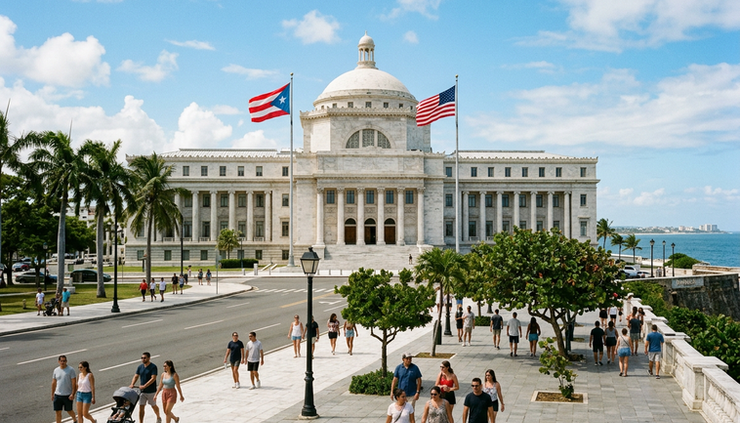
Joint Resolution 66-2026 gives the statehood push a new political marker
Governor González Colón’s signature on Joint Resolution 66-2026 is significant because it ties the current government of Puerto Rico to a clear pro-statehood message at a specific moment in time. For statehood supporters, the signing is more than symbolism. It is a way to say that Puerto Rico’s elected leadership is keeping the issue alive and asking Congress to respond.
Puerto Rico’s status has long sat in a difficult space. The island is a U.S. territory. People born in Puerto Rico are U.S. citizens. Puerto Ricans have served in the U.S. military, built lives across the states, and shaped American culture in music, sports, politics, literature, and business. Yet residents of Puerto Rico cannot vote for president in the general election, and the island’s representative in the U.S. House, the resident commissioner, cannot cast a final vote on House legislation.
That imbalance sits at the center of the statehood case.
Statehood advocates frame the issue as one of democratic equality. If Puerto Ricans are U.S. citizens, they argue, then they should have the same political rights as citizens living in Florida, Texas, New York, or any other state. That means voting members of Congress, presidential electors, equal treatment in federal programs, and a permanent status that does not leave the island subject to congressional control as a territory.
Joint Resolution 66-2026 cannot force Congress to act. Admission of a state requires federal legislation. The U.S. Constitution gives Congress the power to admit new states, and any path forward would require national political will. Still, resolutions matter because they shape the record. They give advocates language to organize around. They let supporters point to an official statement and say, “Puerto Rico has asked again. What is Washington’s answer?”
That is the heart of the Puerto Rico Statehood 51st State Quest After Joint Resolution 66 2026. The signing does not end the debate. It sharpens it.
The PR51st movement works through advocacy, volunteers, and local pressure
The PR51st movement is not one single person, office, or campaign. It is best understood as a network of advocates who believe Puerto Rico should become the 51st state and who work to make that demand visible.
Some are elected officials. Some are lawyers, teachers, veterans, students, retirees, faith leaders, neighborhood organizers, and members of the Puerto Rican diaspora living in the states. Others are volunteers who show up at rallies, town halls, civic education events, and voter registration drives. Their methods vary, but their message tends to return to the same themes:
Equal citizenship Puerto Ricans should not have fewer political rights because they live on the island.
Permanent status Territorial status leaves too many decisions in the hands of Congress without full local power.
Federal fairness Puerto Rico should receive equal treatment in major federal programs and disaster response.
Representation The island should have voting senators, voting House members, and a say in presidential elections.
Grassroots leaders play a special role because they connect big constitutional questions to daily life. In a neighborhood meeting, statehood is not only about Article IV of the Constitution. It is about whether federal disaster aid arrives quickly, whether health care funding is stable, whether young people stay or leave, and whether local communities feel ignored by both San Juan and Washington.
Volunteers often do the steady work that does not make national headlines. They explain ballot language. They call relatives in the states. They share personal stories with members of Congress. They help organize events where residents can ask what statehood would mean for taxes, language, schools, and public services.
The diaspora also matters. Puerto Ricans living in states can vote for president and members of Congress. That gives them a route to pressure federal lawmakers in a way island residents cannot. For statehood supporters, this creates a practical strategy: build support on the island, then connect that support to voters in states where Congress can be influenced.
This is why the movement’s work is often both local and national. A rally in San Juan and a congressional office visit in Washington are part of the same push.

Statehood remains controversial because status is also identity
The statehood debate cannot be reduced to a simple fight between progress and resistance. Puerto Rico’s political status touches history, language, culture, economics, and personal identity. People can agree that territorial status is flawed and still disagree sharply about what should replace it.
Many residents favor statehood, but others support independence. For independence supporters, the central issue is national self-determination. They see Puerto Rico as a Caribbean nation with its own culture, history, and political identity. From that view, statehood would not solve colonialism. It would make assimilation permanent.
Some support free association, a status that would create a sovereign Puerto Rico with negotiated ties to the United States. This option appeals to people who want more national control while preserving certain relationships with the U.S., though any compact would need clear terms and mutual agreement.
A smaller number of residents have voiced interest in rejoining Spain. This idea draws attention because it is unusual, and it reflects frustration with both U.S. territorial status and local governance. For some, it is tied to history, language, and a sense of cultural belonging to the Spanish-speaking world. For others, it is more a protest against the current arrangement than a fully developed political program.
Statehood critics raise several concerns.
One concern is cultural identity. Puerto Rico’s language, traditions, legal history, and Caribbean character are central to daily life. Critics worry that statehood could increase pressure to conform to mainland political and cultural norms. Supporters answer that states already differ widely by language, culture, and history, and that statehood would not erase Puerto Rican identity.
Another concern is taxation and cost of living. Statehood could change how federal taxes apply to residents and businesses. Supporters argue that equal federal benefits and economic stability would offset costs. Critics worry that new tax burdens could fall hard on working families, small businesses, and retirees if the transition is not handled carefully.
There are also concerns about federal control. Some residents distrust Washington because of the island’s long territorial history, federal oversight during the fiscal crisis, and uneven disaster recovery experiences. They ask whether statehood would truly bring equality or whether Puerto Rico would still be treated as politically marginal.
Statehood advocates respond that the current territory status already gives Congress broad power without equal representation. In their view, statehood would not increase federal control. It would give Puerto Rico voting power inside the system that already affects it.
Both sides raise serious points. The debate is intense because the stakes are real.
Daily crises shape how residents judge the status question
Political status can feel abstract until the lights go out, the water stops running, or a public corruption scandal breaks trust again. Puerto Rico’s statehood debate now unfolds against a difficult backdrop of infrastructure and public safety challenges.
Energy problems test public patience
Puerto Rico’s electric grid has struggled for years. Hurricanes, aging infrastructure, debt, management failures, and delays in modernization have all contributed to outages and high frustration. For many families and businesses, unreliable power is not a policy detail. It affects medical equipment, refrigeration, schoolwork, remote jobs, and basic comfort.
Statehood supporters often argue that equal political power would help Puerto Rico demand better federal support for grid rebuilding and energy resilience. They point to the need for reliable funding, stronger oversight, and long-term planning.
Critics answer that status alone will not fix mismanagement. A state can still have bad infrastructure. Without transparent contracts, skilled administration, and local accountability, they argue, statehood could bring more money into broken systems rather than better results.
Both claims can be true. Political power matters, but governance matters too.
Water distribution problems reveal uneven development
Water service also shapes public trust. Some communities face interruptions, aging pipes, pressure problems, or worries about service quality. These issues hit rural areas and vulnerable households especially hard.
When residents see repeated failures in basic services, they often ask a reasonable question: if the government cannot deliver water reliably, why should people trust it to manage a major political transition?
Statehood advocates may answer that equal federal treatment could improve funding for infrastructure. Opponents may answer that Puerto Rico first needs stronger local institutions, better maintenance, and less political patronage.
The water issue shows how status and governance overlap. Federal resources can help, but local execution decides whether pipes are repaired and communities are served.
Corruption weakens every status option
Corruption is one of the most damaging issues in Puerto Rican public life because it cuts across all political camps. It undermines trust in statehood advocates, commonwealth defenders, independence supporters, and public agencies alike.
When public money is misused, residents pay twice. They lose the funds that should have gone to services, and they lose faith that future funds will be handled well.
For the PR51st movement, corruption presents a challenge. Advocates can argue for equal rights, but they also need to show that statehood will come with cleaner government, not just a new constitutional label. For statehood critics, corruption strengthens the argument that political status is not the only problem. A new status without ethical reform would still leave residents exposed to the same old abuses.
Any serious path forward should include stronger procurement rules, independent oversight, public access to records, and real consequences for misconduct.
Gang influence reflects deeper social stress
Gang influence in some communities is tied to poverty, illegal markets, weak opportunity, and distrust of institutions. It affects public safety, schools, families, and local economies. It also feeds a cycle where residents feel abandoned, and criminal groups exploit that absence.
Statehood supporters sometimes argue that equal federal support for law enforcement, courts, education, housing, and economic development would help reduce the conditions that allow gangs to grow. Critics warn that policing alone cannot solve the problem and that more federal involvement can create concerns about civil rights and community trust.
A serious response must include both safety and opportunity. That means better schools, job paths, addiction treatment, community programs, witness protection, and accountable policing. Status may shape resources, but daily security depends on whether institutions earn trust block by block.

Congress remains the gatekeeper, but Puerto Ricans remain the center
The legal path to statehood runs through Congress. Puerto Rico can hold votes, pass resolutions, and send delegations, but admission as a state requires federal action. That means the island’s future depends partly on national politics, party calculations, and the willingness of lawmakers to treat Puerto Rico’s status as a democratic question rather than a bargaining chip.
Still, Congress is not the only actor that matters. Puerto Ricans themselves remain at the center of the debate. Any lasting status change needs legitimacy. That requires clear choices, honest information, and respect for people who disagree.
A fair debate should avoid two common mistakes.
The first mistake is treating statehood as an automatic cure. Statehood would not instantly repair the grid, end corruption, fix water systems, or stop gang violence. New representation and equal federal treatment could help, but institutions would still need reform.
The second mistake is treating opposition to statehood as backward or unserious. Independence supporters, free association advocates, and even those who look toward Spain are responding to real historical and political concerns. They may disagree on the solution, but many share the same frustration with territorial status and local failures.
The signing of Joint Resolution 66-2026 gives statehood supporters a stronger organizing point. It also gives critics a reason to sharpen their questions. What would the transition look like? How would taxes change? How would Spanish and English function in public life? What protections would exist for culture, land, workers, and local decision-making? How would federal funds be monitored? How would Puerto Rico avoid carrying old governance problems into a new political status?
Those questions deserve direct answers.
The 51st state question is really a democracy question
Puerto Rico’s statehood debate is often framed through flags and slogans, but the deeper issue is democratic power. Who makes the rules? Who gets a vote? Who carries the burdens of citizenship, and who receives its full rights?
Governor Jennifer González Colón’s signing of Joint Resolution 66-2026 on October 16, 2026 adds momentum to the statehood cause, especially for PR51st advocates who have spent years building the case for equality. It offers a new document, a new date, and a new rallying point.
Yet the island’s future cannot be decided by momentum alone. Puerto Rico must confront the practical concerns that shape daily life, from electricity and water to corruption and public safety. Statehood supporters need to explain how admission would improve those conditions. Critics need to explain how their preferred path would protect rights, fund services, and produce accountable government.
The next chapter will not be written only in Washington. It will be written in Puerto Rican communities, in family conversations, in public forums, and in the hard work of making democracy mean more than a word on paper.


