Reviving Frederiksted and the West End of St Croix - The Cruise Pier as a Major Attraction
M.A. Dworkin
St. Croix - Frederiksted has one of the most powerful waterfronts in the Caribbean, yet too much of it feels underused, underlit, and undercelebrated after the cruise ships leave.
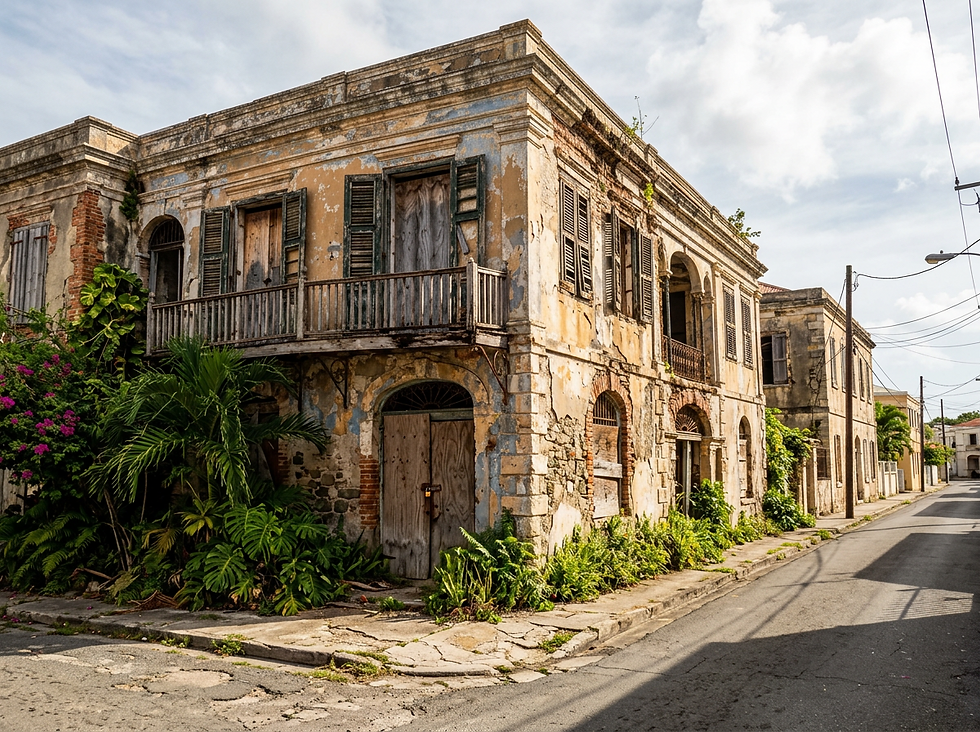
On the west side of St. Croix, the town holds rare assets in one compact place: deep history, calm water, striking sunsets, a walkable street grid, a working cruise pier, and a cultural memory that reaches far beyond tourism. It is also a place where empty buildings, uneven upkeep, and limited evening activity send the wrong message to residents and visitors alike.
Reviving Frederiksted is not only a matter of fresh paint or more cruise traffic. It calls for a plan that respects the town’s past, supports local people, and gives the waterfront a reason to stay alive after 5 p.m.

Frederiksted’s history gives the West End its deeper meaning
Frederiksted is not just a pretty seaside town waiting for a makeover. It is a place where some of the most important events in Virgin Islands history unfolded.
The town was laid out during Danish colonial rule and became a key port on St. Croix. Ships moved goods, people, and wealth through its harbor. Sugar, molasses, rum, and other plantation products tied the island to global trade. That prosperity came at a brutal cost. Enslaved Africans and their descendants built the economy while living under violent systems of control.
Frederiksted’s historic importance is especially tied to emancipation. In 1848, enslaved people gathered in and around Frederiksted, including near Fort Frederik, to demand freedom. Their collective action forced a turning point in the Danish West Indies. Governor Peter von Scholten declared emancipation on July 3, 1848, after pressure from the enslaved population made the old order impossible to maintain.
That history should sit at the center of any revival plan.
Too often, Caribbean redevelopment treats historic towns as backdrops for shopping and dining. Frederiksted deserves better. Its streets, fort, waterfront, and public spaces can tell a fuller story, one that honors resistance, courage, labor, family, faith, music, food, and survival.
A stronger cultural district could include:
Clear walking routes
Signs and markers that connect Fort Frederik, the waterfront, historic churches, old commercial buildings, and key public spaces.
Story-based public art
Murals, sculpture, and installations created by local artists, with themes tied to emancipation, labor, the sea, and West End life.
Nighttime history walks
Guided evening tours that pair storytelling with music, food, and local vendors.
A living history calendar
Regular events tied to Emancipation Day, Crucian Christmas Festival traditions, Quelbe music, craft, foodways, and oral history.
The goal should not be to freeze Frederiksted in the past. The goal should be to let history help shape a better future.
Why parts of Frederiksted feel neglected today
The visible decline in Frederiksted did not happen for one simple reason. It came from layers of economic, social, and planning challenges that built up over time.
Some buildings show wear because ownership is complicated, restoration is expensive, or rental income does not justify repairs. Historic structures need careful work, not quick fixes. That makes them costly to maintain, especially when the local economy is uneven.
Tourism patterns also play a role. Frederiksted sees bursts of activity when cruise ships arrive, then the streets can empty out. Businesses that rely heavily on cruise passengers face a hard rhythm. One busy day may be followed by several slow ones. That makes it difficult to keep staff, extend hours, or carry inventory.
The West End has also competed with other parts of St. Croix for attention and investment. Christiansted often gets more visitor focus because of its established restaurants, hotels, shops, marina activity, and historic district. The east side has beaches, resorts, and attractions that draw steady movement. Frederiksted, even with its beauty, can feel like a place people pass through rather than a place they plan to stay.
Storm damage and infrastructure strain have added more pressure. Like the rest of the Virgin Islands, St. Croix has faced major hurricanes over the years. Recovery can take a long time, especially when public infrastructure, private property, insurance issues, and limited funding all collide.
There is also the issue of perception. When storefronts are closed, lighting is weak, sidewalks are uneven, or public spaces feel inactive, people assume an area is unsafe or uninviting. That perception can become a cycle. Fewer visitors come after hours, so fewer businesses stay open. Fewer businesses stay open, so fewer people come after hours.
Breaking that cycle requires more than one project. It requires steady coordination among government, property owners, residents, artists, vendors, cultural leaders, taxi operators, tour guides, cruise partners, and small businesses.
Frederiksted’s challenge is not a lack of beauty or history. It is a lack of connected activity that lasts beyond the cruise ship schedule.
The cruise pier can become more than an arrival point
Frederiksted’s cruise pier is one of its greatest advantages. The long docking area gives the town a dramatic physical feature, a place where passengers arrive with the Caribbean Sea all around them and the historic town directly ahead.
At its best, that arrival should feel like an invitation.
Right now, the pier functions mainly as a transit zone. Passengers disembark, meet tours, shop briefly, visit beaches, or head elsewhere. That movement matters, but it does not fully use the power of the space. The town needs a stronger connection between the ship, the pier, the waterfront, and the streets beyond.
The dock area and nearby public spaces could become a more active waterfront experience without losing their working port function.
Possible improvements include:
A shaded promenade
Comfortable walking areas with shade, seating, water stations, and clear wayfinding into town.
Small vendor kiosks
Well-designed booths for local food, crafts, art, books, skin care, sauces, produce, and handmade goods.
Rotating cultural demonstrations
Wood carving, basketry, steel pan, moko jumbie performance, storytelling, quadrille, and cooking demonstrations.
Evening lighting
Warm, pedestrian-scale lighting that makes the waterfront feel safe and welcoming after dark.
Public seating facing the water
Simple benches, picnic tables, and low walls where people can watch the sunset.
Pop-up stages
Small performance areas for local bands, poets, DJs, dancers, and school groups.
Frederiksted does not need to become a theme park. It should not copy ports that feel detached from local life. The strongest version of the pier would feel unmistakably Crucian.
That means cruise guests should not only find souvenirs. They should encounter local flavor, local knowledge, and local pride. Residents should also feel that the space belongs to them, not only to visitors who arrive by ship.

Local vendors and artists should lead the after-hours revival
One of Frederiksted’s biggest opportunities is evening activity. The West End has some of the best sunsets on St. Croix. That alone should make it a natural gathering place.
The missing piece is a reliable reason to linger.
A stronger after-hours district could bring locals and visitors together through food, music, art, and public space. The key is consistency. One event can create excitement, but regular programming builds habits.
A weekly or twice-monthly waterfront market could run from late afternoon into the evening. It should be designed for people who live on St. Croix as much as for travelers. Locals will support places that feel authentic, affordable, and worth returning to.
A successful after-hours plan might include:
Local food tents serving pates, johnny cakes, roast fish, kallaloo, vegan plates, local juices, and desserts
Artists selling original work, prints, jewelry, pottery, textiles, and photography
Musicians rotating through small sets, including Quelbe, reggae, jazz, steel pan, and acoustic performances
Youth arts programs with supervised booths or performance slots
Outdoor film nights focused on Caribbean stories
Sunset yoga, dance classes, or fitness walks along the waterfront
Late openings for galleries, museums, cafes, and small shops
Taxi and shuttle service timed to events, hotels, and residential areas
The town could also create themed evenings. For example, “First Friday in Frederiksted” could combine gallery openings, street food, music, history tours, and pier walks. A “Sunset Market” could focus on local makers and farmers. A “Heritage Night” could feature oral history, traditional music, and storytelling near Fort Frederik.
These events should not push out existing residents or small operators. The best model would make it easy for local vendors to participate. Fees should be fair. Permits should be clear. Booth design should be attractive but not so expensive that only larger businesses can afford it.
Training and support would help, too. Many talented makers and cooks need help with payment systems, food safety rules, booth setup, pricing, packaging, and scheduling. A strong revival plan would pair cultural programming with small business support.
That is how Reviving Frederiksted and the West End of St Croix History Cruise Port and Local Culture becomes more than a slogan. It becomes a practical path.
Revival should balance preservation, safety, and local ownership
Frederiksted’s revival will fail if it becomes only a beautification campaign. It must address the basic conditions that shape how people use the town.
Clean streets, working lights, safe sidewalks, visible security, clear parking, maintained restrooms, and reliable trash pickup may not sound exciting. They matter more than any ribbon-cutting. People stay longer in places that feel cared for.
Historic preservation also needs real support. Many older buildings in Frederiksted could become restaurants, guesthouses, galleries, studios, apartments, and cultural spaces. Yet owners often face high repair costs and complex rules. Incentives could help bring vacant or damaged buildings back to life while protecting the town’s character.
Useful steps could include:
Need | Practical step |
Safer evenings | Better lighting, active storefronts, visible patrols, and regular events |
Stronger small businesses | Vendor training, fair permits, shared equipment, and marketing help |
Historic building repair | Grants, tax incentives, technical guidance, and code support |
Better visitor flow | Clear signs, walking maps, shuttle links, and staffed information points |
Local cultural control | Artist councils, vendor committees, and resident input before major changes |
Housing must also be part of the conversation. If revival raises rents too quickly, the people who give Frederiksted its identity could be pushed out. A healthy town needs residents, not just visitors. Mixed-use development, affordable rentals, and support for local property owners can help keep the community rooted.
Public art should be handled with the same care. Murals and sculptures can bring life to blank walls and public corners, but they should come from local artists and community input. Frederiksted does not need generic tropical imagery. It needs art that speaks to Crucian heritage, the sea, emancipation, music, agriculture, family, and the daily life of the West End.
A better West End starts with making people want to stay
Frederiksted already has what many destinations try to create from scratch. It has a historic fort, a dramatic pier, oceanfront sunsets, walkable streets, deep cultural memory, and a strong local creative community.
Its deteriorated areas should not be seen as proof of failure. They are signs of underinvestment, uneven planning, storm pressure, and missed chances. Those problems are real, but they are not permanent.
A practical revival would start with the waterfront and spread inward. Make the pier more welcoming. Light the public spaces. Support local vendors. Put artists in the center of the plan. Tell the history honestly. Create regular evening activity. Repair historic buildings in ways that keep the town’s character. Give locals as many reasons to enjoy Frederiksted as tourists have.
Frederiksted’s future should honor the people who gathered there to demand freedom, the generations who kept West End culture alive, and the residents who still see what the town can become.
The goal is simple: turn the waterfront from a place people pass through into a place people remember, return to, and claim as their own.