
Building The Melvin Evans Highway: Connecting East and West
John F. McKeon

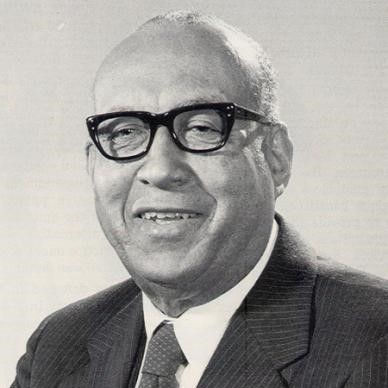
Melvin Herbert Evans, born in Christiansted in 1917, was a pioneering Virgin Islands
politician and physician who made history as the first popularly elected governor of the US Virgin Islands. A Republican, he served as governor from 1969 to 1975, initially as an appointee of President Richard Nixon before winning the territory's first gubernatorial election in 1970. Following his governorship, Evans became the territory's delegate to the US House of Representatives (1979–1981), where he focused on improving healthcare and education. His distinguished career in public service concluded with his appointment as the US Ambassador to Trinidad and Tobago by President Ronald Reagan, a role he held until his death in 1984.
His highway, (VI-66) now stands as the vital east–west artery of St. Croix, representing a cornerstone of the island's modern attempts infrastructure and economic connectivity. riginally conceived to bridge the gap between the principal towns of Christiansted and Frederiksted, the highway was a signature achievement during the administration of its namesake, Melvin H. Evans—the first elected and first Black governor of the US Virgin Islands.
Spanning the island's southern coast, its construction facilitated rapid industrial growth by linking crucial sites such as the Henry E. Rohlsen International Airport and the South shore industrial corridor. Serving as the territory's only divided highway in the US Virgin Islands.
How It Was:
The mid-20th-century roads of St. Croix were veins of red earth and crushed limestone, winding through the Crucian landscape. Centerline Road was the main artery frequently shared with the small locomotives of the Bethlehem sugar railway. Mahogany Road, a lush, dark tunnel through the western hills was shaded by majestic mahogany trees. The North Shore Road was a narrow track hugging steep cliffs,—a rugged ride revealing breathtaking views of the azure sea. This was the Island prior to the construction of the Melvin Evans Highway. The towns of Christiansted and Frederiksted were framed by ochre arches and shadowed walkways.
The road system was primarily an agrarian era network that struggled to support the island's rapid industrialization in the 1960s. Queen Mary Highway (Route 70) was the main east-west thoroughfare, originally cut during Danish rule more than 260 years ago. It served as the central hub for the island's sugar-based economy, connecting the towns of Christiansted and Frederiksted.
Most secondary roads were former plantation tracks that had been paved with thin layers of asphalt. They were designed for agricultural transport rather than heavy industrial traffic. Many primary roads suffered from buckling and collapsing asphalt because the original foundations were thin and not built to modern standards. A lack of proper drainage systems led to chronic flooding and the rapid formation of large ruts and holes, some of which forced vehicles to a complete stop or rendered parts of the road impassable. There was a complete absence of streetlights in many areas, forcing night drivers to navigate in pitch-black conditions. Industrial growth in the 1960s caused severe traffic congestion in downtown areas, as heavy equipment and large vehicles had to pass directly through historic town centers like Christiansted to move across the Island.
Throughout its existence this major roadway has undergone significant reconstruction and safety improvements. This article explores the historical trajectory of the highway’s development, from its mid-20th-century origins as a four-lane thoroughfare to its role as the fastest road in the territory
During the tenure of Governor Melvin H. Evans (1969–1975), the territory began a significant push to modernize its infrastructure. In Evans’ first year alone, 25.3 miles of new roads
were constructed—more than in the previous ten years combined. The highway was envisioned to provide a high capacity bypass to relieve pressure on the older, deteriorating road network. It is one of the few divided highways in a territory with the distinction of being the only US jurisdiction to drive on the left. It is also the fastest road on the island—and in the territory—with a 55 mph speed limit for passenger vehicles (except buses) and a 40 mph limit for heavy trucks and buses. All junctions are at-grade, there are stoplights with connecting roads, and driveway access is limited by default in the territory. The highway is not explicitly classified as an expressway. It is an important intermediate link between locations on the southern coast, including an oil refinery and the Henry E. Rohlsen International Airport, and the island's principal towns Christiansted and Frederiksted.
The highway travels through areas of mostly lighter development and has multiple spurs and other intersections connecting to parallel roads and smaller communities. St. Croix has no single encircling route so the highway is one of the most heavily used. The Grant Anticipation Revenue Vehicle (GARVEE) bonds to rebuild the territory’s roads, were secured after years of trying by the bill’s chief sponsor, Senator Nereida Rivera-O’Reilly, the funds would see $40 million being used on the Veteran’s Drive project in St. Thomas and the remaining $50 million on the Melvan Evans Highway on St. Croix along with other smaller projects. St. Croix Senators had fought passionately to secure most of the funds for their district, contending that the Big Island needed more attention. In 1976, the 11th Legislature officially named the highway through Act No. 3911 to honor Governor Evans for his efforts to advance the infrastructure and economic development of the Virgin Islands, ensuring his place in Virgin Islands history.
Maintenance Difficulties
What are the factors that contribute to rapid road failure in the Caribbean? Well, let’s take a look. The island's steep, hilly terrain makes drainage a major issue; without proper runoff systems, rainwater often pools and undermines the roadbeds. These environmental factors are compounded by limited local funding and the logistical challenge of importing heavy equipment and materials, resulting in a maintenance cycle that often struggles to keep pace with the rapid rate of wear and tear. Inadequate, blocked, or missing drainage systems are a major issue, as water washes away the road base and causes rapid pothole development. WAPA(Water and Power Authority) and wastewater projects often break new road surfaces, and the repairs to these "cuts" are often improperly compacted or left unpaved for long periods.
The island faces limitations in equipment, funding, and experienced personnel for consistent, high-quality road maintenance. Maintaining the roads on St. Croix is a constant battle against the island’s tropical environment and aging infrastructure. The intense Caribbean sun and heavy seasonal rains frequently lead to asphalt degradation and significant potholes, while the salt air accelerates the erosion of both the road surfaces and the machinery used to fix them. The region's intense rainstorms and tropical weather quickly degrade already weakened or poorly constructed roads. Despite efforts to repair roads, such as in Christiansted, many projects face delays, exacerbating the problem of quick deterioration. Contractors often fill excavation sites with inferior materials rather than properly compacting fill in layers, causing the asphalt patch to sink or break. A lack of consistent, timely repairs means minor issues quickly become major hazards.
History and Construction:
Since its initial construction, the highway has undergone multiple phases of modernization and repair. A significant overhaul began around 2018 under the Mapp Potter Administration, funded by GARVEE Bonds from the Federal Highway Administration. As of 2023–2025 the work includes reconstruction of the roadway, drainage improvements, and the installation of new streetlights across the entire highway from Emancipation Drive to Williams Delight.
Notable Milestones:
Period | Event |
1971–1976 | Original construction pushed by Governor Melvin H. Evans. |
2013–2014 | Major rehabilitation of the segment between the industrial park and east airport intersections. |
2018–Present | Continuous phased reconstruction to meet U.S. Department of Transportation standards. |
Key Acquisition and Development Details:
The land for the Melvin Evans Highway was primarily acquired through a combination of existing government-owned land and the acquisition of private parcels along the industrial and southern corridor of the island. While specific historical "land grab" dates aren't always in modern digital records, the highway's expansion and modernization have been a collaborative effort between the Virgin Islands Department of Public Works and federal agencies like the Federal Highway Administration (FHWA). Much of the land acquisition was tied to the development of St. Croix’s industrial zone, including areas near the Airport and the St. Croix Container Port. Recent major overhauls and expansions have been funded through GARVEE (Grant Anticipation Revenue Vehicle) Bonds, which allow the territory to leverage future federal highway funds to pay for current infrastructure needs, including any necessary right-of-way adjustments. The reconstruction was divided into six major segments and multiple funding phases, primarily supported by the GARVEE bond issuances and supplemental federal grants.
Opposition to Construction:
While there is no record of a single territory-wide lawsuit that successfully halted the Melvin Evans Highway project, several localized court battles and legal disputes over land access and ownership have occurred along its route. A significant Superior Court battle occurred regarding land access in areas slated for road construction. Plaintiffs raised concerns about the feasibility of construction in disputed areas containing protected mahogany trees and utility infrastructure from the Virgin Islands Water and Power Authority (WAPA). Ongoing legal disputes, such as Salvador Alvarez v. Estate of Everlena Keel, have involved claims for properties near the highway corridor. These cases often center on individuals claiming ownership of land based on long-term occupation versus government or estate titles. Multiple cases in the Superior Court of the Virgin Islands have dealt with ownership conflicts in estates that the highway passes through, such as Estate Carlton and Estate Hannah's Rest. Several specific property owners and estates have been involved in legal disputes regarding land rights, access, and ownership in the highway's vicinity:
The "Cuffy" Land Access Dispute (Estate Clairmont)
This is the most prominent "road construction" court case from recent years (2019– 2025), and is often confused with government highway projects. Bernard Cuffy vs. Patricia Babij, Brian Devlin, and Cindy Devlin. Cuffy attempted to clear a right-of-way to access his property in Estate Clairmont. Neighbors sued to stop him, arguing it was their private land, not a public access road.The V.I. Superior Court ruled in Cuffy's favor, affirming his right to access his property. While this was a private dispute rather than a government taking for the Melvin Evans Highway, it highlights the complex land title issues (easements vs. private ownership) that plague road projects on St. Croix.
Estate Sion Hill (Eminent Domain Rejection)
Unnamed Homeowner vs. Government of the Virgin Islands. The A property owner in Estate Sion Hill rejected a $30,000 government offer for an easement intended for sidewalk and road improvements (connected to the broader road network improvements). The owner challenged the "taking" (eminent domain), suggesting the government use a vacant lot across the street instead. This represents a direct "fight" against appropriation.
Salvador Alvarez v. Estate of Everlena Keel
Properties near the highway corridor (often involving older estates like Estate Profit or Hannah's Rest). Alvarez claimed ownership of land through adverse possession (squatter's rights) after occupying it and operating a business ("Salvador's Barber Shop") since 1996. These types of cases complicate highway expansion because the government cannot easily pay "the owner" for land when the legal title is being fought over in court between an estate and a long-term occupant.
Estate Carlton & Hannah's Rest
These estates are the sites of major recent intersections and signal projects (the Good Hope intersection). Disputes here often involve heir or inherited property—land passed down through generations without clear probate. This makes it difficult for the Department of Public Works to secure the necessary "clear title" to widen roads or install utilities without risking future lawsuits from long-lost heirs.
The project was executed in distinct phases to manage the heavy traffic flow on St. Croix’s main arterial road. The (2015–2019) GARVEE bond provided approximately $16 million dedicated to early rehabilitation efforts on the highway. The Industrial Park to East Airport Road Rehabilitation and resurfacing from Route 669 to Route 64 was a $5.1 million contract awarded to VI Paving, focusing on critical asphalt repairs and safety improvements. The West Airport Road to Industrial Park, a $5.6 million Paving and safety provisions was also fully funded by GARVEE proceeds. The Phase 2 & Final Reconstruction (2021–2025) addressed the most western portions of the highway using remaining 2015 funds and supplemental federal-aid highway grants.
$12.3 million financed the Good Hope to Williams Delight reconstruction of both eastbound and westbound lanes, installation of new concrete swales for drainage, and comprehensive lighting. Reported as the "sixth and final section" of the broader highway preservation project.The $9.6 million Clifton Hill Connector widened the intersection to include dedicated turning lanes and adjusting the steep incline to reduce accidents.
Recent Maintenance & Refinancing (2025–2026):
The 2025 GARVEE bond deal ($150 million) primarily refinanced older debt to save the territory money, while also funding broader road repaving across St. Croix. In early 2026, targeted road repairs and detours were scheduled for the Sunny Isles, Home Depot, and Estate Profit intersections to maintain the newly completed segments. New energized highway lights now extend from Emancipation Drive to Williams Delight, addressing a long-standing public safety concern.
In 2025, the government completed a massive $17.5 million purchase of 2,469 acres at Maroon Ridge and Annaly Bay. While separate from the highway itself, this acquisition reflects the broader government strategy of securing land for public use and conservation under Legislative Act 8609. The government has also been in talks to purchase additional property surrounding the Paul E. Joseph Stadium in Frederiksted to facilitate the highway's western terminus expansion.
Recent activity has focused on "punch list" items, final surfacing, and intersection specific repairs. As of November 2025, Governor Bryan confirmed that the lighting of the Melvin Evans Highway was completed, significantly improving safety. Remaining work in early 2025 involved connecting transformers from WAPA to light sections near Sunny Isles and Paradise Mills. Utility Undergrounding work by WAPA near the Hannah's Rest area (Phase 1 Electrical Undergrounding) continues to impact traffic near the western end of the highway. As of April 2026, the major multi-phase rehabilitation and expansion of the Melvin Evans Highway (Route 66) on St. Croix is nearing full completion. The project has focused on comprehensive rebuilding to Federal Highway standards, including new pavement, safety improvements, and energized lighting across the entire route.
While the primary structural expansion is finished, the Department of Public Works (DPW) continues routine maintenance and localized repairs. Most recently, in late January 2026, the DPW conducted a series of targeted road repairs at major intersections to address surface wear.
Obstacles:
The building and ongoing rehabilitation of the Melvin Evans Highway on St. Croix have faced several significant obstacles over the years, ranging from infrastructure failures to severe weather events. The recovery from Hurricanes Irma and Maria created a massive backlog of repairs and modernization needs, shifting focus toward rebuilding to federal standards. Storms tripled the lead times for critical infrastructure like traffic signal poles.
COVID-19 significantly disrupted road construction on St. Croix by causing immediate operational delays, but it ultimately catalyzed a surge in infrastructure funding. While the pandemic initially halted projects and forced the Department of Public Works (DPW) to reduce hours for essential services only, it later led to a massive $22 million allocation from the 2021 Bipartisan Infrastructure Law (IIJA) that allocated over $570 billion targeting nation wide improvements for roads, bridges, public transit, broadband, and water systems and enhanced investments in ports, airports, and high-speed internet. Coordinating with other utilities has caused frequent delays. For example, the Department of Public Works (DPW) had to take over streetlight installation from WAPA to ensure completion. Additionally, failing Waste Management infrastructure and the need to repair or "slip line" sewer pipes without trenching have complicated roadwork. Projects have been stalled due to suppliers going out of business, forcing the government to find new vendors on short notice for critical items like traffic signals. Initial construction suffered from poor drainage design, leading to rapid road deterioration and the need for frequent "asphalt overlays" rather than permanent solutions. Modern phases now require extensive work on concrete swales to fix these historical issues.
High rates of vehicular accidents due to steep inclines at certain connectors (like Clifton Hill) necessitated the demolition and reconstruction of medians and the addition of dedicated turning lanes. Major phases rely on Federal Highway Administration GARVEE Bonds, which require strict adherence to federal standards, adding complexity to the planning and execution phases. The scale of the modernization required launching an entirely new Highway Division at Public Works to handle the volume of engineers.
The comprehensive rehabilitation of the Melvin Evans Highway stands as a testament to the Virgin Islands Department of Public Works' commitment to modernizing St. Croix’s infrastructure, transforming a once-deteriorated route into a safe, reliable artery through key improvements in pavement quality, drainage, and lighting.
By leveraging federal GARVEE funds for major resurfacing and rehabilitation, this project not only addresses immediate safety hazards but also represents an attempt at long-term investment in the island’s economic mobility and emergency resilience. As the final phases conclude, the modernized highway serves as a benchmark for future road projects, demonstrating that prioritized maintenance is essential for creating a safer, more sustainable, and better-connected community for both residents and visitors.
Historian John F. McKeon lives on St. Croix USVI and in Southampton NY. He holds degrees from Trinity College Dublin, (MPhil with Distinction). and St. Joseph's University New York (Summa Cum Laude) B.A. East Asian History with a Philosophy Capstone Minor in Labor, Class and Ethics. John also has certificate from the Oxford University Epigeum Research Integrity Center. He is a current member of the Society of Virgin Island Historians.
Sources:
https://dpw.vi.gov/wp-content/uploads/2024/06/DPW-Budget Presentation-FY2025.pdf
https://www.vi.gov/contract-signed-for-new-phase-of-melvin-evans highway-repairs-twenty-road-projects-now-underway/

