
Can Cloud Seeding Ease Puerto Rico’s Drought and Water Crisis
Maria Rivera Garcia
Special to the St. Croix Times
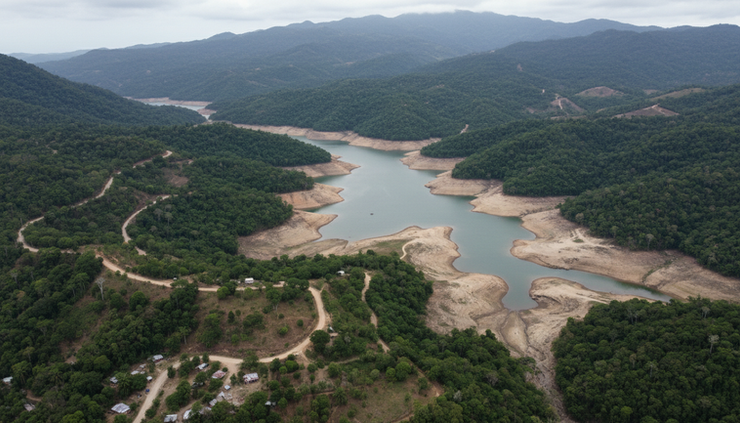
San Juan, PR - A dry spell in Puerto Rico is never just a weather story. It can mean low reservoirs, rationing schedules, closed school fountains, stressed farms, and families storing water in buckets because the tap may not run when they need it.
That is why cloud seeding gets attention whenever drought tightens its grip. The idea sounds direct: treat clouds so they produce more rain. For an island facing hotter days, shifting rainfall patterns, water shortages in towns, and pipes that lose too much water before it reaches homes, any tool that promises rain deserves a serious look.
But cloud seeding is not a rain button. It can help under the right conditions, and it can fail when the atmosphere does not cooperate. Puerto Rico’s water crisis needs both science and hard public works: better forecasting, careful reservoir management, repaired pipes, stronger drought planning, and honest public communication.

What cloud seeding can and cannot do
Cloud seeding works by adding tiny particles to clouds so water droplets or ice crystals can form more easily. Aircraft, ground-based generators, or rockets release materials such as silver iodide or salt particles, depending on the type of cloud and the goal.
The method is most often used in two ways:
Snowpack programs
In colder mountain regions, seeding aims to increase snowfall that later melts into reservoirs.
Warm cloud programs
In tropical or warmer regions, seeding may use salt-based particles to encourage droplets to collide, grow, and fall as rain.
Puerto Rico would fall mainly into the second category. Its rain often comes from trade-wind showers, tropical moisture, sea breezes, and convective clouds that build over mountains and inland areas. That setting is different from the winter snowpack programs used in the western United States.
The key point is simple: cloud seeding needs seedable clouds. If there are no clouds, there is nothing to seed. If clouds are too dry, too shallow, or moving too fast, the effect may be weak or impossible to detect. If a tropical wave or frontal boundary is already producing rain, it can be hard to know how much extra rain came from seeding.
Many atmospheric scientists describe cloud seeding as a tool with modest potential, not a standalone drought solution. The World Meteorological Organization has urged governments to treat weather modification with caution, use sound science, and measure results carefully. U.S. agencies and university researchers have also stressed that seeding programs work best when they are tied to long-term monitoring, radar data, aircraft observations, and independent review.
A common estimate from some established programs is that cloud seeding may increase precipitation by a small percentage under favorable conditions. That can matter over a season or across a watershed. But during a severe drought, when water demand is high and reservoirs are already low, a modest rainfall increase may not be enough to prevent rationing.
Cloud seeding is best understood as a possible supplement to water management, not a substitute for conservation, infrastructure repair, and drought planning.
Puerto Rico’s drought is a water system problem as much as a weather problem
Drought begins with a lack of rain, but the damage grows when the water system is already fragile.
Puerto Rico has lived through repeated dry periods that strain reservoirs and aquifers. When rainfall drops across key watersheds, storage levels decline and communities can face rotating service interruptions. Towns far from major reservoirs, communities served by smaller systems, and higher-elevation areas can feel the pressure early.
The impact shows up in ordinary routines. Families fill tanks and containers before service cuts. Small restaurants adjust hours or spend more on stored water. Schools and clinics need backup plans. Farmers reduce planting, move livestock, or lose crops. Fire risk can rise in dry brush areas. Household stress grows because uncertainty becomes part of the week.
Aging infrastructure makes all of this worse.
Puerto Rico’s public water system includes old pipes, treatment plants, pump stations, and storage tanks spread across difficult terrain. In many places, leaks and breaks waste treated water before it reaches customers. Power interruptions can affect pumps. Heavy rain after a dry period can wash sediment into intakes, which can also disrupt service. When a system already loses water, drought turns those losses into a crisis.
The Puerto Rico Aqueduct and Sewer Authority, known as PRASA, has long faced the costly job of maintaining and upgrading a large islandwide system. The challenge is not only technical. It is financial, political, and geographic. Mountain roads, scattered communities, steep slopes, and hurricane damage all complicate repairs.
Drought also exposes inequality. A household with a cistern, a vehicle, and money to buy bottled water has more options than a household without those resources. Rural communities served by smaller or non-PRASA systems may have fewer backup sources. For older adults, people with disabilities, and families with infants, water outages can quickly become health and safety issues.

What case studies say about cloud seeding results
Cloud seeding has a long history, and the results are mixed. That does not mean it never works. It means results depend heavily on cloud type, geography, measurement methods, and program design.
Israel shows why old assumptions need retesting
Israel ran cloud seeding programs for decades, especially around the Sea of Galilee watershed. For years, the program was viewed as a practical way to support water supply. Later research raised doubts about how much extra rain the program actually produced. Studies suggested that changing air pollution, natural variability, and improved analysis made the benefits less clear than earlier believed.
The lesson for Puerto Rico is not that cloud seeding should be dismissed. The lesson is that measuring success is hard. A program can appear useful for years if it is not tested against control areas, radar data, and long-term rainfall records.
Western U.S. programs are useful but not a perfect match
States in the western U.S. have used cloud seeding to increase mountain snowfall. These programs often target winter storms over specific mountain ranges. Extra snow, even a small amount, can add water to reservoirs months later.
Puerto Rico has no snowpack. Its water supply depends on rainfall over reservoirs, rivers, aquifers, and watersheds. A seeding program on the island would need to focus on rain-producing clouds and short-term runoff, not seasonal snow storage. That makes the science and operations different.
The United Arab Emirates shows the value and limits of active programs
The United Arab Emirates has invested heavily in aircraft-based cloud seeding because it has few natural freshwater sources. The country has built forecasting, radar, and flight operations around the practice. Its program shows that governments can create a serious operational system when they fund monitoring and research.
But even there, cloud seeding does not solve water scarcity on its own. The UAE still relies on desalination, conservation efforts, and water policy. Cloud seeding is one piece of a larger water strategy.
For Puerto Rico, that is the practical takeaway. A pilot project could be worth studying, especially if drought becomes more frequent or intense. But the island would need clear rules before spending public money:
What clouds will be targeted?
Which watersheds are the priority?
How will results be compared with unseeded areas?
Who will review the data?
What environmental safeguards will apply?
How will the public know whether it worked?
Without those answers, cloud seeding can become a public relations move rather than a water policy.
Government responses need to connect emergency relief with long-term repair
Puerto Rico’s government and water agencies have several tools for drought response. Some are immediate. Others take years.
Short-term responses can include rationing schedules, tanker deliveries, emergency repairs, public conservation notices, temporary pumping adjustments, and closer monitoring of reservoir levels. These steps are often unpopular, but they can prevent a worse collapse when supply drops.
Longer-term strategies matter more. They include:
Repairing leaks and replacing old pipes
Every gallon lost through a broken main is a gallon that cannot reach a home, school, farm, or hospital.
Protecting watersheds
Forests, wetlands, and healthy soils help regulate runoff, reduce erosion, and support cleaner water entering reservoirs.
Improving reservoir operations
Better forecasting can help managers plan releases, pumping, and conservation measures earlier.
Diversifying water sources
Some areas may benefit from wells, small-scale storage, rainwater harvesting, reuse for non-drinking purposes, or carefully planned desalination where practical.
Strengthening local emergency systems
Municipalities need clear plans for vulnerable residents, water distribution points, and backup supply for critical facilities.
Federal funds tied to disaster recovery and infrastructure repair can play a major role, but the public often judges progress by what happens at the faucet. If residents see streets dug up without lasting improvement, trust fades. If rationing arrives with little warning, frustration grows.
A stronger drought strategy would connect climate data, infrastructure spending, and public communication. It would treat water not only as a utility service, but as a public safety issue.
Where experts would likely place cloud seeding in Puerto Rico’s water plan
A balanced expert view would not reject cloud seeding out of hand. It would ask whether the island has the right conditions, equipment, oversight, and goals.
Meteorologists would focus on atmospheric fit. Puerto Rico’s clouds can produce intense rain, but tropical rainfall is highly variable over short distances. One town can flood while another remains dry. Sea-breeze patterns and mountain effects can create quick changes. A seeding program would need high-quality radar, aircraft coordination, and careful timing.
Hydrologists would ask a different question: where would the extra rain go? Rain over a reservoir watershed is more useful for public supply than rain over the ocean or over paved areas where runoff rushes away. If the goal is to refill reservoirs, cloud targeting must match watershed needs.
Water utility experts would point to leakage and system losses. If a water system wastes a large share of treated water, producing a little more rain will not fix the core problem. Repairing pipes may deliver more reliable benefits than trying to squeeze extra rain from marginal clouds.
Environmental experts would ask about materials used, flight safety, monitoring, and public consent. Silver iodide has been used in many programs at low concentrations, but communities still deserve clear information about what is being released, where, and why.
Economists would compare costs. Aircraft, radar, pilots, meteorologists, data analysis, and program review all cost money. If the same funds could repair a high-loss pipeline, upgrade a pump station, or protect a watershed, seeding must prove it adds value.
That leaves a reasonable middle path. Puerto Rico could study cloud seeding through a limited, transparent pilot program, but only if it is paired with strong measurement and not sold as a cure. The program should be designed around specific watersheds, seasonal conditions, and public reporting. If the data shows little benefit, leaders should be willing to stop. If it shows value, the island can decide whether expansion makes sense.
The water crisis will be solved on the ground, even if rain comes from the sky
The question is not whether Puerto Rico should use science to seek more water. It should. The question is which tools deliver real relief.
Cloud seeding may help during certain weather patterns. It could become part of a broader drought response if research shows that it produces useful rainfall over the right watersheds. But it cannot repair leaking pipes, replace aging pumps, protect low-income households from outages, or rebuild trust after years of uneven service.
Puerto Rico’s drought challenge sits at the intersection of climate, infrastructure, land use, and public policy. More rain would help, but better water management is just as urgent.
A serious plan should include:
Faster leak detection and pipe replacement
Clear drought stages and public alerts
Better support for towns with repeated outages
Watershed protection and reforestation where needed
Backup supply for schools, clinics, and elder care facilities
Independent review of any cloud seeding pilot
Public reporting that explains results in plain language

Cloud seeding can be part of the conversation, but it should not distract from the harder work already waiting underground. Puerto Rico needs rainfall, but it also needs pipes that hold, reservoirs that are managed for a hotter future, and drought plans that reach every town before the taps run dry.


