
DPNR at the 52nd U.S. Coral Reef Task Force Meeting: Commissioner Oriol Leads All Islands Report
M.A. Dworkin
Washington, DC - Coral reefs are living infrastructure. They shelter coastlines, support fisheries, draw visitors, and hold cultural meaning across island communities. On September 2, 2026, those connections were front and center in Washington, DC, as the 52nd U.S. Coral Reef Task Force Meeting brought federal, state, territorial, and island partners together to focus on reef protection at a critical moment.
The Department of Planning and Natural Resources, known as DPNR, played a central role in that conversation. Representing the U.S. Virgin Islands and the broader needs of island jurisdictions, DPNR’s participation helped keep local reef priorities tied to national policy, funding, science, and response planning.
A key moment came when Commissioner Oriol delivered the U.S. All Islands Coral Reef Committee Chair’s Report, sharing island perspectives on conservation work, ongoing threats, and the practical needs of communities working closest to coral reef ecosystems.
DPNR brought island priorities to the national table
The U.S. Coral Reef Task Force serves as a major forum for coordinating reef conservation across jurisdictions. Its meetings bring together agencies and partners working on coral reef science, management, restoration, enforcement, disaster response, and community engagement.
For DPNR, participation in the 52nd meeting was more than attendance. It was a chance to speak from the front line of reef stewardship.
In the U.S. Virgin Islands, reef health connects directly to daily life. Coral reefs help reduce wave energy before it reaches shore. They support fish habitats that local fisheries depend on. They shape marine recreation, tourism, education, and cultural memory. When reefs decline, the effects spread well beyond the water.
DPNR’s presence helped make that reality clear. The department’s work sits at the intersection of planning, natural resource management, coastal permitting, environmental protection, fisheries, water quality, and public education. That broad responsibility gives DPNR a practical view of what reef conservation requires.
It is not one project or one agency. It is a linked effort that includes:
Monitoring reef conditions over time
Reducing land-based sources of pollution
Responding to coral disease and bleaching
Restoring damaged habitat where possible
Supporting responsible coastal development
Strengthening partnerships with researchers and local communities
Preparing for storms, heat stress, and other climate-related pressures
At the Washington, DC meeting, those themes fit into a broader national discussion about how to protect reefs while island communities face rising environmental and economic pressure.
Commissioner Oriol delivered the All Islands Chair’s Report
Commissioner Oriol’s delivery of the U.S. All Islands Coral Reef Committee Chair’s Report was one of the meeting’s most important contributions from DPNR.
The All Islands Coral Reef Committee brings together coral reef jurisdictions from across the United States and its territories, including island areas where coral ecosystems are central to community life. The Chair’s Report gives those jurisdictions a shared voice. It helps ensure that national conversations do not overlook the distinct conditions island managers face.
Commissioner Oriol’s report centered on the realities that island reef programs know well. Coral reef conservation depends on science, but it also depends on timing, staffing, local trust, field access, emergency response capacity, and stable support.
Island jurisdictions often manage large marine areas with limited personnel and complex needs. Many reef threats happen at once. A heat stress event can arrive in the same season as heavy rainfall, storm damage, vessel groundings, or coral disease concerns. Local teams must respond quickly while still carrying out long-term planning and monitoring.
The Chair’s Report gave space to those operational concerns. It also pointed to the strength of island collaboration. When one jurisdiction learns from a restoration project, disease response, watershed effort, or monitoring approach, others can adapt that knowledge to their own waters.
That shared learning matters because coral reefs do not fit neatly into political boundaries. Ocean currents, reef species, storms, sediment, and heat stress connect places across distance. The All Islands framework allows managers to compare challenges, share methods, and advocate together for resources that match the scale of the work.
Commissioner Oriol’s role also reflected DPNR’s ongoing leadership in reef issues. By presenting the report, he helped carry both the U.S. Virgin Islands perspective and the wider island committee message into a national setting.
Conservation discussions focused on pressure, response, and resilience
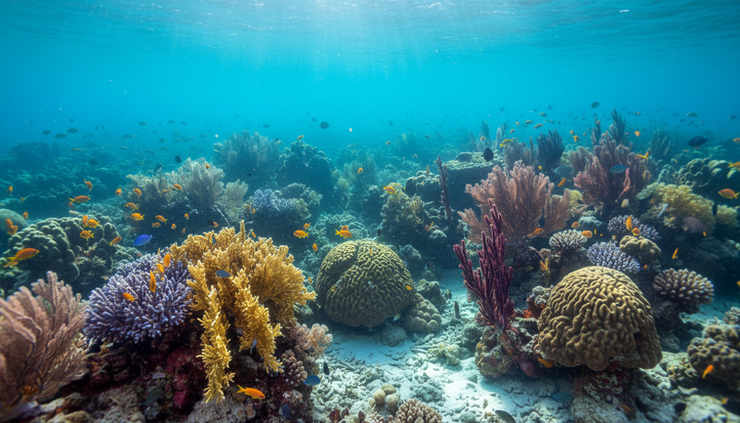
The meeting’s reef conservation discussions reflected a simple truth: coral reefs face layered threats, and conservation work must be just as coordinated.
Across U.S. coral jurisdictions, managers are dealing with warming waters, bleaching events, coral disease, storm damage, coastal runoff, vessel impacts, marine debris, and habitat loss. Some threats come from global climate patterns. Others start on land, in watersheds, roads, construction areas, drainage systems, and shorelines.
That mix of pressures shaped the conservation themes discussed during the meeting.
Water quality remains a reef protection priority
Many reef problems begin upland. Sediment, nutrients, chemicals, and stormwater runoff can move from roads, construction sites, and developed land into nearshore waters. Once there, they can stress corals, cloud water, fuel algae growth, and make it harder for reefs to recover from other impacts.
DPNR’s role is especially relevant here because planning and natural resource protection meet at the shoreline. Strong reef conservation requires land-use decisions that account for what happens downstream.
Meeting discussions around water quality pointed to the need for better coordination between watershed planning, coastal permits, enforcement, monitoring, and community education. Reef protection cannot wait until pollution reaches the reef. It must start on land.
Coral bleaching and heat stress demand faster response
Bleaching occurs when corals lose the algae that help feed them, often because of high water temperatures. Bleached corals are not always dead, but they are stressed and more vulnerable. If heat lasts too long or returns too often, recovery becomes harder.
Task Force conversations emphasized preparation. Reef managers need clear response plans before heat stress peaks. That can include monitoring priority sites, sharing alerts, coordinating with scientists, and identifying areas that may show natural resilience.
For island agencies, speed matters. Local staff need tools and support that allow them to document conditions, communicate with partners, and act when response options are available.
Restoration is useful, but it cannot stand alone
Coral restoration remains an important part of reef conservation. Nurseries, outplanting, and species-specific recovery work can help support damaged or declining reef areas. Restoration also creates opportunities for science, training, and public involvement.
Still, restoration cannot replace prevention. If water quality remains poor, if physical damage continues, or if heat stress grows too frequent, restored corals face the same pressures that harmed the reef in the first place.
The meeting’s conservation discussions reflected that balance. Restoration works best when paired with stronger protection, better permitting practices, reduced pollution, and long-term monitoring.
Local capacity is central to national success
A national reef strategy depends on strong local programs. Island agencies need trained staff, data systems, field equipment, lab access, vessels, emergency response plans, and sustained funding. They also need time to build trust with fishers, boaters, schools, community groups, and coastal residents.
This is where DPNR’s participation carried weight. Reef policy is most effective when it reflects what local managers can actually implement. Commissioner Oriol’s report helped connect national goals to field realities.
Coral reef conservation succeeds when science, policy, and community action meet in the places where reefs are part of everyday life.
The meeting highlighted the value of island collaboration
One of the strongest messages from the 52nd U.S. Coral Reef Task Force Meeting Commissioner Oriol Leads All Islands Report was that island jurisdictions are not working in isolation.
The All Islands Coral Reef Committee creates a space for jurisdictions to compare conditions, raise shared concerns, and coordinate recommendations. That kind of collaboration is especially important as reef threats become more frequent and complex.
An island dealing with coral disease response may have lessons for another island building its own response plan. A jurisdiction improving watershed management can share what worked, what stalled, and what community outreach made possible. A reef monitoring program in one place can help shape methods elsewhere, especially when managers need data that can be compared across regions.
For DPNR, this shared table strengthens local work in the U.S. Virgin Islands. It gives the department a way to bring back ideas, connect with technical partners, and advocate for support that reflects local needs.
It also gives DPNR a platform to highlight the realities of Caribbean reef management. The U.S. Virgin Islands face the same broad pressures as many reef areas, but every shoreline, bay, watershed, and community has its own conditions. National planning must be flexible enough to support that local detail.

What this means for reef work in the U.S. Virgin Islands
The meeting in Washington, DC carried practical importance for the U.S. Virgin Islands. DPNR returned to the national conversation with the experience of a territory where reef health affects coastal safety, fisheries, tourism, education, and environmental quality.
The discussions also reinforced several priorities likely to remain central to reef work across the territory.
Stronger reef monitoring
Reliable data helps managers see change over time. It supports decisions about protected areas, restoration sites, water quality concerns, and emergency response. Monitoring also helps show whether management actions are working.
Better land-to-sea planning
Reef protection must include watersheds, guts, drainage systems, roads, and coastal development. Planning decisions that reduce sediment and polluted runoff can make reefs more able to handle heat stress and storm damage.
Faster response to reef threats
Coral bleaching, coral disease, storm impacts, and vessel groundings require timely reporting and coordination. Agencies need response pathways that are clear before an emergency begins.
Public involvement
Community awareness matters. Residents, fishers, boaters, divers, students, and businesses all have roles in reef protection. Public reporting, responsible recreation, and support for conservation rules can reduce damage and strengthen stewardship.
Sustained funding and partnerships
Short-term projects can help, but reef conservation needs continuity. Long-term funding allows agencies to retain skilled staff, maintain equipment, support monitoring, and build programs that last.
These priorities are not separate. They support one another. Better monitoring informs better planning. Better planning improves water quality. Better water quality improves restoration success. Public involvement strengthens compliance and care. Partnerships help local agencies do more with limited resources.
DPNR’s participation showed why local leadership matters
The 52nd U.S. Coral Reef Task Force Meeting was a national gathering, but its importance depends on what happens in local waters after the meeting ends.
DPNR’s role helped bridge that gap. Commissioner Oriol’s delivery of the All Islands Chair’s Report brought island voices into the center of the conversation. It showed that reef conservation policy must be grounded in the needs of communities that live with reefs, depend on reefs, and respond first when reefs are in trouble.
That message is especially relevant now. Coral reefs face growing pressure, and the work ahead will require clear priorities, trusted science, practical management, and steady cooperation across jurisdictions.
The meeting also reminded participants that reef conservation is not only about protecting marine life. It is about shorelines, food systems, local economies, culture, education, and the future of island communities.
DPNR’s participation in Washington, DC affirmed a clear commitment: the U.S. Virgin Islands will remain part of the national effort to protect coral reefs, while continuing to bring local knowledge and island leadership to the table.

The takeaway from September 2, 2026, is direct and hopeful. Coral reef conservation depends on partnership, but partnership works best when island voices help lead it. Through DPNR’s active participation and Commissioner Oriol’s All Islands report, the meeting placed those voices where they belong, at the center of the work to protect reefs for the generations that come next.

