NASA Chandra X Ray Observatory New Gallery Reveals 16 Remarkable Galaxies
Axel Dash
In a galaxy far, far away - A galaxy can look calm in visible light and still blaze with violent energy in X-rays. That is what makes NASA’s Chandra X-ray Observatory so powerful. It sees the universe where black holes feed, stars explode, gas heats to millions of degrees, and colliding galaxies leave scars that optical telescopes can miss.
NASA’s new Chandra gallery brings that hidden universe into view through 16 remarkable galaxies. Some are close cosmic neighbors. Others are warped, colliding, or powered by active supermassive black holes. Together, they show that galaxies are not static islands of stars. They grow, collide, flare, and reshape themselves across immense spans of time.
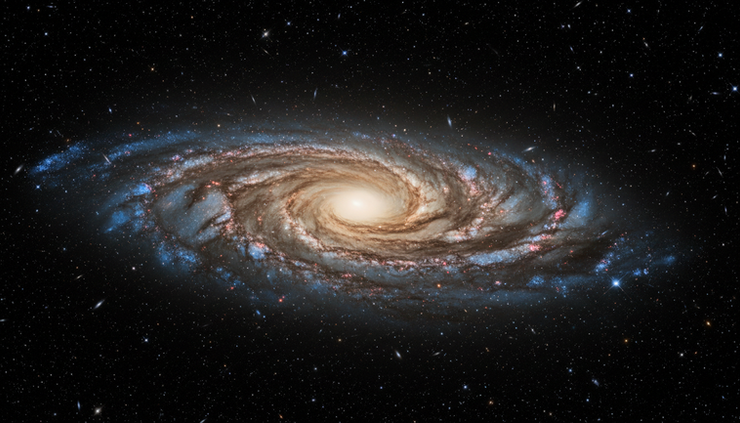
The new Chandra gallery shows galaxies in high-energy light
The Chandra X-ray Observatory does not simply make pretty pictures. It maps some of the hottest and most extreme places in the universe.
Visible-light telescopes show starlight, dust lanes, and glowing gas. Chandra adds another layer. It detects X-rays from sources such as:
Supermassive black holes pulling in matter
Hot gas heated by explosions, collisions, and galactic winds
Neutron stars and stellar-mass black holes feeding from companion stars
Supernova remnants left behind after massive stars die
Galaxy clusters filled with vast clouds of X-ray-emitting plasma
The result is a richer portrait. A spiral arm becomes a nursery for massive stars and X-ray binaries. A smooth elliptical galaxy reveals a black hole jet. A distorted galaxy pair shows the impact of gravity on a grand scale.
That is the real strength of the NASA Chandra X Ray Observatory New Gallery Reveals 16 Remarkable Galaxies release. It is not just a collection of cosmic portraits. It is a guide to how galaxies live.
The 16 galaxies reveal many ways a galaxy can be extraordinary
Each galaxy in the gallery tells a different story. Some are famous because they sit nearby. Some matter because they show rare stages of galactic change. Others help astronomers study black holes, star formation, and the hot gas that shapes the universe.
Galaxy | What makes it stand out | Why it matters |
Andromeda Galaxy, M31 | The nearest large spiral galaxy to the Milky Way | Chandra helps identify X-ray binaries and activity near its central black hole, giving astronomers a close comparison to our own galaxy. |
Antennae Galaxies, NGC 4038 and NGC 4039 | A dramatic pair of colliding galaxies with long tidal tails | Their merger triggers intense star formation and creates bright X-ray sources linked to compact objects and hot gas. |
Black Eye Galaxy, M64 | A dark dust band gives it the “black eye” appearance | Its unusual gas motion and dusty structure make it useful for studying how galaxies absorb material and reorganize over time. |
Cartwheel Galaxy | A ring-shaped galaxy likely formed after a smaller galaxy passed through it | Chandra reveals X-ray sources tied to massive star formation in the outer ring, where the collision set off a wave of new stars. |
Centaurus A, NGC 5128 | A nearby active galaxy with a striking dust lane and powerful jet | It shows how a central supermassive black hole can launch high-energy jets far beyond the galaxy’s core. |
Cigar Galaxy, M82 | One of the best-known starburst galaxies | Its intense star formation drives hot gas outward in a galactic wind, which Chandra can trace in X-rays. |
M87 | A giant elliptical galaxy at the center of the Virgo Cluster | Its supermassive black hole powers a famous jet, and Chandra studies both the jet and the hot cluster gas around it. |
NGC 1068 | A classic Seyfert galaxy with an obscured active nucleus | X-rays help astronomers study material near a hidden black hole that is partly blocked from view by dust and gas. |
NGC 1365 | A barred spiral with an active galactic center | Its central bar may help funnel gas inward, feeding star formation and activity near the black hole. |
NGC 253 | Also known as the Sculptor Galaxy, a nearby starburst galaxy | Chandra reveals hot gas and compact X-ray sources linked to rapid star formation. |
NGC 3079 | An edge-on spiral galaxy with a large bubble of hot gas | Its X-ray emission helps show how star formation or black hole activity can push material out of a galaxy’s disk. |
NGC 4258, M106 | Known for water masers near its central black hole and unusual spiral arms | Chandra helps study its X-ray-bright nucleus and the effects of jets interacting with the galaxy’s disk. |
NGC 4631 | The Whale Galaxy, seen nearly edge-on | Its X-ray halo shows how star-forming regions can heat gas and send it above and below the galactic plane. |
NGC 6240 | A merging galaxy with evidence for two central supermassive black holes | It offers a rare look at what can happen when large galaxies and their central black holes move toward eventual merger. |
Sombrero Galaxy, M104 | A bright central bulge and dark dust lane give it a distinctive shape | Chandra reveals many X-ray point sources, including systems with compact stellar remnants. |
Whirlpool Galaxy, M51 | A beautiful spiral interacting with a smaller companion galaxy | Its arms contain star-forming regions, X-ray binaries, and hot gas shaped by gravitational interaction. |
This variety matters. Galaxies are not defined only by shape. A spiral, elliptical, ring galaxy, or merger can contain hidden high-energy processes that only become clear in X-ray light.

Chandra sees what ordinary cameras cannot
Chandra works very differently from a normal camera. X-rays do not bounce off mirrors the way visible light does. If they hit a mirror straight on, they tend to pass through or get absorbed. Chandra solves this with grazing-incidence mirrors.
That means X-rays skim the telescope’s mirror surfaces at very shallow angles, almost like stones skipping across water. The mirrors guide the X-rays toward detectors that record where each photon lands and how much energy it carries.
The observatory carries instruments designed for high-energy astronomy, including detectors that can measure X-ray brightness, position, timing, and energy. Those data allow scientists to separate different kinds of sources.
A galaxy image from Chandra often begins as a set of photon detections. Scientists process those data, assign colors to different energy bands, and then may combine the X-ray view with observations from other telescopes. A finished image can include:
X-ray data from Chandra
Often shown in blue, purple, or pink to mark hot gas and energetic sources.
Visible light from optical telescopes
Useful for starlight, dust lanes, and the overall shape of the galaxy.
Infrared light from space telescopes
Helpful for seeing warm dust and star-forming regions.
Radio data
Key for tracing jets, magnetic fields, and some forms of cold gas.
The colors are not meant to match what human eyes would see from a spaceship window. They are scientific choices that make invisible wavelengths visible. In many cases, they help separate hot gas from stars, jets from dust, and compact sources from diffuse glow.
That is why Chandra images can feel both artistic and precise. They are beautiful, but they are also maps of real physical conditions.
Black holes, collisions, and starbursts shape the gallery
The gallery’s 16 galaxies can be grouped by the cosmic events they reveal.
Some galaxies show the power of black holes
M87, Centaurus A, NGC 1068, NGC 4258, and NGC 1365 all highlight the role of central black holes. A supermassive black hole does not glow by itself. The fireworks come from nearby material. Gas and dust heat up as they spiral inward, and some systems launch jets that stretch far beyond the galactic core.
Chandra is especially useful here because X-rays can come from the hottest material closest to black holes. In some galaxies, X-ray data also help pierce through obscuring dust and gas.
Some galaxies show what happens when galaxies collide
The Antennae Galaxies, the Cartwheel Galaxy, Whirlpool Galaxy, and NGC 6240 all show gravity at work. Galactic encounters can stretch spiral arms, trigger bursts of star formation, and push gas into new patterns.
These events look chaotic, but they also build the universe we see today. Large galaxies often grow by merging with smaller ones. Chandra helps astronomers track the high-energy side of that growth, including compact objects, shock-heated gas, and black hole activity.
Some galaxies show intense star formation
M82, NGC 253, and NGC 4631 are strong examples of starburst activity or large-scale stellar feedback. When many massive stars form in a short time, they flood their surroundings with radiation and powerful winds. Later, some explode as supernovae.
That activity can heat gas to millions of degrees. Chandra detects that gas as it rises out of galaxy disks, forming halos and winds. These winds can affect future star formation by moving gas around or pushing it out of the galaxy.

Why X-ray galaxies help explain the universe
The Chandra gallery is easy to enjoy as a collection of stunning images, but its scientific value runs deeper.
Galaxies are the places where stars, planets, black holes, and heavy elements gather. To understand galaxies, astronomers need to understand more than starlight. They need to study the hot and energetic processes that drive change.
X-rays help answer questions such as:
How do supermassive black holes affect their host galaxies?
What happens to gas during a galaxy merger?
How do starbursts heat and expel material?
Where do neutron stars and stellar-mass black holes form?
How does hot gas move through and around galaxies?
These questions connect nearby galaxies to the wider history of the cosmos. A galaxy like Andromeda helps scientists compare another spiral system with the Milky Way. M87 helps explain black holes in giant elliptical galaxies and galaxy clusters. The Antennae and NGC 6240 show what happens when galaxies begin to combine.
Each object becomes a case study. Together, they form a broader picture of a universe that is active, changing, and full of hidden structure.
The gallery invites a slower look at cosmic beauty
The best way to experience the new Chandra gallery is not to scroll quickly from one image to the next. Spend time with each galaxy.
Look for the bright central core of an active galaxy. Trace the arms of a spiral galaxy to see where young stars may be forming. Notice the haze above an edge-on disk, which may be hot gas escaping into space. In a merger, look for stretched shapes and distorted arcs that show gravity’s long reach.
The beauty of these images comes from the science behind them. Every color, point of light, and glowing cloud represents real energy traveling across space. Some of that light began its journey before human civilization existed. Chandra catches it only after it crosses millions of light-years and reaches a detector built to read the universe in X-rays.

NASA’s Chandra X-ray Observatory has spent decades showing that the universe is more energetic than visible light suggests. This new gallery of 16 galaxies carries that legacy forward. It turns invisible radiation into images that reveal black holes, starburst winds, galaxy collisions, and hot gas on enormous scales.
Explore the gallery with curiosity. The images are stunning, but their real gift is perspective. They remind us that the cosmos is beautiful not because it is simple, but because it is full of mysteries we are still learning how to see.
**Note: Go to Chandra X-ray Observatory to view full photo images of Galaxy Gallery.