
Senate Bill on Birthright Citizenship: What It Means for US Territories and the Future of American Citizenship
M.A. Dworkin
USVI - A bill aimed at narrowing birthright citizenship in U.S. territories would do more than alter immigration rules. It would force a larger question into the open: who counts as American at birth, and how much power does Congress have to redraw that line?
The debate reaches beyond the U.S. Virgin Islands. It touches Puerto Rico, Guam, the Northern Mariana Islands, and American Samoa, each with a different legal history and relationship to the federal government. It also lands in the middle of a broader national fight over the Fourteenth Amendment, territorial status, immigration enforcement, and the meaning of allegiance to the United States.
This article is for general information only and is not legal advice.

What the Senate bill is trying to change
The proposed Senate bill seeks to restrict birthright citizenship in U.S. territories, including the U.S. Virgin Islands. While the exact legal impact would depend on the final text, the basic idea is clear: Congress would try to limit automatic U.S. citizenship for some people born in territories.
That is different from changing citizenship rules for people born in the 50 states. The Fourteenth Amendment says that all persons born or naturalized in the United States, and subject to its jurisdiction, are citizens of the United States and of the state where they reside. For more than a century, that language has been understood to protect broad birthright citizenship in the states.
Territories sit in a more complicated space. Many people born in U.S. territories are citizens at birth because Congress has said so by statute. For example, people born in Puerto Rico, Guam, the U.S. Virgin Islands, and the Northern Mariana Islands generally receive U.S. citizenship at birth under federal law. American Samoa is different. People born there are generally U.S. nationals, not U.S. citizens, unless they obtain citizenship through another route.
That distinction matters. If citizenship in a territory comes mainly from statute, Congress may claim it has more room to revise the rule. But that does not mean Congress can act without limits. Any change would likely face constitutional challenges, especially if it treats people born under U.S. sovereignty as a lesser class or strips settled expectations from families and communities.
The bill’s supporters would likely frame it as a targeted correction to current law. Critics would see it as a step toward a narrower, more conditional form of American citizenship.
The stakes are high because birthright citizenship is one of the clearest rules in American law. A person born in a covered place does not need to prove a parent’s immigration status, political loyalty, or long-term residence. The fact of birth settles the issue. Restricting that rule would make citizenship less automatic and more dependent on federal categories.
Why the Territories raise harder legal questions
The U.S. Territories have never fit neatly into the constitutional structure. They are under U.S. sovereignty, but they are not states. Their residents may serve in the U.S. military, carry U.S. passports in many cases, and live under federal law. Yet they lack full voting representation in Congress and cannot vote for president unless they reside in a state.
That gap is the root of the problem. If the federal government can exercise broad power over territorial residents, can it also limit the citizenship rights of children born there? Or does birth under U.S. sovereignty carry a stronger constitutional meaning?
The answer has been shaped by a controversial line of Supreme Court cases often called the Insular Cases. Those decisions allowed different constitutional rules to apply in territories than in states. Many scholars, judges, and advocates have criticized that framework because it came out of an era marked by colonial thinking and unequal treatment of island communities.
A Senate bill limiting citizenship in the Territories would likely revive those debates. It would raise questions such as:
Whether the phrase “the United States” in the Fourteenth Amendment includes U.S. territories for citizenship purposes.
Whether Congress may grant citizenship by statute and later narrow it.
Whether different rules for different territories violate equal protection principles.
Whether a change can apply only to future births or also affect people already born.
Whether U.S. nationals, especially in American Samoa, should be treated differently from citizens in other territories.
The U.S. Virgin Islands are a useful example. The islands came under U.S. sovereignty after the United States purchased them from Denmark in 1917. Congress later created a path to citizenship for people connected to the territory. Over time, birth in the U.S. Virgin Islands became treated by federal law as a basis for citizenship at birth.
If Congress now moves to restrict that status, it would be changing a legal promise that has shaped generations of family decisions, migration patterns, military service, education, and work.

How the Supreme Court ruling shapes the debate
The recent Supreme Court ruling that invalidated efforts to limit birthright citizenship is central to the political and legal context. Its key message was that the government cannot easily narrow citizenship by executive interpretation or by treating the Fourteenth Amendment as flexible policy language.
That matters because many recent efforts to restrict birthright citizenship have focused on the phrase “subject to the jurisdiction thereof.” Critics of broad birthright citizenship argue that children born to certain noncitizen parents should not qualify because their parents lack full political allegiance to the United States. Supporters of the traditional rule answer that people born on U.S. soil are subject to U.S. laws, courts, and authority, with narrow exceptions such as children of foreign diplomats.
The Supreme Court’s ruling strengthened the view that citizenship rules cannot be changed by administrative preference alone. A president cannot simply announce a narrower reading and override the settled legal meaning that has governed generations of births.
Still, the ruling does not end every debate. A Senate bill focused on territories would raise a somewhat different question. Instead of asking whether the executive branch can reinterpret the Fourteenth Amendment for births in the states, it asks how far Congress can go when citizenship in a territory rests partly, or largely, on federal statute.
That distinction may be the bill’s legal opening. Supporters may argue that the Court protected constitutional birthright citizenship in the states but left room for Congress to define statutory citizenship in territories. Opponents may argue that this is a distinction without enough constitutional weight because territorial residents are born under U.S. sovereignty and subject to U.S. jurisdiction.
The ruling also has a practical effect. It signals that courts will look closely at any attempt to reduce citizenship by category. A law that treats the children of certain parents differently, or treats one U.S. territory less favorably than another, would need a strong legal justification.
In short, the Court’s ruling makes a broad attack on birthright citizenship harder. It does not make a territorial bill impossible, but it raises the legal risk and narrows the path.
The Trump Administration’s argument for restrictions
The Trump Administration’s view of birthright citizenship has been rooted in a narrower reading of the Fourteenth Amendment and a broader concern about immigration enforcement. Its central claim is that current law goes beyond what the Constitution requires and creates incentives that Congress or the executive branch should address.
That perspective rests on several arguments.
The first is sovereignty. The administration’s position has been that the United States should decide who becomes a citizen and should not treat birth alone as enough in every case.
The second is immigration control. Supporters of restrictions argue that automatic citizenship can complicate enforcement when a child is born to parents who lack lawful immigration status or who came to the United States temporarily.
The third is allegiance. A narrower view of the Citizenship Clause places more weight on whether parents have full and permanent allegiance to the United States. Under this view, being physically present and subject to ordinary laws may not be enough.
The fourth is statutory authority. In the territories, the administration’s position would likely emphasize Congress’s power to set citizenship rules where the Constitution is less explicit than it is for the states.
Critics reject those arguments on both legal and practical grounds. They argue that birthright citizenship creates clarity, prevents hereditary castes, and avoids a system where children inherit legal insecurity from their parents. They also warn that narrowing citizenship could create a population of people born under the U.S. flag but denied equal membership in the nation.
The policy divide is sharp because each side starts with a different idea of what citizenship is. One side sees it as a guarded legal status that should reflect consent, allegiance, and immigration rules. The other sees it as a constitutional guarantee that protects equality at birth.
What lawful adjustments might look like
If lawmakers want changes that align with the Trump Administration’s stance while surviving court review, they would likely need a careful and limited approach. Sweeping restrictions would face stronger challenges, especially if they appear designed to create unequal citizenship by ancestry or territory.
Several possible adjustments could emerge.
Congress could clarify statutory citizenship in the Territories
Congress might revise the federal statutes that define citizenship at birth in Territories. The law could specify which places qualify, which parent-child relationships count, and how temporary presence affects citizenship.
This would be the most direct approach, but also the most contested. If Congress narrows citizenship for future births in a territory, courts would have to decide whether that change conflicts with the Constitution, equal protection principles, or longstanding reliance interests.
The law could apply only prospectively
A bill that affects only future births would stand on firmer ground than one that tries to change the status of people already born. Retroactive citizenship limits would create severe legal and moral problems.
Prospective rules would still be controversial, but they would avoid the most disruptive outcome: making people question whether their existing citizenship remains secure.
Congress could target temporary presence rather than territorial birth itself
Lawmakers could attempt to distinguish between parents who reside in a territory and parents who are only briefly present. This type of rule would reflect the administration’s concern about short-term travel for citizenship purposes.
Yet it would create hard questions. How long must a parent live in a territory? What documents prove residence? Would the rule apply equally to tourists, students, workers, asylum seekers, and people with pending immigration cases? Any system like this would add bureaucracy to what is now a simple rule.
A parental status requirement could be proposed
Some restriction proposals focus on the status of the parents. For example, citizenship at birth might require at least one parent to be a U.S. citizen, U.S. national, lawful permanent resident, or member of the U.S. armed forces.
This approach fits the Trump Administration’s emphasis on allegiance and legal status. It would also mark a major break from the traditional American rule that the child’s citizenship does not depend on the parent’s status in most cases.
The risk is that such a rule could create a class of people born in U.S. territory who belong fully to no country in practice. That risk would be especially serious for island communities with mixed-status families and complex migration histories.
Congress could create a citizenship review process, but that raises its own problems
A review process might require documentation before citizenship is recognized. That would give the federal government more control, but it would also make citizenship slower, more expensive, and less certain.
The current system favors clear proof through birth records. A review model would shift the burden onto families and territorial governments. It could also produce uneven results, especially where records are incomplete or where people lack easy access to federal agencies.

What this means for the future of American citizenship
The Senate bill is part of a larger shift in how citizenship is being debated. For much of U.S. history, birthright citizenship has served as a bright line. It reduced disputes, protected children from inherited exclusion, and made citizenship less dependent on politics.
A territorial restriction would move the law toward a more conditional model. Birth would still matter, but it might not be enough. Parentage, immigration status, residence, and congressional definitions could matter more.
That shift would have several long-term effects.
First, it could deepen the legal divide between states and territories. A child born in Florida would have one citizenship guarantee, while a child born under the U.S. flag in a territory might face a different test.
Second, it could increase litigation over the meaning of the Fourteenth Amendment, the scope of congressional power, and the continuing force of the Insular Cases.
Third, it could change how territorial residents view their relationship with the United States. Citizenship is not only a legal status. It is also a promise of belonging. Weakening that promise in territories that already lack full political representation would carry real political costs.
Fourth, it could encourage future lawmakers to test other limits. If Congress can narrow citizenship in one territorial context, later proposals may try to extend that logic elsewhere.
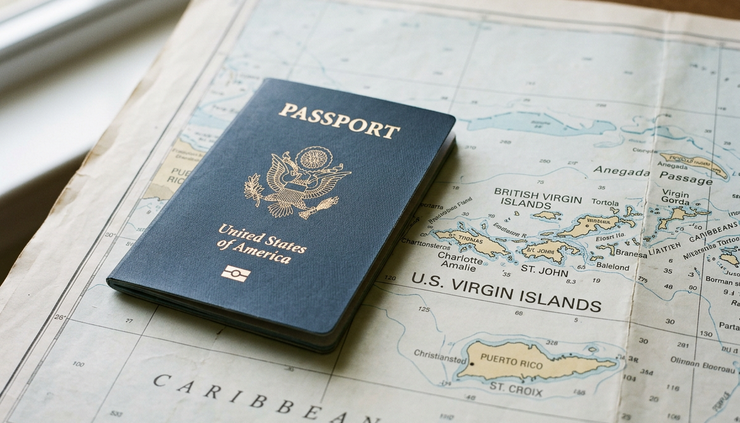
The future of American citizenship may turn on whether courts and lawmakers treat the territories as exceptions or as communities whose members are fully part of the national project. The answer will shape not just who receives a passport at birth, but what the United States means when it claims sovereignty over a place and its people.
The bill’s path is uncertain. What is clear is that any serious change to birthright citizenship will face court challenges, political opposition, and deep questions about equality. A nation can revise its statutes. It can debate immigration policy. But when it changes the rules of belonging at birth, it changes something far more lasting than paperwork.
