
The Caribbean and Why Panama 'Worked' and Venezuela Is Different
John F. McKeon
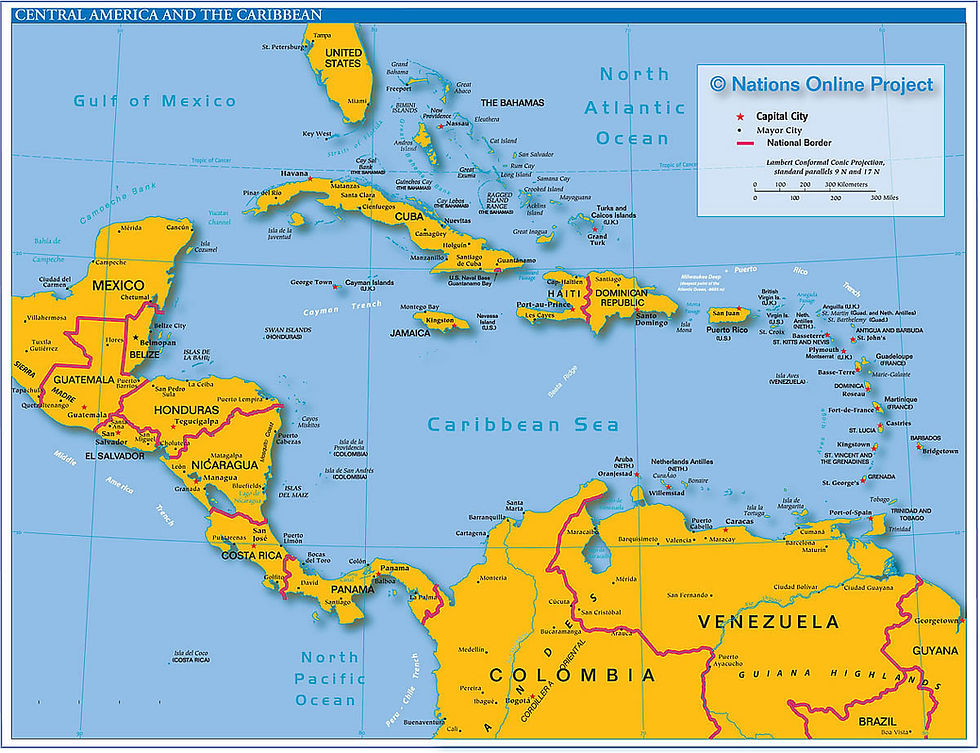
There is much debate concerning the reasons for the recent invasion of Venezuela by the US. But is the real story about drugs, or terror, or oil for America? Or is it all about energy leverage, China!s dependence, and the long game shaping global power? Its a bold and possibly reckless strategy that has many moving parts, requires nimble US action and has no assurance of success. The US has a long history of tampering in Latin America, it is nothing new and not always successful. In 1965, US President Lyndon Johnson sent more than 22,000 US troops to the Dominican Republic to prevent the return of former President Juan Bosch, overthrown in a 1963 coup.
Later, in Granada, following the violent overthrow and execution of Prime Minister Maurice Bishop of Grenada in 1983, President Ronald Reagan ordered an invasion. His administration justified the action by citing the need to protect US medical students and prevent the island from becoming a "Soviet-Cuban colony”.
In 2004, Haitian President Jean-Bertrand Aristide was removed from power and flown to Africa in what he described as a US-orchestrated coup and "kidnapping”. In 2022, French and Haitian officials finally admitted to The New York Times that France and the US had collaborated to remove him.(1) However the circumstances surrounding the Maduro grab that seems more immediately adjacent is the invasion of Panama.
In December 1989, President George H.W. Bush launched a full-scale invasion of Panama involving about 24,000 US troops to remove General Manuel Noriega, who had been indicted on drug-trafficking charges (like Maduro). He was subsequently flown to the United States, tried and imprisoned. The move to arrest Maduro has few precedents in American foreign policy. Other recent comparisons such as The US. helped topple of Iraq!s Saddam Hussein and Libya!s Moammar Gadhafi don’t suffice as both dictators were ultimately killed by their own people.
The Panamanian incursion is the nearest equal comparison. Washington captured Panamanian leader Manuel Noriega in 1990 on drug charges similar to those aimed at Maduro. Yet are they the same? leaving us to ask….Is this really that? Well..a closer look at the US invasions of both nations reveals this definitely is not that. ue combination of beauty and function? For that we have to travel back in time to get our answer.
Key Differences at a Glance
While the 1989 invasion of Panama and the 2026 military action in Venezuela both aimed to remove leaders accused of narcoterrorism, they differ significantly in scale, execution, and local context. The primary goal was to overthrow Manuel Noriega in Panama vs. apprehend Nicolás Maduro and Cilia Flores in Venezuela.
In Panama the US used over 27,000 ground troops for a full-scale occupation, while the Venezuela operation was a more discreet, surgical raid with approximately 150 aircraft and special forces. Major combat operations in Panama lasted two weeks, while the primary raid in Venezuela lasted less than 30 minutes. Noriega’s successor Guillermo Endara was sworn in immediately in Panama, but the Maduro government remains largely in place under Delcy Rodríguez in Venezuela.

Military Approach and Technology
In Panama the US imposed a huge, conventional ground invasion designed to demolish the country's military infrastructure while also applying new technology in the confrontation.(2) Venezuela was more of a precision-strike operation employing advanced electronic warfare to incapacitate air defenses and "turn off the lights”(3) in Caracas before a special force deployment moved in.
The actions were Justified by President George H.W. Bush as a "Just Cause" to protect 35,000 US citizens after a Marine was killed, and to defend the Panama Canal Treaty. However the Trump administration framed the invasion of Venezuela as a law-enforcement action using "inherent constitutional authority" to capture indicted fugitives. The distinctive differences become obvious when considering the scale, Economic and Geographical implications of the two incursions. Immediately apparent is that Panama is a tiny nation where US forces were already embedded. The Panamanian military was quickly overwhelmed. However, Venezuela is a nation twelve times larger with a population ten times greater than Panama's in 1989.
Venezuela is a vast terrain of jungles and mountains and houses an intact military that will make a full occupation significantly more complex. The international and economic fallout are impossible to predict in Venezuela . It must be noted that the Panama incursion took place at the end of the Cold War with largely uncontested US regional dominance. It certainly faced condemnation from the UN and OAS but it eventually led to a stable ‘democracy’.
The military actions in Venezuela occurs within a fragmented global order with immediate condemnation from China, Russia, and Cuba. The Trump administration has suggested the US will "run" the country and utilize its oil reserves for reimbursement, sparking "No Blood for Oil" international as well as domestic protests. Why China, Russia and Cuba protest this action becomes apparent when we look at the possible futures of Venezuela and its effect on these three nations particularly
In Venezuela US. strategy has long anticipated a split in the Chavista (4) movement, with compliant, moderate elements rising to take the reins. This remains to be seen, but as of yet there have been no high-level resignations. In response to the capture, Venezuela's Supreme Court decreed that Vice President Delcy Rodríguez assume the role of acting president immediately. In a televised address, Rodríguez forcefully rejected U.S. President Donald Trump's suggestion that she might cooperate, declaring, "There is only one president in this country, and his name is Nicolás Maduro." Senior allies, including Defence Minister Vladimir Padrino López, have echoed this defiance.
There seems to be a walking back these statements presently happening. It is necessary to look at the deep historical narratives driving the Venezuelan left. Acting President Delcy Rodríguez is the daughter of Jorge Antonio Rodríguez, a socialist student leader who was tortured to death by state security agents in 1976. His death was a martyrdom for the movement, allowing the framing of the current struggle not just as a political dispute, but as a continuation of a decades-long ‘battle against oppression’.

Hugo Chávez (1999–2013) rephrased the country's social contract using populist economic policies known as the Bolivarian Missions.(5) A central figure in the opposition, María Corina Machado—an industrial engineer from a family whose assets were taken under Chávez—was awarded the Nobel Peace Prize in 2025 for her pro-democracy efforts. Following Maduro's capture, she called for opposition candidate Edmundo González to assume the presidency. President Trump has publicly dismissed Machado, and Secretary of State Marco Rubio has stated that holding elections would be "premature at this point." This suggests the U.S. intends to run Venezuela directly for the foreseeable future, eyeing the nation!s oil reserves rather than handing power to a civilian opposition it views as weak.
Underpinning the economic conflict is the issue of Venezuelan gold. Since 2019, the Bank of England has frozen approximately $2 billion in Venezuelan gold reserves. The UK government initially justified this by recognizing opposition figure Juan Guaidó as interim president. Despite the dissolution of Guaidó's parallel government in late 2022, the gold remains frozen. A UN special rapporteur has noted that this seizure prevents Venezuela from purchasing essential humanitarian goods, and the control of these assets is now likely to become a primary point of leverage as the US attempts to administer the economy.
The July 2024 presidential election remains a point of contention, with the opposition claiming victory for Edmundo González Urrutia based on collected tally sheets, while the National Electoral Council (CNE) declared Maduro the winner without providing detailed breakdowns. The Carter Center(6) criticized the lack of transparency, but with the US administration now sidelining the opposition, the focus has shifted to the raw exercise of US power. Looking ahead, Venezuela is shrouded in uncertainty. The United States seems more content to secure strategic assets in the Western hemisphere, namely the Panama Canal and Venezuela's oil fields.
Despite some similarities, there exist big differences between the interventions in Panama and Venezuela. Panama is widely seen as a bright spot in a history of US interventions in Latin America that have included CIA backed coups in Guatemala and Chile.The major result was a semi democratic system with self-determination, peaceful transfer of governance, and an economy that actually took off and did very, very well. One reason the Panama operation worked, is because a political opposition there was ready to take over and American troops — thousands of whom were already stationed in the Canal Zone — were quickly in and out of Panama itself. By contrast, President Trump declared the United States would "run" Venezuela for now in advance of what he called a "safe, proper and judicious transition." Trump said Venezuela's vice president, Delcy Rodríguez, had been sworn in as the new president.
President Trump seemed to dismiss the notion that Venezuelan opposition leader and 2025 Nobel Peace Prize winner María Corina Machado could lead the country, saying she didn't have enough support or respect inside Venezuela. To maintain control and remain in power Maduro had to steal the 2024 election, revealing there seems to be significant popular will to get rid of him.
Yet, what seems to be lacking so far, is the presence of any kind of transition plan. The apparent fear is unless you had some sort of managed transition from the regime to a democratic or some semi-functional democratic system, you would see absolute chaos for a long period of time.
That risks a power vacuum where various armed groups — including guerrillas from Colombia, cartels and narco terrorists would swiftly move to fill, amplifying even greater violence. But what if any support is for the American incursion?
What happens to the Oil?
First of all, the US does not need the Venezuelan oil but what it represents to the geopolitical landscape has the means of being a game changer. As a result, the US remains a major importer of crude to feed its refineries, despite being one of the biggest oil exporters in the world. Access to Venezuelan crude at an attractive price may play an important role in sating President Trump!s appetite for cheap energy to fuel the "re-industrialization” of the US economy but there is much more to be gained.
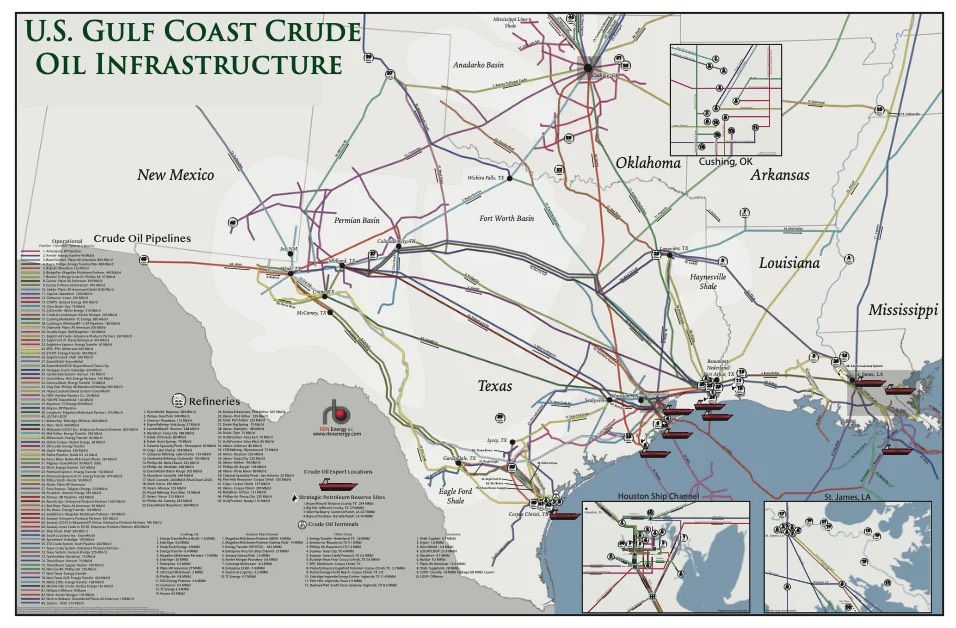
Clustered along the US Gulf coast are some of the largest and most complex heavy-crude refineries in the world. These sprawling industrial hubs, owned by major US oil companies, stand ready to emerge. In some ways, these refineries are a relic of another time; built to process the heavy, crude imported from Latin America before the boom in lighter US shale oil emerged earlier this century.
Venezuelan oil is particularly dense and sticky. The high-sulphur crude more closely resembles a semi-solid tar than the far clearer liquids produced in US shale heartlands, making it more difficult to extract and process into gasoline, diesel, jet fuel and feedstock for the chemicals industry. But it is exactly what many refineries in the US were built to treat.
The Hovensa refinery on St. Croix, built by Hess in the 1960s, became one of the world's largest, operating as a joint venture with Venezuela's PDVSA from 1998 until its closure in 2012 due to financial losses from market shifts. After years as a storage terminal, it was purchased and restarted as Limetree Bay Refining in 2021 but faced immediate mandatory shutdowns by the EPA due to severe pollution incidents, leading to bankruptcy filings and indefinite closure, leaving behind a legacy of economic impact and environmental concerns.
A Virgin Island Joint Venture with Venezuela
In 1998, the refinery entered to a partnership called HOVENSA, owned by Hess Corporation and Venezuela!s national oil company.(7) The partnership brought new capital and a steady stream of Venezuelan crude oil allowing the facility to continue operating at high capacity into the early 2000s. However, rising operational costs, environmental regulations, and market dynamics shifted toward more modern refineries. HOVENSA experienced heavy losses — well over a billion dollars in its closing years. When HOVENSA finally announced the closure of the refinery. it marked the end of an era, leading to unemployment, population decline through emigration, and local business failures. The refinery was an enduring partnership between Hess Oil and Venezuela's state oil company permitting the processing of Venezuelan crude for many years. At its peak, it was one of the world's largest refineries, processing large volumes of Venezuelan heavy crude.
Venezuelan crude requires sophisticated refining units. The St. Croix facility possesses the necessary cokers (8) making it possible to produce higher-value products, The refinery closed in 2012 due to market changes and high costs, but its potential restart can handle heavy crudes. , the physical infrastructure remains capable of refining Venezuelan crude, given its history and equipment. The decision to process Venezuelan crude would depend on ownership, current contracts and the economic viability compared to other crudes.
Future American investment by oil companies is a hard sell due to the extremely challenging economics and security concerns around drilling in the unstable nation. Oil companies are aware that Exxon has twice had its infrastructure expropriated by the Venezuelan government in the past. The company is still owed about $1 billion. ConocoPhillips, is still owed almost $9 billion in Venezuela, as a result of its assets being expropriated there.
Security on the ground is also an issue for companies, even as Venezuela continues to be one of the most dangerous places for any business to operate and oil firms have repeatedly expressed concern about the safety of their workers. As of yet there is no plan to provide such security guarantees.
South America is so much more important economically to the US than the Venezuelan oil that President Trump wants US companies to take control of. Copper, lithium, and uranium, not to mention tropical medicines and extraordinary biodiversity, are all at the offer. After decades of being largely ignored except for the odd U.S.-led International Monetary Fund debt bailout, there now exists the opportunity for better outcomes for some countries, especially where populist governments have stifled economic growth or the US’s abrupt turn to hard power may ultimately lead to the election of more vehemently anti-American governments than the continent started with, handing China greater access to the region!s resources. However none of these outcomes are guaranteed, and the future of Venezuela remains yet to be written.
The US-Venezuela Clash and the Caribbean Cauldron
The Political concerns are daunting as well. In the mid-2020s, a second conservative wave has incrementally reshaped the political map of Latin America as a reaction to previous left-wing "Pink Tide”(9) governments.
The support from right-wing Latin American nations for recent US led actions that captured Nicolás Maduro in Venezuela has primarily led to a deepening of ideological divisions within the region and a lack of a cohesive, united regional response. Latin American nations are split along ideological lines (10). Right-leaning governments, such as Argentina and Ecuador have openly supported the US intervention, framing it as a positive development for democracy and a defeat for “narco-chavismo”(11) In contrast, left-leaning governments, including Brazil and Colombia, have condemned the action as a violation of sovereignty and international law. Support from certain regional nations, coupled with the lack of a unified condemnation, has been seen as potentially emboldening the US. to pursue a more muscular foreign policy in the hemisphere, with hints of possible future actions against Cuba and Nicaragua. (12) But what of the other nations that border on the Caribbean Sea?
Cuba
The January 2026 US military operation to capture Nicolás Maduro in Venezuela has caused immediate and severe ripple effects in Cuba, ranging from direct casualties to an existential economic crisis. The following are the key effects on Cuba
The Cuban government confirmed that 32 Cuban security officers—members of its armed forces and intelligence agencies—were killed during the U.S. strike while protecting Maduro and his wife. Cuba held two days of national mourning, lowering flags to half-mast across the island in response to the deaths of its personnel. The operation resulted in a total blockade of oil tankers, effectively halting Venezuelan oil imports to Cuba. President Trump stated there will be "zero" more oil or money going to Cuba from Venezuela. Experts warn that the sudden loss of Venezuelan crude, which historically met roughly a quarter of Cuba's demand, could lead to a collapse of the island's fuel-intensive transport and electricity grid. Notably while Mexico became Cuba's main oil supplier in 2025, Mexican President Claudia Sheinbaum has clarified that exports will not increase to fill the gap left by Venezuela due to U.S. pressure. The U.S. administration has suggested Cuba must "make a deal" or face similar consequences, leading to fears in Havana that the island is the next target of the revived Monroe Doctrine. It is believed the deepened economic misery is intended to spur a popular uprising against the Cuban regime. Venezuela was Cuba's most important regional ally, providing "oil for doctors" and acting as a shield against U.S. influence. Cuban President Miguel Díaz-Canel condemned the U.S. action as "state terrorism," warning it shatters regional stability and treats Latin America as a “backyard”.
The island is dependent on Venezuelan assistance, and it was in dire straits even before the US had Maduro captured. The Cuban economy is in tatters. Tourism, its primary industry, has shrunk to at least half its pre-pandemic levels with no signs of rebounding. Crime and disease are on the rise as law enforcement and hospitals break down, thanks to insufficient financing. The island!s government has withstood enormous pressure before. But it is facing its greatest-ever crisis.
The most immediate risk for Cuba!s rulers is energy. The island relies heavily on imported fuel, from Venezuela, to power its electrical grid, which is teetering on the brink of failure. It is estimated that 40 percent of the country goes without energy during peak hours. Some have power for just two to four hours a day. If the US cuts Cuba off from Venezuelan oil the grid could collapse. Havana will surely look to other countries to step in, but it is unlikely to find many suppliers. Mexico sends some oil currently, but less than in previous years.. Brazil doesn!t seem inclined to replace Venezuela either, since leftist President Luiz Inácio Lula da Silva, known as Lula, knows this would undermine his newly improved relationship with US. Russia, strained by its invasion of Ukraine, and China are also unlikely to fill the vacuum.
Any prolonged blackouts could produce e mass protests as large as or larger than those of July 2021. The 2021 demonstrations, the first of their scale in decades, showed the depth and breadth of public anger. Such protests might prove tough to contain, especially if they played out in the overcrowded Havana neighborhoods. Security forces historically engage in brutal methods of smothering unrest—detention, torture, threats. However they have yet to shoot or kill dozens of people at a protest. It is unclear what would happen if that changed and whether protests might cascade. Yet, it!s entirely possible the regime could survive this dire situation. The Cuban military has immense stakes in the government!s survival, given that it controls much of the economy through a web of companies that would vanish after a political transition. And it seems no one on the island is in a position to challenge the armed forces.
Colombia.
Colombia is the US 's closest security partner in the region, designated a Major Non-NATO Ally (MNNA) in 2022, enhancing military cooperation.Historically a top priority, U.S. aid through programs like Plan Colombia helped stabilize the state against guerrillas and cartels, though drug issues persist. Colombia helps manage hemispheric challenges, including mediating transitions in Venezuela, and serves as a regional leader in implementing US. security initiatives. The U.S. is Colombia's largest trading partner, with bilateral trade in goods and services exceeding $39 billion in 2022. The Trade Promotion Agreement (CTPA)boosts US exports (corn, oil, machinery) and Colombian imports (crude oil, coffee, flowers) and supports investment. Significant US investment flows into Colombia's mining and manufacturing sectors. Colombia is rich in oil, coal, gold, and emeralds, supplying key US imports. It is a pivotal point and major trade crossroads. Its Caribbean and Pacific coastlines make it a crucial location for global trade and US geopolitical focus in Latin America. President Trump has threatened to use direct military force against Colombia. Colombian President Gustavo Petro, unlike the Venezuelan and Cuban leaders, was democratically elected. He is a leftist ideologically opposed to the US and who was at times friendly with Maduro. Washington seems to roll the dice and expects that a conservative president will win in May’s upcoming elections.
The support for Maduro!s removal is real. Endorsement of how the United States manages what follows is the question.The balance sheet, rather than the battlefield, will prove to be more decisive. Venezuela has lost more than three-quarters of its GDP in a decade. Oil production has collapsed, even as the country continues to have some of the most extensive reserves in the world (the largest by some measures). Public services barely function. The control over oil revenues is the central determinant of whether any future government can succeed. If those revenues are diverted externally, political sovereignty will be hollow, elections or no elections. It carries global implications, political risk will slow production growth in the short term. However, the Venezuelan oil supply could meaningfully alter global balances. If successful, the US would become a participant in shaping global oil markets—unbelievably functionally inserting itself as a de facto participant of OPEC+ without formal membership! The administration!s move now allows unanticipated leverage over both Xi Jinping and Vladimir Putin. CCP war planners almost certainly never thought the US. would depose Maduro. Xi may be thinking twice about his plans to invade Taiwan under these new conditions, and the newly acquired US dominance over China's oil supply can hurt Xi!s seeming invincibility as party leader and the alternate patron of the Global South. China buys oil that is not subject to American pressure. Oil that cannot be sold just anywhere because it is sanctioned, so it!s unloaded at a heavy discount.
First it stymies the Chinese and Russian efforts to destroy the petrodollar, through BRICS and other means. If, and this is a big if, the US. guides its policies properly, Venezuela and Iran will revert to selling their oil only in American dollars, and not Chinese yuan. Second,it will enable China to squeeze Russia, after losing access to discounted crude from Iran and Venezuela and being forced to pay full price in US dollars, China will have more leverage to demand steeper discounts from Russia. None of these outcomes if achievable would be considered harmful to US security. These are all the possible futures for not only Venezuela but for the nation’s of the Caribbean Sea and for the geopolitical future of the world going forward. It seems the future is as of yet unwritten.
Historian John F. McKeon lives on St. Croix USVI and in Southampton NY. He holds degrees from Trinity College Dublin, (MPhil with Distinction). and St. Joseph's University New York (Summa Cum Laude) B.A. East Asian History with a Philosophy Capstone Minor in Labor, Class and Ethics. John also has certificate from the Oxford University Epigeum Research Integrity Center. He is a current member of the Society of Virgin Island Historians.
Foot Notes
The New York Times Investigation (2022) a major New York Times investigation into Haiti's i history with France included interviews with key officials that provided a different perspective on the 2004 events. Thierry Burkard, France's ambassador to Haiti at the time, stated in an interview that France and the United States had effectively orchestrated "a coup" against Aristide.
It was the first combat use of the F-117A stealth fighter and AH-64 Apache attack helicopter
By ‘turning off the lights’, personnel inside a building or safe house make themselves less visible and make the structure a less obvious target, especially during nighttime operations or bombings.The goal is to blend into the darkness and avoid providing visual cues to enemy observation, snipers, or aerial surveillance This instruction was a command given to Marines securing the US embassy in Panama during the US invasion to heighten security and minimize risk.
The sociopolitical ideology founded by former Venezuelan President Hugo Chavez rooted in anti-imperialism.
According to UN data, these policies drastically reduced poverty, which fell from 49.4% in 1999 to 23.9% in 2012. However, this came at the cost of economic diversification, leaving the country dangerously dependent on oil. Critics argue that failure to save during boom years, combined with price controls, created the shortages and inflation that spiraled into crisis under Maduro.
The Carter Center is a nonpartisan, nonprofit organization founded in 1982 by former U.S. President Jimmy Carter and former First Lady Rosalynn Carter in partnership with Emory University.
HOVENSA, a joint venture between Hess Corporation and Venezuela's state oil company PDVSA, secured $600 million in financing for refinery upgrades in 2000, underwritten by Bank of America for its St. Croix refinery, with crude oil often sourced from Venezuela; Predictably this was a loan to HOVENSA, NOT a direct loan to Venezuela.
A coker is an oil refinery processing unit that converts the residual oil from the vacuum distillation column into low molecular weight hydrocarbon gases, naphtha, light and heavy gas oils, and petroleum coke. The process thermally cracks the long chain hydrocarbon molecules in the residual oil feed into shorter chain molecules leaving behind the excess carbon in the form of petroleum coke.
The ‘Pink Tide’ or marea rosa is a political wave that turned towards left-wing governments in Latin America throughout the 21st century. The movement gained prominence with the election of Hugo Chávez in Venezuela in 1998.
The "New Right" has adopted grassroots organizing and social media activism—tactics traditionally used by the left—to mobilize voters and challenge established socialist administrations
"Narco-chavismo" is a term used by critics, intelligence agencies, and international observers to describe the alleged transformation of Venezuela's Chavismo anti imperialist ideology into a criminal enterprise directly involved in international drug trafficking.The concept suggests that the Venezuelan state has become a narco-state, where the lines between government authority and organized crime have been conjoined
Argentina: Javier Milei, a right-wing libertarian, won the 2023 presidential election and continues to lead with a "chainsaw" approach to government spending. El Salvador: Nayib Bukele maintains high popularity through authoritarian-leaning security policies that have drastically reduced crime but raised human rights concerns. Bolivia: In 2025, conservative Rodrigo Paz was elected president, defeating the long-dominant socialist MAS party for the first time in decades.Chile: José Antonio Kast, representing the New Right, secured a runoff victory in late 2025. Honduras: Conservative Nasry Asfura won the 2025 election, returning the right to power.


