Trump Rejects Iran Deal War Rages On
Updated: Mar 16
M.A. Dworkin

Middle East - President Donald Trump’s Administration has rejected efforts by Middle Eastern allies to start diplomatic negotiations aimed at ending the war that is entering its third week as Iran has demanded an end to US-Israeli strikes before ceasefire talks can begin.
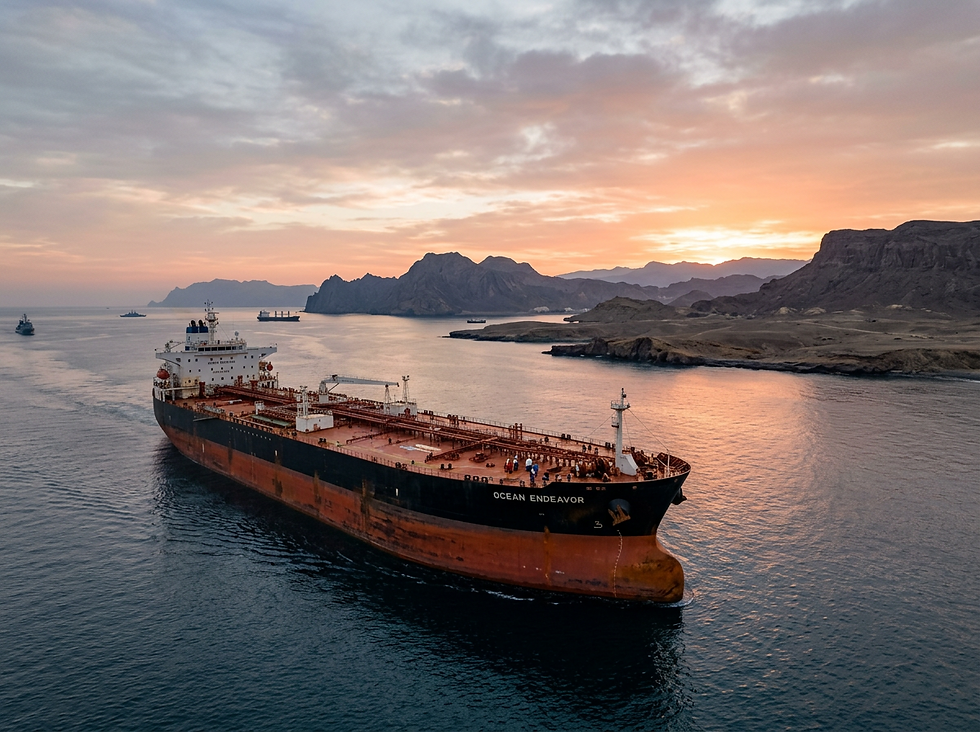
The lack of interest for ending the conflict suggests both sides are digging in for an extended battle, even as civilian casualties in Iran mount up and the closure of the Strait of Hormuz has sent oil prices around the globe soaring.
The US bombing strikes on Iran’s Kharg Island, the country’s singular oil export hub, signalled the Trump Administration’s determination to pick apart Iran’s valued military and economic assets and bring the rogue nation to its economic knees. Trump claims to have “obliterated” military installations on Kharg Island, leaving it defenseless, but noted that he spared oil infrastructure “for reasons of decency.” An attack on the critical oil facilities on the island could send the Iranian economy into a tailspin and signal the start of civil unrest among the Iranian people. But the President has threatened to abandon his restraint if Iran continues to deploy mines and drones against commercial shipping entering and exiting the Strait of Hormuz. At least 16 vessels have been targeted, forcing major oil producers like Saudi Arabia, Iraq and Kuwait to curb crude output.
While Iran’s new Supreme Leader, Mojtaba Khamenei, the late Ayatollah’s son, who has been reported injured and hiding out in a cave, and has not been seen in public since the start of the war, recently vowed to keep the Strait of Hormuz shut and threatened to step up attacks on neighboring Gulf nations.
Oman, which mediated talks before the war, has tried multiple times to open a line of communication, but the White House has made it clear it is not interested.
“He’s not interested in that right now,” a Senior White House official said, referring to the President. “We’re going to continue with the mission unabated. Maybe there’s a day, but not right now.”
President Trump has made it quite clear that the U.S. will maintain the “Operation Epic Fury” offensive until Tehran accepts more stringent terms including the total abandonment of its nuclear program. With the regional death toll nearing 3,750, the White House is doubling down on its maximum pressure military campaign, even as the de facto closure of the Strait has sent oil prices anchored near the $100 per-barrel mark. Trump has called for a multinational naval coalition, including China, France, Japan, South Korea, and the U.K. to forcibly reopen the world’s most critical energy chokepoint.
Iran has continued to launch retaliatory strikes across the Persian Gulf, targeting both Israel and Arab energy hubs. The United Arab Emirates (UAE) reported intercepting a massive wave of 1,600 drones and 300 missiles since the start of hostilities.
The US Central Command recently issued a report that there has been a 90% drop in ballistic missile attacks and 83% drop in drone attacks since the start of the conflict; and that the great majority of attacks are being intercepted by U.S.-led defense systems, including in the Gulf States. Ongoing operations have targeted Iran’s missile launchers, stockpiles, and missile and drone production facilities, weakening their ability to maintain high-intensity attacks. Yet some experts suggest the slowdown is also due to Iran trying to preserve its remaining arsenal for a longer-term conflict.
As economists voice concerns over oil disruption and spiralling gas prices that could lead to a recession, Trump Administration officials seem to be at odds with Israeli military leaders as to when the war might end. U.S. officials continue to echo the President’s words that the war will be over in a few weeks or sooner.
“It will be over soon, “ Trump stated. “There’s practically nothing left to target…Little this and that. Anytime I want it to end, it will end.”
The President indicated that the initial campaign was designed as a six-week fight.
“The war is going great,” he said. “We are way ahead of the timetable. We have done more damage that we thought possible, even in the original six-week period.”
US-Israeli strikes have knocked out Iran’s air defenses, destroyed its naval capacity and left the Iranian regime without an air force.
Prime Minister Benjamin Netanyahu has reiterated his call for Iranians to seize the opportunity to bring down their government as Israeli Government Ministers have secretly stated that toppling Iran’s regime could take up to a year.
“The operation will continue without any time limit, as long as required,” said Israel Defense Minister Israel Katz, who offered a different view on the future of the war. “Until we accomplish all objectives and achieve victory in the campaign.”
According to some reports, there is a measure of concern in Israel that Trump could decide to end the war earlier than Jerusalem would like, leaving Israel’s key goals unaccomplished.
Mr. Katz echoed Mr. Netanyahu’s message that one of the aims of the Israel Defense Forces (IDF) strikes is “to allow the Iranian people to rise, act, and overthrow this regime. Ultimately, this depends on them.”
The Defense Minister called the Iranian leaders who have survived the strikes “a bunch of cowards who attack women, children, and the elderly in the streets, specializing in massacres and killing civilians…They are already threatening to muder and slaughter anyone who protests,”
His thoughts do not fall far from the reality of the situation considering the Iranian regime, led by Ayatollah Ali Khamenei, slaughtered over 30,000 peaceful protestors who dared to question Iran’s brutal, oppressive policies even before the conflict began.