UN Report Flags Drug Boat Strikes in the Caribbean and Pacific as Possible War Crimes
Bud Ayer
Miami, FL - A speedboat in open water can look like a military target from a surveillance screen. Under international law, that is not enough.
A recent UN report by Ben Saul, the UN Special Rapporteur on the promotion and protection of human rights while countering terrorism, has put new pressure on the United States over strikes on boats described by US officials as drug trafficking vessels. Saul’s findings raise a hard question: when a government uses lethal military force against alleged traffickers at sea, is it fighting a war, enforcing the law, or committing unlawful killings?
The answer matters far beyond one operation. It affects how the United States justifies force in the Caribbean and Pacific. It affects whether suspected smugglers can be killed without warning or capture. It also affects the legal exposure of US service members ordered to patrol, track, and potentially strike vessels far from a recognized battlefield.

Ben Saul’s findings challenge the war framing
Saul’s report focuses on the use of lethal force against people suspected of drug trafficking. His core finding is blunt: suspected criminal activity does not, by itself, turn civilians into lawful military targets.
That conclusion sits at the center of the controversy. Governments can fight drug trafficking. They can intercept vessels, board boats, seize cargo, arrest suspects, and prosecute people. But the legal rules for policing crime are different from the rules for fighting an armed conflict.
Saul’s findings reportedly treat the strikes as potential unlawful killings because the people aboard were not shown to be taking part in hostilities in an armed conflict. In that view, labeling them “narco-terrorists,” “cartel members,” or “drug traffickers” does not erase their protections under international human rights law.
The report also points to a wider concern: if lethal strikes become a repeated method of maritime drug enforcement, the issue may go beyond isolated wrongful deaths. A pattern of attacks carried out as state policy could raise questions about murder as a crime against humanity, if the legal threshold is met.
That threshold is demanding. Crimes against humanity require more than one unlawful killing. They require a widespread or systematic attack directed against a civilian population, with knowledge of the attack. Still, Saul’s warning signals that international scrutiny is moving from the legality of individual strikes to the structure behind them: planning, orders, intelligence, targeting rules, and official policy.
Why international law treats these strikes differently
The legal debate turns on a basic distinction.
In an armed conflict, international humanitarian law allows combatants to target enemy fighters and certain military objectives. The law still limits how force is used, but it accepts lethal targeting as part of war.
Outside armed conflict, international human rights law applies. In that setting, lethal force is lawful only in narrow circumstances, mainly when it is strictly necessary to protect life from an imminent threat. Police cannot execute suspected criminals because arrest is difficult. The same principle applies at sea.
That is why the classification matters so much.
If the situation is treated as armed conflict | If the situation is treated as law enforcement |
Military targeting rules may apply | Human rights rules govern use of force |
Lethal force may be used against lawful military targets | Lethal force is a last resort to protect life |
Status and conduct of the target matter | Immediacy, necessity, and proportionality matter |
War crimes law may apply | Unlawful killings may be treated as murder |
Saul’s analysis appears to reject the idea that ordinary drug trafficking creates a battlefield. Even armed criminal groups do not automatically create a non-international armed conflict. International law looks for factors such as the intensity of violence and the organization of the armed group. A smuggling network with weapons and money may be dangerous, but danger alone is not the same as war.
This is why the phrase possible war crimes can sound paradoxical. If there is no armed conflict, war crimes law may not apply. But if the United States argues there is an armed conflict, then the strikes must satisfy the laws of war. If they target civilians who are not directly participating in hostilities, the killings could be prosecuted as war crimes.
In either framework, the legal risk is severe.
The central issue is not whether drug trafficking is harmful. It is whether the state may kill suspected traffickers without the safeguards required by law.
The Trump Administration’s defense faces major legal hurdles
The Trump Administration has defended aggressive force against drug trafficking organizations by framing them as national security threats. That approach rests on several arguments that have become familiar in US counterterrorism and border security policy.
One argument treats certain cartels or trafficking networks as terrorist-like armed groups. The administration’s language has often linked drug trafficking, organized crime, and threats to US communities. From that view, strikes at sea are presented as preventive acts against a hostile force moving deadly contraband toward the United States.
Another argument relies on self-defense. The administration could claim that trafficking organizations pose an ongoing threat and that maritime strikes disrupt attacks on US citizens through the drug trade. This argument is politically powerful, especially when tied to overdose deaths and cartel violence.
A third argument draws on executive power. Presidents often claim broad constitutional authority to protect the country from foreign threats. At sea, that claim may be combined with maritime interdiction authorities, counterdrug statutes, and military support to law enforcement.
Each argument has weaknesses under international law.
Calling traffickers terrorists does not settle the matter
A label is not a legal category by itself. Even if a government designates a group as terrorist, it still has to show that the rules permitting military force apply. Terrorist designation does not automatically create an armed conflict. Nor does it allow a government to kill any alleged member wherever they are found.
The law asks what the person was doing at the time. Were they directly participating in hostilities? Were they posing an imminent threat to life? Could the vessel have been stopped, disabled, boarded, or tracked instead?
If the answer is yes, lethal strikes become much harder to defend.
Self-defense has limits
Self-defense under the UN Charter generally concerns armed attacks or imminent armed attacks. Drug trafficking causes grave harm, but courts and legal experts have often resisted treating criminal commerce as the equivalent of an armed attack by a state or armed group.
That does not mean governments are powerless. It means the tools are different. Interdiction, arrest, extradition, sanctions, prosecutions, and cooperation with coastal states fit more naturally within the legal framework.
A strike that destroys a boat and kills everyone aboard needs a tighter justification than “they were suspected traffickers.”
Domestic authority does not erase international obligations
A president may claim authority under US law, but international law still applies. That distinction matters for commanders and troops.
Even if an operation receives approval through domestic channels, it can still violate international human rights law, the law of the sea, or the laws of war. Internal legal memos do not guarantee immunity abroad. They also may not protect individuals if a future court finds that the orders were unlawful.
Murder, war crimes, and crimes against humanity are separate legal paths
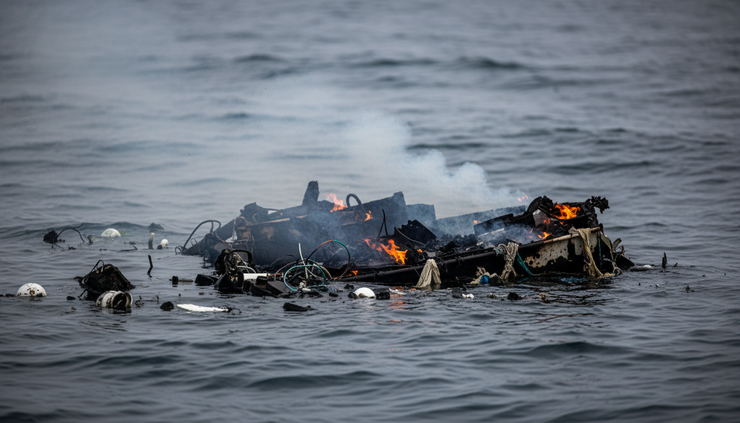
The report’s strongest implication is that the killings may be treated as murders if they happened outside armed conflict and lacked lawful justification. In plain terms, a state cannot use the military to execute suspected criminals when capture or nonlethal interdiction is possible.
That does not require sympathy for traffickers. It requires a legal process. International law protects the right to life even when the person is suspected of serious crime.
If the United States insists that these strikes are part of an armed conflict, the analysis shifts. The people killed must be lawful targets under international humanitarian law. The attack must distinguish between combatants and civilians. It must be proportionate. It must avoid unnecessary harm.
If those requirements are not met, the same strike could be examined as a war crime.
The crimes against humanity question is broader. Prosecutors would look at whether the strikes formed part of a widespread or systematic attack on a civilian population. They would ask whether officials knew the broader pattern and still continued it. They would examine targeting lists, public statements, rules of engagement, after-action reviews, and legal approvals.
That does not mean charges are inevitable. It means the legal risk rises when alleged unlawful killings are repeated, defended, and normalized as policy.
US troops face the sharpest consequences at sea
For US troops patrolling Caribbean and Pacific waters, the report is not an abstract legal debate. It touches daily operational choices.
The people most exposed may include:
Pilots and drone crews who identify targets
Ship commanders who authorize intercepts
Intelligence personnel who classify vessels
Legal advisers who review strike packages
Special operations forces involved in maritime interdiction
Coast Guard and Navy crews working in joint missions
The risk is not only prosecution. It is uncertainty.
A crew may receive an order that passed through a chain of command and legal review. Yet the crew may still have questions. Who confirmed the boat’s identity? Was there evidence beyond a route, speed, or vessel type? Were weapons visible? Was the crew warned? Was disabling fire possible? Did a partner government consent? Was the vessel in international waters or inside another state’s maritime zone?
Those questions matter because service members have a duty to follow lawful orders. They also have a duty not to follow manifestly unlawful orders. Most real-world cases are not simple. The fog is not only tactical. It is legal.
The burden shifts to evidence and restraint
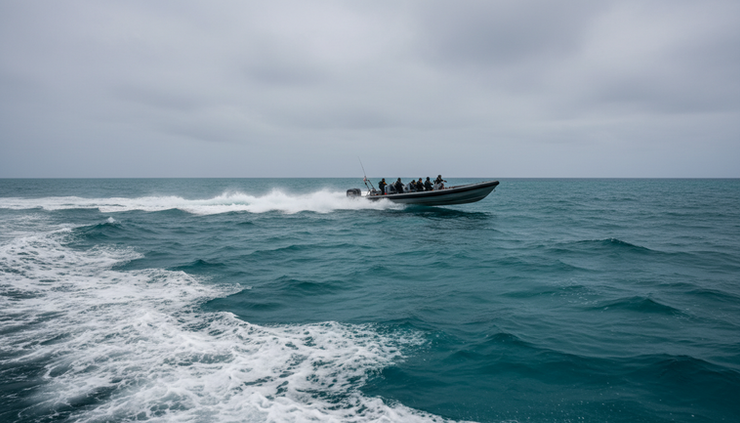
The UN report may push US commanders to demand stronger evidence before any use of lethal force. That could include clearer intelligence standards, better recording of warnings, and more careful preservation of surveillance footage.
It may also push operations toward nonlethal methods, such as:
Tracking a suspect vessel until a boarding team can intercept it
Disabling engines when safe and lawful
Coordinating with coastal states for arrest
Using aircraft for surveillance rather than attack
Treating crews as suspects for prosecution, not enemy fighters
These methods can be more difficult. They may put boarding teams at risk. They may allow some suspects to escape. But international law often requires states to accept operational difficulty rather than skip directly to lethal force.
Morale and mission clarity may suffer
Troops asked to carry out counterdrug missions need clear rules. If leaders describe the mission as war while lawyers outside the chain of command describe it as unlawful killing, trust erodes.
That can affect morale in several ways. Some service members may fear future investigations. Others may feel political leaders are using military force for a law enforcement problem. Commanders may become more cautious, while policymakers may demand faster and more visible results.
The worst outcome is ambiguity. At sea, crews make decisions under pressure. They need rules that are legally sound before the moment of contact.
The Caribbean and Pacific are not legal blank spaces
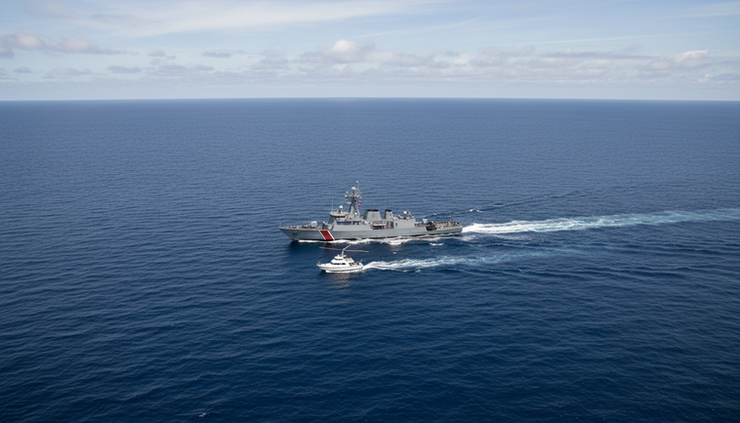
Open water can create a false sense of legal distance. A boat far from shore may feel outside normal rules. It is not.
The Caribbean and Pacific include territorial seas, contiguous zones, exclusive economic zones, and international waters. Different rules apply depending on location, flag state, consent, and the nature of the mission. The law of the sea protects freedom of navigation, but it also regulates boarding, pursuit, and enforcement.
If a suspect vessel is stateless, states may have more room to board and inspect it. More room does not mean unlimited authority to destroy it. If a vessel is flagged to another country, the legal issues become more sensitive. Consent from that country may be needed for certain enforcement steps.
Human rights obligations may still apply when a state exercises power over individuals, including at sea. That can include situations where a military aircraft or ship uses force against a vessel.
This is where Saul’s report adds weight. It warns that counterdrug operations cannot be placed outside law by moving them offshore, calling them military actions, or treating every suspect vessel as an enemy unit.
What the report may change
The report does not by itself convict anyone. UN special rapporteurs do not run criminal courts. Their findings do, though, shape international debate and create a record that other bodies can use.
The practical effects could include:
More congressional pressure for legal memos and briefings
Demands for disclosure of targeting rules
Greater scrutiny from allied governments
Human rights litigation by families of those killed
Internal reviews by the Defense Department
Stronger warnings from military lawyers before future strikes
The findings may also affect cooperation with partner countries. Some governments may not want to share intelligence if it could lead to lethal strikes they consider unlawful. Others may ask for assurances that US operations will prioritize interdiction and arrest.
For the United States, the strategic issue is credibility. Washington often calls on other governments to follow the rule of law, protect civilians, and reject extrajudicial killings. If it claims a right to kill suspected traffickers at sea based on secret evidence, other governments may copy that logic.
That is the broader danger. A rule created for one set of suspected criminals can quickly become a tool for many states against many enemies.
The legal line is clear even when the mission is hard
Drug trafficking is destructive. Maritime interdiction is dangerous. Armed criminal networks can threaten communities, corrupt governments, and kill people. None of that gives states a blank check to use military force.
Ben Saul’s findings put the legal issue in direct terms: if alleged traffickers are not lawful military targets and do not pose an imminent threat to life, killing them at sea may amount to murder. If the government frames the operation as war, then the laws of war apply, and unlawful targeting can become a war crime. If repeated killings form part of a broader state policy against civilians, the analysis can reach the level of crimes against humanity.
For troops in Caribbean and Pacific patrol zones, the safest path is not looser language or broader labels. It is clearer law, better evidence, tighter rules of engagement, and a strong preference for capture over killing.
The takeaway is simple: the fight against drug trafficking must stay inside the law. Once a state treats suspicion as a death sentence, the sea stops being a patrol zone and starts looking like a place where accountability is meant to disappear.