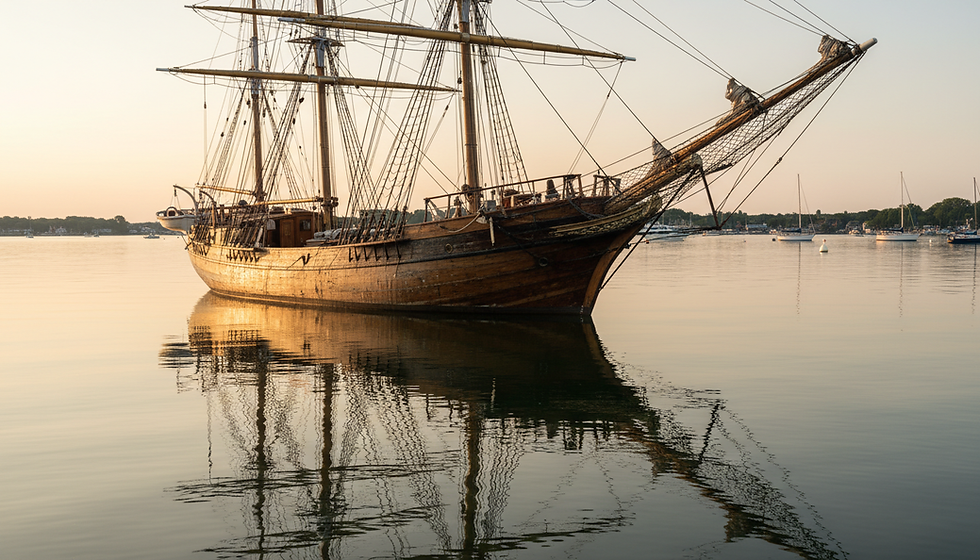
Denis Sullivan Sails South: Latest Voyage Stops and Winter Arrival in St Croix
Axel Dash
Mid-Atlantic - A tall ship moving south for winter is never just a relocation. It is a working voyage, a floating classroom, and a moving reminder that ocean education begins long before the anchor drops.
The World Ocean School’s schooner Denis Sullivan is making that kind of passage now, heading down the coast and toward its winter home in St. Croix, U.S. Virgin Islands. For students, crew, alumni, and anyone who follows traditional sail, the trip offers a rare chance to watch a Great Lakes-inspired schooner trade northern waters for the Caribbean.
The voyage south brings together seamanship, weather watching, port visits, and the steady rhythm of life aboard a large sailing vessel. It also sets the stage for the ship’s winter season in the U.S. Virgin Islands, where the Denis Sullivan will continue its work as a platform for hands-on ocean learning.

The latest voyage news from the southbound passage
The biggest news is simple and satisfying: the Denis Sullivan is on the move, sailing south toward St. Croix for the winter season.
World Ocean School has framed the voyage as both a seasonal passage and a continuation of its broader mission. The schooner is not just changing harbors. She is moving into a new chapter of programming, community engagement, and ocean-based education in warmer waters.
Because offshore passages depend on weather, currents, mechanical readiness, crew rotations, and port logistics, updates from voyages like this often come in stages. The most useful signs to watch are:
Departures from major stopover ports
Arrival photos from docks and marinas
Crew notes from offshore legs
Weather window updates
Preparations for island programming in St. Croix
For a vessel like Denis Sullivan, patience matters. A southbound run can include calm stretches, brisk reaches, waiting periods in port, and route adjustments based on wind and sea state. Traditional sail rewards timing. A good crew does not simply point the bow at the destination and hope for the best. They read the weather, plan conservatively, and use each leg as a training ground.
That is part of what makes this passage so compelling. Every mile south is a real lesson in navigation, watch standing, line handling, teamwork, and respect for the ocean.
A voyage like this turns the map into a classroom. Ports become chapters, weather becomes homework, and the ship itself becomes the teacher.
The Denis Sullivan also carries a distinct identity. Built as a replica of a 19th-century Great Lakes schooner, she connects working maritime history with modern education. That history travels with her, even as she enters Atlantic and Caribbean waters.
The likely rhythm of the route south
A winter migration from the U.S. East Coast to the Caribbean usually follows a practical pattern rather than a straight line. The exact route can shift, but the logic stays the same: move safely from port to port, wait for favorable weather, then make the longer offshore push when conditions line up.
The Denis Sullivan’s southbound story is best understood in three broad phases.
The northern departure
The first phase is the transition out of cooler northern waters. This part of the passage often carries the most emotional weight. Family, supporters, educators, and former students may follow departure updates closely because the ship is leaving familiar ground.
The crew prepares the vessel for nearshore and offshore sailing. That means checking rigging, safety gear, navigation systems, provisions, water, fuel, spare parts, and the everyday details that make shipboard life work. On a schooner, readiness is both technical and physical. Lines need to run cleanly. Sails need inspection. Watch schedules need structure. Everyone aboard needs to know their role.
The first miles south can also bring a sharp change in weather. Late-season coastal sailing may include cold spray, short daylight hours, and shifting systems. A good departure is less about speed and more about settling the ship into a safe rhythm.
Mid-Atlantic and Southeast stopovers
The middle phase often includes key coastal ports where the vessel can take on supplies, make checks, welcome visitors, or wait for the next weather window. Common southbound tall ship stopovers along the East Coast include places such as Newport, New York Harbor, Norfolk, Beaufort, Charleston, Savannah, and ports in Florida.
Not every voyage visits every port. A schooner’s actual stops depend on conditions and scheduling. Still, these kinds of harbors serve clear purposes.
They offer:
Protected water after exposed stretches
Access to repairs and provisions
Crew change options
Public visibility for the ship’s mission
Time to prepare for the offshore leg toward the Caribbean
Each stop adds texture to the voyage. A schooner docked in a historic harbor draws attention quickly. People notice the masts first, then the rigging, then the deck activity. Even tied up, the ship tells a story.

The offshore turn toward the Caribbean
The final phase is the bigger bluewater move. At some point, the route leaves the comfort of short coastal hops and turns toward the Caribbean. This is where the passage becomes more than a delivery. It becomes an offshore sailing experience.
Offshore, the ship settles into watches. People wake, work, eat, rest, and stand lookout by a clock that no longer feels connected to shore life. Night sailing brings its own world, dark water, stars when the sky clears, the sound of the hull moving, and the steady work of keeping the ship on course.
The crew also keeps a close eye on tropical and subtropical weather patterns. Even outside the peak hurricane season, the Atlantic can demand respect. Swells, squalls, headwinds, and light-air delays can all shape the passage.
For a school ship, these are lessons that no textbook can replace. Students and trainees learn how ocean conditions change plans. They see how teamwork becomes safety. They understand that seamanship is a practice, not an idea.
Key stops that shape the story
The route south is more than a line on a chart. It is a chain of decisions, harbors, and transitions. The most meaningful stops are not always the most famous. They are the places where the crew resets the ship and the voyage shifts into its next stage.
Here are the types of stops that matter most on a passage like this.
Stop type | Why it matters | What followers can look for |
Departure harbor | Marks the start of the winter migration | Send-off photos, crew preparations, first sailing updates |
Coastal layover | Gives the ship time to rest, repair, and resupply | Dockside images, provisioning, weather updates |
Southern staging port | Prepares the vessel for the offshore leg | Rig checks, fuel and water, final route planning |
Caribbean arrival port | Begins the winter season | Welcome events, education programs, daysail news |
Several coastal areas naturally stand out on a southbound schooner route. Norfolk and the Chesapeake region often serve as a strategic pause because they connect northern and southern coastal sailing grounds. The Carolinas and Georgia can offer useful stopover options, especially when weather systems make offshore progress less appealing. Florida ports can serve as staging points before a Caribbean crossing, depending on the chosen route.
The voyage may also include time away from public docks, where there are no dramatic arrival photos and no crowd on the pier. That quiet time counts too. In fact, it may be where the most important shipboard learning happens.
A tall ship passage trains people through repetition. Coiling a line correctly matters. Keeping watch matters. Logging weather matters. Making coffee before the next watch can matter more than expected. These small routines are how a crew becomes reliable.
What makes the Denis Sullivan different
The Denis Sullivan is not a generic sailboat with extra masts. She has a particular story.
She was built as a modern tribute to the working schooners that once carried cargo and helped shape life around the Great Lakes. Those historic vessels moved lumber, grain, coal, and other goods through inland seas that could be as dangerous as the ocean. Their crews worked hard, navigated without modern comforts, and depended on sail power, skill, and discipline.
That heritage makes the Denis Sullivan especially well suited for education. Students can stand on deck and feel a direct link between maritime history and present-day ocean science. They can learn why hull shape matters, how sail trim changes motion, and how human choices affect marine environments.
World Ocean School’s role adds another layer. The organization uses ships as classrooms, giving students the chance to learn through real responsibility. Aboard a schooner, education does not feel abstract. It shows up in wet foul-weather gear, shared meals, reefing practice, chart work, and the quiet pride of doing a hard task well.

That mix of history, seamanship, and science gives the winter voyage extra meaning. The ship is not heading south to disappear into storage. She is heading toward another season of public purpose.
What to expect when the schooner arrives in St. Croix
St. Croix is a fitting winter home for a school ship. The island offers warm water, rich marine life, strong maritime connections, and access to coral reef ecosystems that can turn a lesson into a lived experience.
Upon arrival, the first priority will likely be practical. A vessel coming off a long passage needs care. The crew will inspect the rig, clean and organize the deck, check systems, handle customs and port requirements, and prepare the ship for the season ahead.
After that, the public-facing work can begin.
Expect the winter season in St. Croix to center on several kinds of activity.
Dockside presence and community welcome
A tall ship at the dock has a magnetic pull. The Denis Sullivan’s arrival will likely draw attention from residents, students, educators, visiting sailors, and travelers who happen to see her masts above the waterfront.
Dockside time can introduce the ship to the community before programs begin. People may get the chance to learn about the vessel, meet crew members, and understand how World Ocean School uses sail training to teach broader lessons about the ocean.
Ocean education in Caribbean waters
St. Croix offers a strong outdoor classroom. The surrounding waters can support lessons on reefs, currents, marine habitats, weather, navigation, and conservation. For students who have only seen the ocean from shore, stepping aboard a schooner can change how they understand it.
The ship can help connect big ideas to direct experience.
For example:
A lesson about wind becomes sail handling.
A lesson about navigation becomes a plotted course.
A lesson about marine ecosystems becomes observation from the deck.
A lesson about teamwork becomes a watch rotation.
That is the strength of shipboard education. It makes learning physical, social, and memorable.
Public sails and maritime programming
Depending on the season schedule, the Denis Sullivan may support public sails, school visits, youth programs, dockside tours, or partner events. These offerings can vary by port and staffing, so followers should watch official World Ocean School updates for confirmed details.
What is safe to expect is a strong focus on access. School ships exist to bring people closer to the water, not to keep maritime knowledge behind a gate. In St. Croix, that mission has room to grow.
Why this winter arrival matters
The Denis Sullivan’s voyage south matters because it brings together two kinds of movement.
One is geographic. The ship is moving from northern waters toward the Caribbean, following a route shaped by weather, seamanship, and seasonal need.
The other is educational. The ship carries forward a mission that treats the ocean as a place to learn responsibility, science, history, and care. That mission feels especially urgent in coastal and island communities, where the sea is not an abstract subject. It shapes daily life.
St. Croix gives the Denis Sullivan a winter base where those lessons can unfold in direct contact with warm water, working harbors, and living marine systems. For maritime fans, the arrival means another chance to see a schooner doing what schooners do best. For students, it means the possibility of stepping aboard and discovering that learning can move with the wind.
The best way to follow the rest of the passage is to watch for official voyage updates, port arrival photos, and program announcements from World Ocean School. The most memorable moments may be simple ones: a reefed sail at sunset, a dock line tossed ashore, a student looking up at the rig for the first time.
The Denis Sullivan is sailing south, but the larger story is not just about reaching St. Croix. It is about what happens after landfall, when the voyage becomes a season of learning.