Pentagon UFO File Dump October 2026: The Roswell Event - Egg Shaped Craft, Alien Bodies and Walter Hauts Shocking Affidavit
M.A. Dworkin
Roswell, NM - The Pentagon’s UFO files released on October 23, 2026 have pulled one of America’s most contested mysteries back into the spotlight: Roswell, New Mexico, July 1947.
The old questions are familiar. What crashed on a ranch northwest of Roswell? Why did the Army first announce that it had recovered a “flying disc,” then quickly replace that story with a weather balloon explanation? And why did Walter G. Haut, the military public information officer who issued the original press release, later sign a sealed affidavit claiming he had seen an unusual craft and non-human bodies?
The new files do not erase decades of dispute. They do make the Roswell record worth reading again, carefully and without pretending every claim carries the same weight. At the center is Haut’s late-life account, a reported egg-shaped craft, and the enduring claim that the military recovered bodies that were not human.

The 1947 Roswell sequence still drives the mystery
The Roswell story began in early July 1947, during a wave of “flying saucer” reports across the United States. Rancher W. W. “Mac” Brazel found strange debris on the Foster ranch, northwest of Roswell. Accounts differ on exactly when he found it, but the debris was reported to local authorities in early July.
Brazel contacted Sheriff George Wilcox in Roswell. The sheriff then alerted officials at Roswell Army Air Field, home of the 509th Bomb Group, the only atomic bomb unit in the world at that time.
Major Jesse Marcel, the base intelligence officer, and counterintelligence officer Sheridan Cavitt went to the ranch to inspect and collect material. Marcel later became one of the most important Roswell witnesses because he rejected the idea that the debris was from an ordinary weather balloon.
The public turning point came on July 8, 1947. Walter G. Haut, the base public information officer, issued a press release under orders from Colonel William “Butch” Blanchard. The statement said the Army had recovered a “flying disc.”
That announcement created a media storm.
The Roswell Daily Record ran the now-famous headline:
“RAAF Captures Flying Saucer On Ranch in Roswell Region”
Within hours, the story changed.
At Fort Worth Army Air Field in Texas, Brigadier General Roger Ramey presented debris to reporters and photographers. The new explanation was that the “flying disc” was actually a weather balloon. Marcel was photographed with foil-like material and sticks, images that became part of the official debunking narrative.
That fast reversal is one reason Roswell never faded. A simple mistake could explain it. So could confusion during a national flying saucer panic. To believers, though, the retraction looked like the first public act of a cover-up.
Date | Event | Why it matters |
Early July 1947 | Mac Brazel reports strange debris from ranchland near Roswell | Starts the official military response |
July 8, 1947 | Walter Haut issues a press release saying the Army recovered a “flying disc” | Creates the first official public claim |
July 8, 1947 | General Ramey displays debris in Fort Worth and calls it a weather balloon | Establishes the official retraction |
Later decades | Witnesses give conflicting accounts of craft, debris, bodies, and military secrecy | Turns Roswell into the central UFO case |
Walter G. Haut’s account became more explosive after his death
Walter G. Haut was not a random witness. He was the officer who delivered the original Roswell Army Air Field press release to local media. That role gave him a permanent place in the case.
For years, Haut’s public comments were cautious. He confirmed that he issued the “flying disc” statement, but he did not spend the early decades telling dramatic stories about alien bodies. That changed with a sealed affidavit he signed in 2002.
The affidavit was reportedly intended to remain sealed until after his death. Haut died in 2005, and the affidavit later entered the public Roswell debate through UFO researchers and authors.
In that document, Haut claimed far more than a mistaken press release.
He said he attended a base meeting where senior officers discussed the recovery. He also claimed he saw an unusual craft in a hangar at Roswell Army Air Field and saw bodies that appeared non-human.
His account described the object as egg-shaped, relatively small, and unlike conventional aircraft. He claimed it had no wings, no tail, no visible engine, and no normal cockpit. That description matched a long-running thread in Roswell lore, the idea that the recovered object was not a scattered balloon array, but a compact craft with a smooth exterior.
The most repeated details from Haut’s affidavit include:
A craft roughly 12 to 15 feet long
An oval or egg-like form
No visible seams, windows, wings, tail section, or landing gear
A smooth outer surface
Bodies nearby or associated with the recovered object
Haut’s stated conviction that the craft and bodies were extraterrestrial in origin
That last point matters. Haut did not frame his affidavit as a vague suspicion. He presented his belief directly. He said, in substance, that the recovered object was not from Earth.
That claim remains controversial because it came late in life and lacks the kind of physical evidence needed to prove it. Still, because Haut was the officer tied to the first official announcement, his affidavit carries unusual weight in UFO circles.

The alleged egg-shaped craft was unlike normal aircraft
The craft described in Haut’s later account was not a saucer in the classic movie sense. It was not a large disc hovering above a city. It was described as a small, rounded object, more like an egg or smooth pod.
That detail matters because Roswell has always contained two craft stories.
One story focuses on debris spread across ranchland. This is the version tied to Mac Brazel, Jesse Marcel, and the official photographs from Fort Worth. In that account, the recoverable material included foil, sticks, rubber, beams, and lightweight wreckage. The official Air Force explanation later connected the debris to a classified balloon project known as Project Mogul, which used high-altitude balloon trains to detect Soviet nuclear tests.
The second story focuses on an intact or partly intact craft recovered separately and taken to a hangar. This is the version tied to later witness accounts, including Haut’s affidavit. It is also where the egg-shaped object appears.
The two versions are not easy to fit together. Supporters of the extraterrestrial explanation often argue that there were multiple debris sites, one with scattered wreckage and another with a more complete craft. Skeptics argue that later stories grew from rumor, memory drift, and the popularity of UFO culture in the decades after 1947.
The reported craft features are striking because they do not match ordinary military hardware of the period:
No propellers
No jet inlets
No exhaust ports described
No rivets or visible panels
No standard aircraft control surfaces
No obvious place for a human pilot to sit
If Haut’s account is accurate, the object would not resemble a weather balloon, a V-2 rocket component, or an experimental aircraft. If it is not accurate, then the account shows how Roswell evolved from a debris recovery into a full crash retrieval legend.
That is the tension at the heart of the Pentagon UFO Files 2026 Roswell Egg Craft Alien Bodies and Walter Hauts Shocking Affidavit discussion. The issue is not only what Haut said. It is whether his statement connects to verifiable 1947 events or stands as a late and disputed memory.
The alien body claims are the most contested part of the Roswell event
The non-human body claims did not dominate the first newspaper cycle in July 1947. They developed through later testimony, interviews, books, and affidavits.
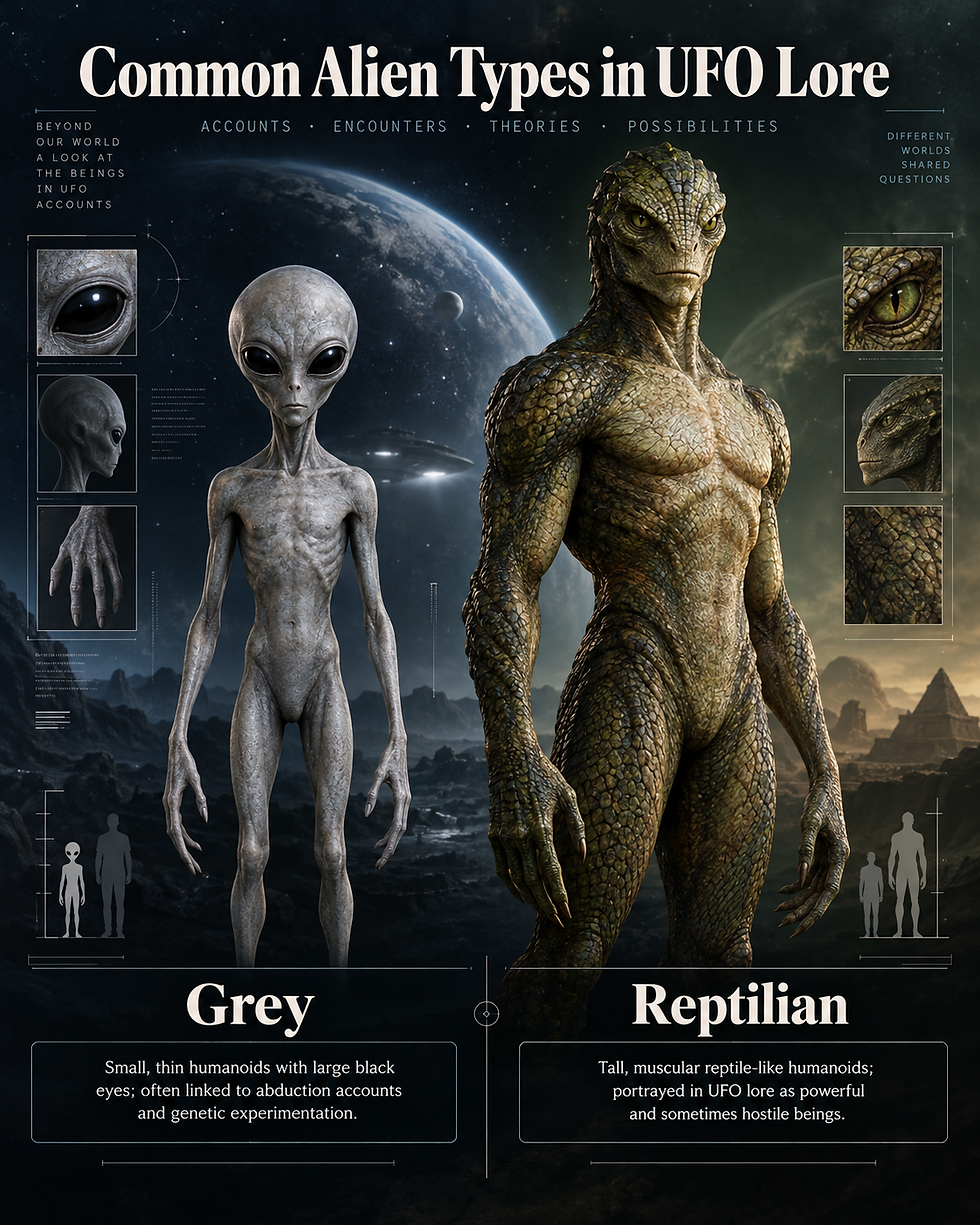
Haut’s sealed affidavit described bodies that were small and not human in appearance. Other Roswell-related accounts have described beings around 3 to 4 feet tall, with large heads, thin limbs, and unusual facial features. These descriptions resemble the now-familiar “gray alien” image, which makes the claims powerful but also difficult to separate from later UFO culture.
Several body-related accounts became part of Roswell lore:
Walter G. Haut
Haut claimed he saw bodies and believed they were extraterrestrial. His position at Roswell Army Air Field makes his claim important, but the late timing leaves room for criticism.
Glenn Dennis
Dennis, a Roswell mortician, said he received unusual inquiries from the base about small caskets and body preservation. He also claimed a nurse told him about alien bodies and an autopsy. Researchers have debated the reliability of this account for years, especially because the nurse’s identity has been difficult to confirm.
Jesse Marcel
Marcel is mainly tied to the debris, not body recovery. He later insisted that the material he handled was not a weather balloon. His testimony helped revive Roswell in the late 1970s.
Mac Brazel
Brazel found the ranch debris. Some later accounts suggest he was detained or pressured to change his story. The strongest verified point is that he reported strange material and became central to the original incident.
Sheridan Cavitt
Cavitt, who accompanied Marcel, later rejected extraordinary interpretations. His account supports a more conventional explanation.
Barney Barnett and the Plains of San Agustin stories
Some accounts place a separate crash site farther west, involving civilians who saw a craft and bodies before military personnel arrived. These stories are heavily disputed and do not line up neatly with the main Roswell timeline.
Later Air Force explanations
The U.S. Air Force reports in the 1990s argued that the debris likely came from Project Mogul. For body stories, the Air Force suggested that later witnesses may have conflated Roswell with military crash-test dummy recoveries and accident victims from the 1950s. Critics point out that this explanation requires memories from different years to merge into one 1947 event.

The first announcement and retraction remain the strongest public facts
Some parts of Roswell are beyond dispute.
The Army did issue a press release saying it had recovered a flying disc. Newspapers did report it. The Army did retract the story and present balloon debris. Those facts are not folklore.
The debate starts with interpretation.
The conventional view says Roswell was a classified military balloon recovery that became confused during the flying saucer panic of 1947. Project Mogul explains why the military might have hidden the true purpose of the debris without needing an alien spacecraft.
The UFO view says the weather balloon story was a cover. Supporters point to the speed of the retraction, the involvement of high-ranking officers, Marcel’s later rejection of the official explanation, and Haut’s sealed affidavit.
Both sides focus on the same pressure point: why did the military first say “flying disc”?
A mistaken phrase from an excited base command is possible. So is an attempt to control a classified recovery. The trouble is that the original physical evidence is not available for public testing. Without that, the case depends on documents, photos, press accounts, and human memory.
Human memory is fragile. Military secrecy is real. Roswell sits directly between those two truths.
How the 2026 UFO files change the conversation
The October 23, 2026 Pentagon UFO files arrived in a different era from the one that shaped Roswell. The U.S. government now openly uses terms like UAP, short for unidentified anomalous phenomena. Congress has held hearings. Military videos have been acknowledged. Serious discussion of unexplained aerial encounters no longer belongs only to late-night radio.
That shift changes how Roswell gets read.
For decades, skeptics could dismiss the entire subject as fringe. Believers could treat every denial as proof of hiding. The newer UAP conversation forces a more careful middle ground. Some cases remain unexplained. Some turn out to be balloons, drones, aircraft, sensor errors, or misidentified objects. A small number resist easy answers.
Roswell still needs the hardest standard because its claims are so large. If the event involved an egg-shaped craft and non-human bodies, it would be one of the most important discoveries in history. That kind of claim requires more than a dramatic affidavit.
It requires physical evidence, clear chain of custody, original documents, and corroboration that survives hostile review.
Haut’s affidavit is not proof by itself. Yet it is also not meaningless. It is a statement from the officer who issued the first “flying disc” announcement, signed decades later, sealed until after his death, and written with clear conviction.
That is why it keeps returning to the center of the story.

What Roswell still leaves unresolved
Roswell is not one claim. It is a stack of claims built over time.
The strongest layer is the documented July 1947 press cycle. A flying disc was announced, then retracted. That happened.
The next layer is the witness testimony about strange debris. Marcel’s later statements matter, though they do not prove an alien craft.
The most dramatic layer is the claim of an intact egg-shaped spacecraft and non-human bodies. Haut’s sealed 2002 affidavit sits here, alongside other later accounts that are harder to verify.
The weakest layer includes stories that shifted over time, lacked confirmable names, or appeared decades after the event without supporting evidence.
That does not make Roswell worthless. It makes it difficult.
The case endures because it combines official contradiction, military secrecy, credible-sounding witnesses, missing physical evidence, and a story too large to ignore. The newly released Pentagon UFO files may renew interest, but the core question remains the same as it was after the first retraction in 1947:
Did the Army recover a misidentified military balloon, or did it briefly tell the truth before burying the most extraordinary discovery of the modern age?
Walter G. Haut believed the answer was extraordinary. The historical record proves a strange public reversal. The rest still waits in the space between testimony and evidence.